
Turnover RateHow to Calculate It for Ponds, Tanks and RAS
Turnover rate explained: what it means, recommended turnover times for koi ponds, aquariums, RAS and natural pools, and how to get the flow you calculate.
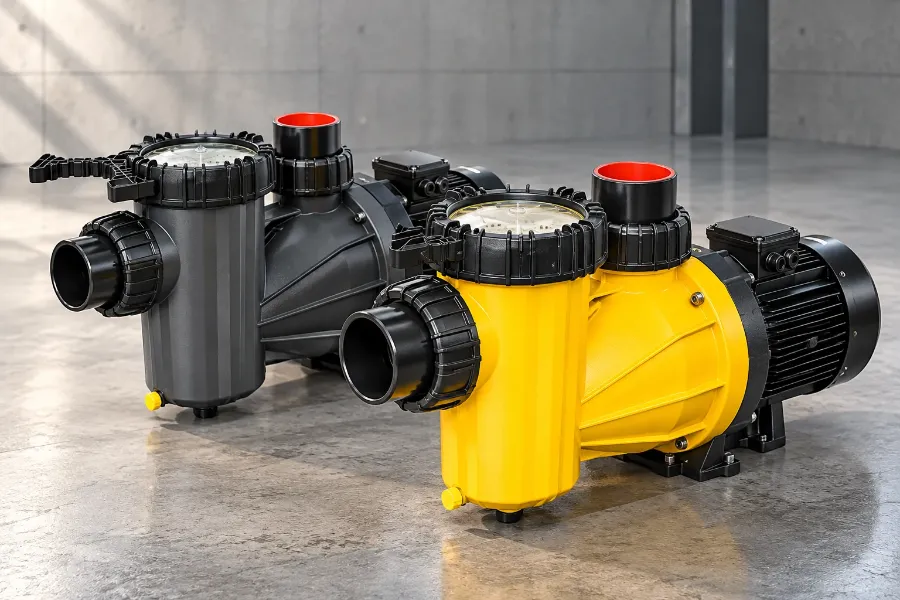 EQUIPMENT REFERENCE
See the mechanism.
Understand the duty.
Select a route or a stage to inspect the process. The cutaway explains the equipment and water environment; it is a teaching illustration, not a project drawing.
Supply the pump
Check the complete pump and system duty.
Maintain the approved suction arrangement and avoid dry running or air ingress.
- Check the complete pump and system duty.
- Use internal pipe dimensions and measured operating flow.
- Review supply conditions, protection and service isolation.
Key takeaways
- Turnover time = water volume divided by flow. A 20,000 litre pond with 10,000 L/h flow turns over in 2 hours.
- Koi ponds and RAS tanks need fast turnover. Planted natural ponds can run much slower because plants do part of the cleaning.
- One turnover does not clean all the water. Each pass removes only a share of the dirt.
- Measure real flow at the filter. Pump labels describe an ideal, not your pipework.
What turnover rate means
Imagine marking a bucket of water as it leaves the pond and following it through the filter. The turnover time is how long, on average, before a bucket-sized share of the whole volume has done the trip. In numbers it is simple:
turnover time (hours) = volume (litres) ÷ flow (litres per hour)
A 30,000 litre pond with a 15,000 L/h pump turns over in two hours. The same figure can be stated the other way round, as turnovers per hour (0.5 here) or per day (12).
Pumps are sold by their maximum flow, but filters and pipework are sized by the flow that really passes. Always plan with the real figure, measured at the working head.
Why it matters
Water only gets cleaner when it passes through treatment. Too little flow and solids settle in the pond, ammonia builds up and oxygen supply lags. Too much flow and you pay for power and pipe you do not need, and in some filters you cut the contact time that makes them work.
Work with your own numbers.
Use the tools below to explore the relevant arithmetic. Enter measured values or declared assumptions. An estimate does not establish equipment capacity, biological performance or a safe operating limit.
Flow & turnover planner
Relate a measured water volume to a selected turnover time. Confirm the time from the application and hydraulic design.
Assumptions and limits
A planning allowance is your assumption. This calculation does not choose a filter, prove treatment capacity or account for pump head.
Measured wash-water use
Use measurements across complete wash cycles and the recorded daily cycle count.
Assumptions and limits
Identify whether you measured wash supply or total waste discharge. No default litres per Pureflow wash cycle are assumed.
Convert units before you calculate
Planning arithmetic · inputs remain visible for review · example values are not operating recommendations
Why one turnover does not clean all the water
People often assume that after one full turnover every drop has been filtered. It has not. Each pass catches only part of what is in the water, and the water returned to the pond is immediately mixed with the water that has not yet been through the filter.
A useful way to think about it: if a filter removes 50 percent of the dirt per pass, then after one turnover about 63 percent of the original dirt is gone, after two about 86 percent, after three about 95 percent. Faster turnover does the same job in less time, which is why dirty ponds and heavily fed tanks need more flow.
Recommended turnover rate by application
These are working ranges, not laws. Heavier stocking, warmer water and richer feed all push you towards the faster end.
| Application | Turnover time | Turnovers per hour | Turnovers per day |
|---|---|---|---|
| Koi pond | 30 min to 2 h | 0.5 to 2 | 12 to 48 |
| Garden pond | 1.5 to 3 h | 0.3 to 0.7 | 8 to 16 |
| Natural swimming pond with filter | 2 to 4 h | 0.25 to 0.5 | 6 to 12 |
| Planted pond with regeneration zone | 6 to 24 h | 0.04 to 0.17 | 1 to 4 |
| Aquarium | 10 to 20 min | 3 to 6 | 72 to 144 |
| Fish farm and RAS tank | 30 to 60 min | 1 to 2 | 24 to 48 |
Guideline values. Your design may need more depending on stocking, feeding and temperature.
Koi pond
Large, messy fish in a relatively small volume. Plan for one turnover every one to two hours, and go towards 30 minutes for heavy stocking or show ponds. See koi pond filter size.
Garden pond
A few goldfish or small koi, plus plants. One turnover in two to three hours is usually plenty.
Natural swimming pond
A filter helps clear the water between the plant zone cycles. Two to four hours is typical when a filter is fitted. See swimming pond filters.
Planted pond with regeneration zone
When plants and gravel do most of the cleaning, slow circulation of 6 to 24 hours can be enough. The slow flow gives roots and bacteria time to work.
Aquarium
Show tanks with dense fish and fine particles in the water are often turned over in 10 to 20 minutes, mostly for clarity and oxygen. See aquarium filtration.
Fish farm and RAS
In RAS the tank flow is set by oxygen, waste removal and tank design. 30 to 60 minutes is a common range. See RAS and turnover by system type.
Where the flow goes: mechanical first, then biological
Not all treatment steps like the same flow. Pushing the whole turnover through one device can overload it. Design in the order the water travels.
| Step | What it does | Flow note |
|---|---|---|
| Drum filter | Removes solids before they break down | Sized for the full pond flow. See drum filter sizing. |
| Moving bed biofilter | Converts ammonia and nitrite | Sized by ammonia load. Contact time matters. See contact time. |
| Trickle filter | Biological stage that also degasses and aerates | Best with steady, even distribution. See trickle filters. |
Getting the turnover you calculated
The number on a spreadsheet only counts if the water really moves at that rate.
- Measure the real flowUse a flow meter, or time how long a known volume takes to fill. Do it with clean filters and then again with dirty ones.
- Size pipes for the flowNarrow pipe throttles flow and wastes power. See pipe sizing.
- Keep the whole volume movingPut the bottom drain and skimmer where they catch the most waste, and return water so every corner is stirred.
- Run it day and nightFish and bacteria need oxygen all 24 hours. Turning a pump off at night lets water go stale.
- Leave room to growFish grow. Plan for the biggest stock you will keep, not the day-one stock.
Pump and pipework checks
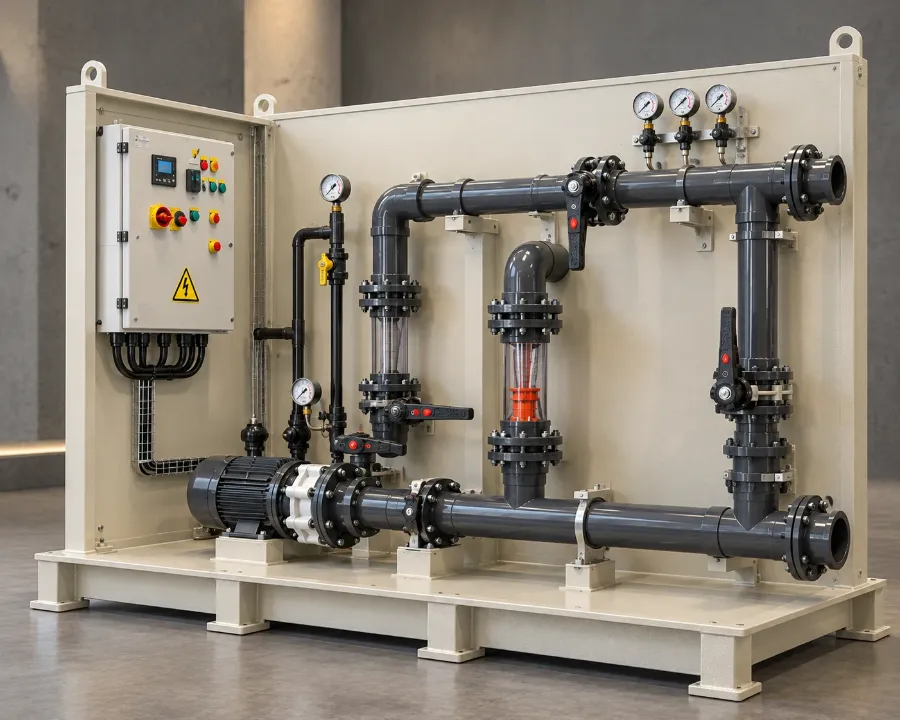
Check that the pump delivers the flow you want at the actual head. Pump curves show how flow falls as head rises, so a pump rated for 20 m³/h may deliver far less through long pipes and a clogged filter.
Try it with your numbers
Keep circulation and treatment separate
Use these questions to prepare a project brief or an operating review. Check an item only when the information has been recorded for your installation.
This checklist is a working aid in the current page session, not a saved maintenance record.
Turnover Rate FAQ
What is turnover rate?
The time it takes for a volume of water equal to the whole system to pass through the filter once.
How do I calculate it?
Divide the water volume in litres by the flow in litres per hour. The answer is the turnover time in hours.
Is faster always better?
No. It is better for waste and oxygen, but biofilters need contact time. Balance the two.
Can I run the pump only in the day?
Not for fish systems. Oxygen and bacteria need water movement all the time.
Does a bigger pump fix a poor filter?
No. It only pushes water through a weak filter faster. Size the filter to the load.
More guides related to turnover rate
Discuss your system with Pureflow.
Share your application, operating volume, actual flow, loading and the question you are trying to resolve.