
Pureflow Bio · Mechanical filtration
Rotary Drum Filters for Aquaculture & Koi Ponds
Pureflow Bio makes rotary drum filters in India for koi ponds, fish farms, hatcheries and recirculating aquaculture systems. Compare Made in India Standard RDF and Pro with UV models from 3 to 300 m³/h catalogue flow, then confirm the hydraulic duty for your pond or farm.
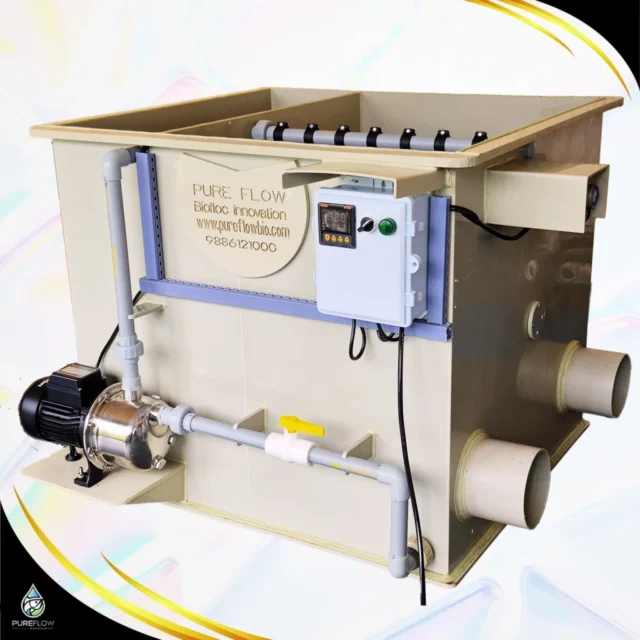
What Is a Rotary Drum Filter?
A rotary drum filter, also called a microscreen filter, removes suspended solids as water passes through a rotating screen. A wash system clears retained waste from the screen into a separate drain, helping operators manage solids before downstream treatment.
Choose Your Rotary Drum Filter Range
Start with the treatment duty, then compare the equipment configuration. Standard RDF and Pro with UV are separate microscreen ranges; a combi filter also brings biological filtration into the selection.
Standard RDF
Mechanical screening for a treatment train with its biological filtration and other stages specified separately. Compare the ten Standard RDF models and their dimensions, connections and catalogue flow listings.
Pro with UV
Ten Pro catalogue models with UV lamp listings from Pro RDF-3 to Pro RDF-300. Compare each model’s dimensions, maximum flow, connections and UV wattage × quantity. Confirm UV treatment duty for the application.
Compare Pro with UV specifications · Explore Pro model pages
Combi drum filtration
For a koi pond layout that combines drum screening and a biological chamber, compare the combi range. Review biological loading, chamber arrangement and the specified equipment scope together.
*Ranges summarise catalogue maximum-flow listings, not guaranteed flow at every mesh or solids load. Use the specifications and calculator below to prepare a duty for review.
Selecting a drum filter for aquaculture and RAS
For a recirculating aquaculture system, confirm the peak flow through the filter, daily feeding, suspended solids, selected mesh and operating water levels. Coordinate mechanical screening with biological filtration and the rest of the RAS filtration system. Catalogue maximum flow is a comparison point; confirm the duty at your mesh and solids loading. Use the RAS feed-load planning studio to prepare the wider system brief.
Drum filter for koi pond: what to check first
Start with the flow through the filter, the pond layout and the planned fish and feeding load. Choose whether biological filtration will be separate or part of a combi arrangement. The koi pond planning studio helps organise the pond-volume and circulation assumptions; the drum-filter calculator below compares the selected flow with the catalogue.
Drum Filters for Koi Ponds, Aquaculture and Aquariums
Koi ponds
Best for: Pond owners and builders planning automatic mechanical filtration around circulation flow and fish loading.
Ornamental fish breeding
Best for: Breeding and holding systems collecting suspended feed and fish waste before biological treatment.
Hatcheries
Best for: Hatchery operators reviewing screen opening, delicate stock requirements and waste drainage.
RAS farms
Best for: Recirculating aquaculture systems coordinating peak flow, feed input and biological filtration.
Aquaponics
Best for: Growers managing solids while planning a separate route for solids recovery or mineralisation.
Public and marine aquariums
Best for: Aquarium life support systems with defined water chemistry, flow, material compatibility and service access.
Follow the water and the waste
How a Rotary Drum Filter Works
Bring suspended waste to the screen
Water from the pond, tanks or treatment branch carries particles to the drum.
Retain particles and clean the mesh
Particles retained by the mesh collect on the screen. A level-sensor cleaning cycle rotates the drum while spray nozzles rinse the mesh.
Continue to the next treatment stage
Coordinate the return with biological filtration and the other treatment stages required by the system.
A rotary drum filter provides mechanical separation. It does not replace biological filtration or remove dissolved ammonia by itself. Select the mesh and hydraulic duty together.
RDF Features and Operating Benefits
75-micron SS 316 screen
The supplied catalogues specify SS 316 grade 75-micron mesh. Select the model using its catalogue maximum flow, dimensions and connections, then confirm the operating duty for the project.
Level-sensor washing
Automatic wash initiation reduces the need to start each cleaning cycle manually. Routine checks are still required.
High-pressure spray nozzles
The wash system rinses collected solids from the screen into the waste stream.
PP drive gear
Made from polypropylene (PP), the drive gear won’t rust, making it a dependable choice for long-term use.
Standard and Pro with UV
Compare mechanical filtration models and a separate Pro series that includes UV equipment.
Customisation and SCADA
Coordinate dimensions, connections and monitoring requirements with the complete filtration project.
Rotary Drum Filter Gallery by Model
Explore Standard drum filters for koi ponds, hatcheries and recirculating aquaculture systems. View each model’s image, flow rating and specifications.
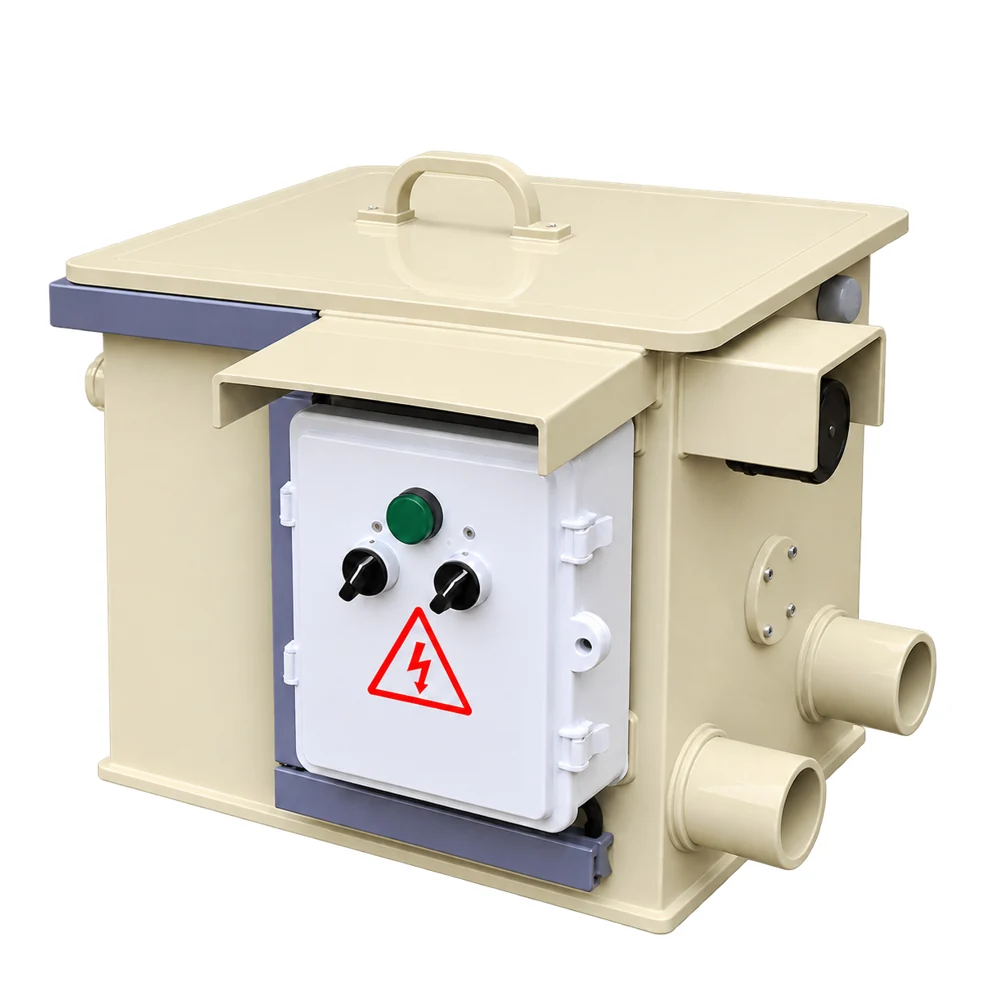
RDF-3
Compact filter for small koi ponds and aquariums, with a closed lid and external control box.
View RDF-3 details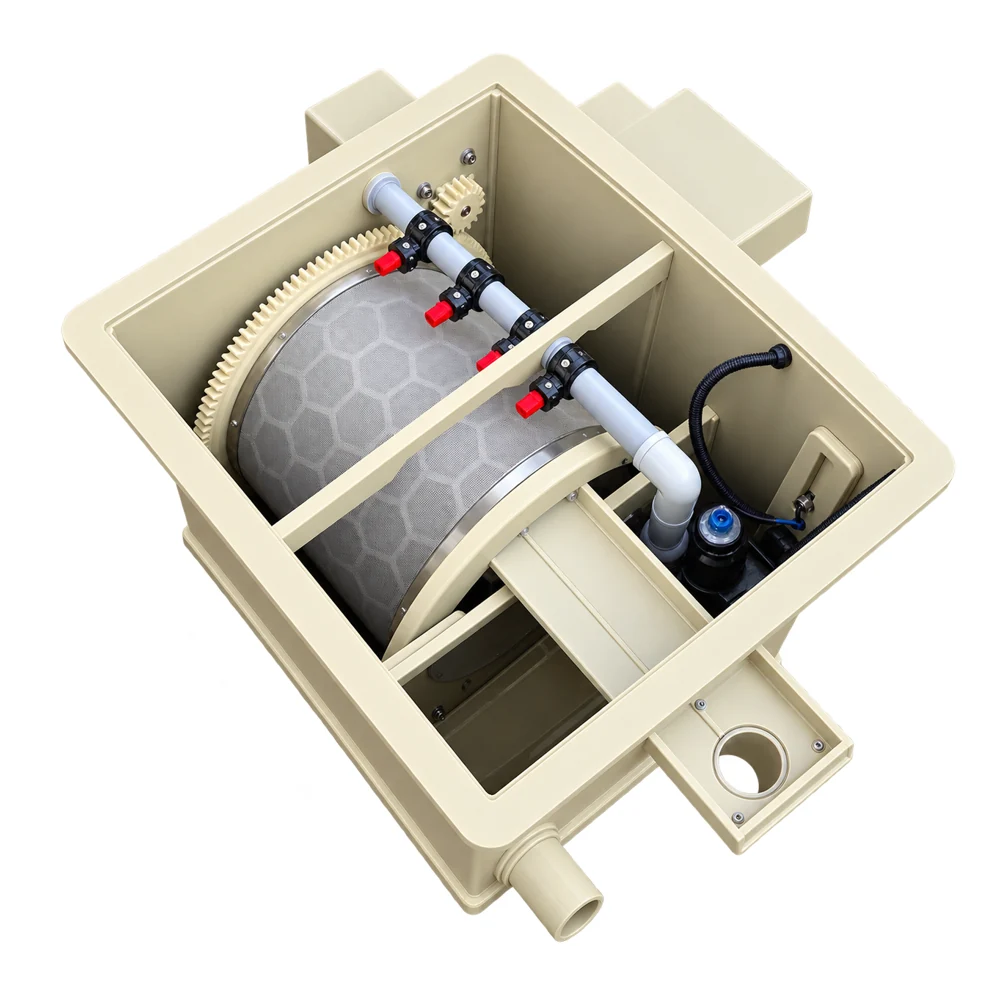
RDF-10
For medium koi ponds and small hatcheries. The open-top view shows the drum screen and spray bar.
View RDF-10 details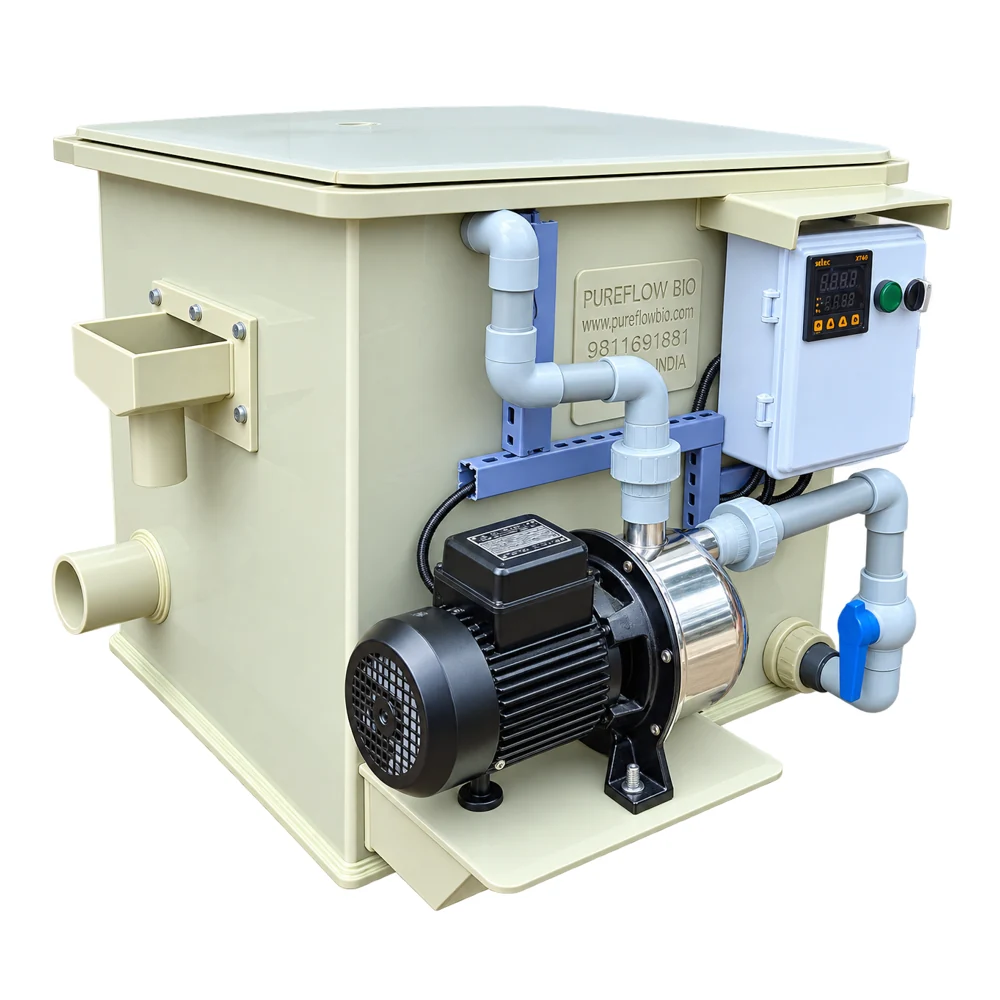
RDF-20
For larger ponds and nursery systems, with the wash pump, pipework and controls mounted together.
View RDF-20 details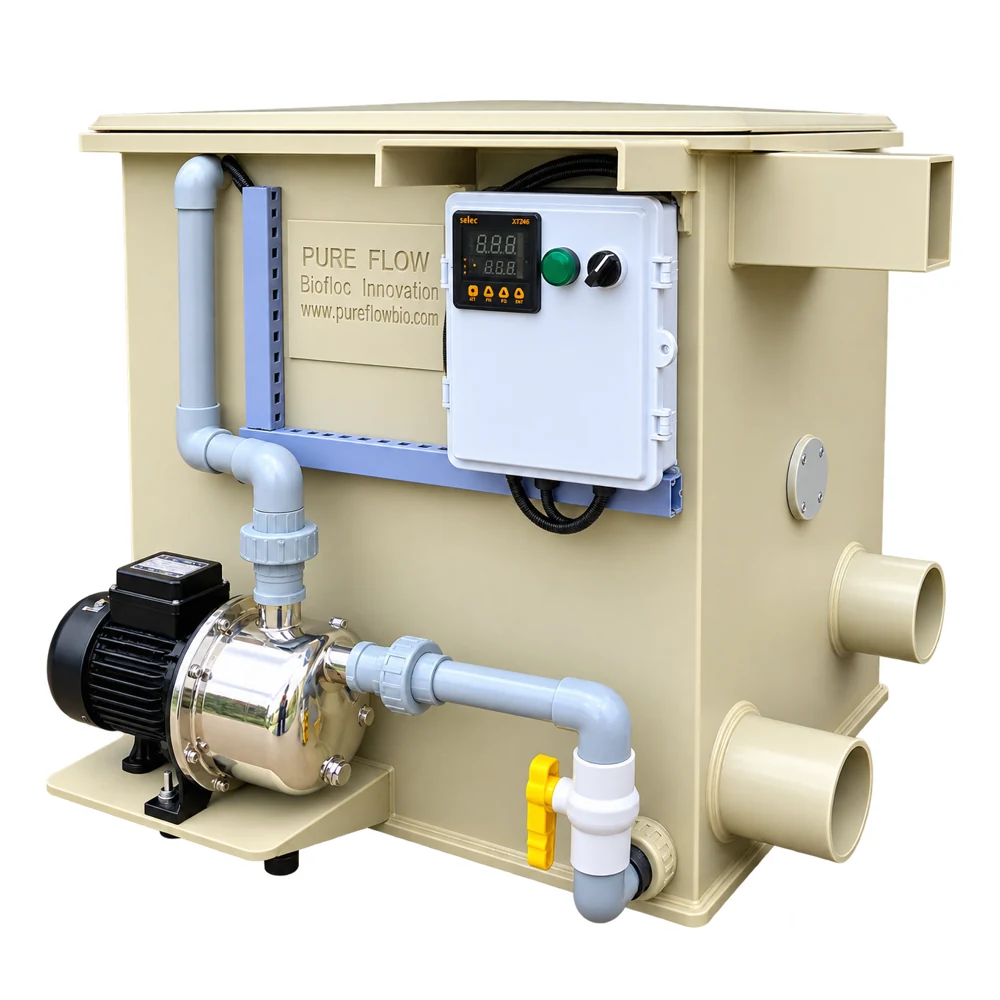
RDF-30
For large koi ponds and small RAS installations, with a closed lid, automatic wash system and side connections.
View RDF-30 details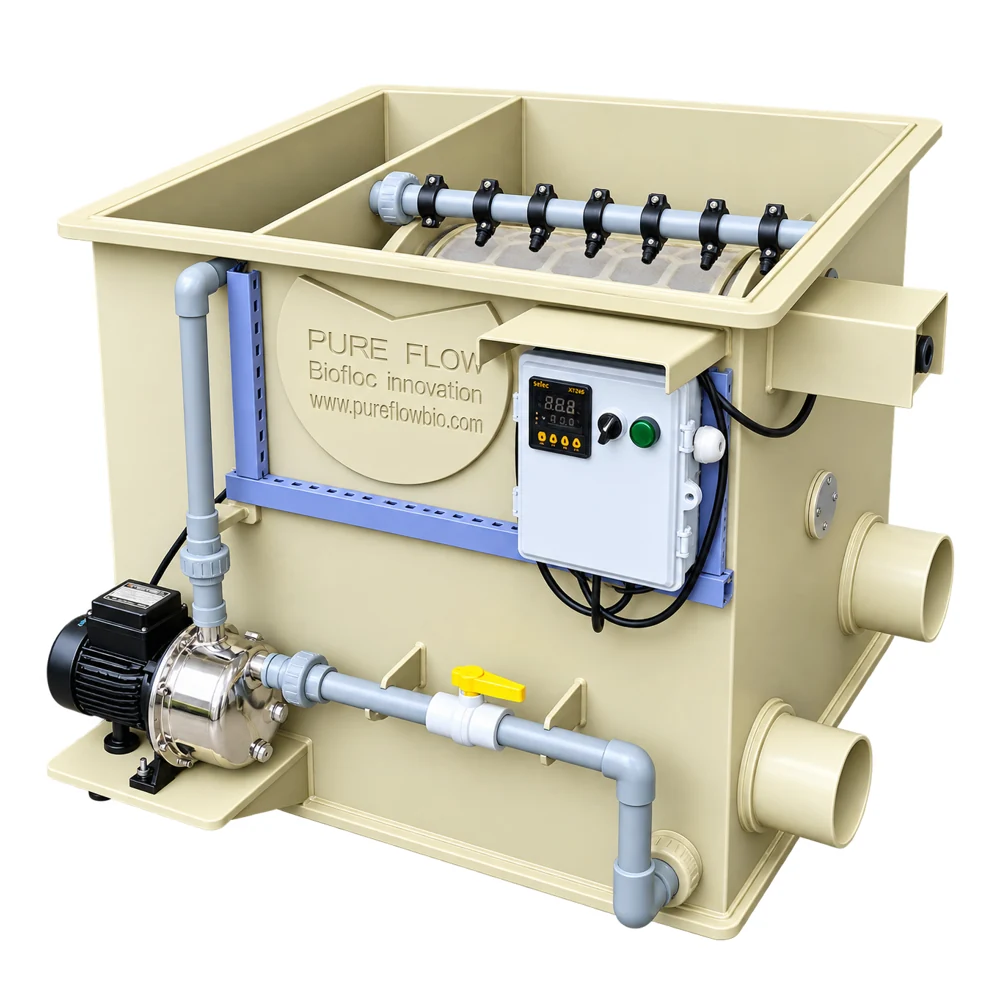
RDF-50
For fish farms and larger RAS installations. The open-top view shows the spray bar, wash pump and control panel.
View RDF-50 details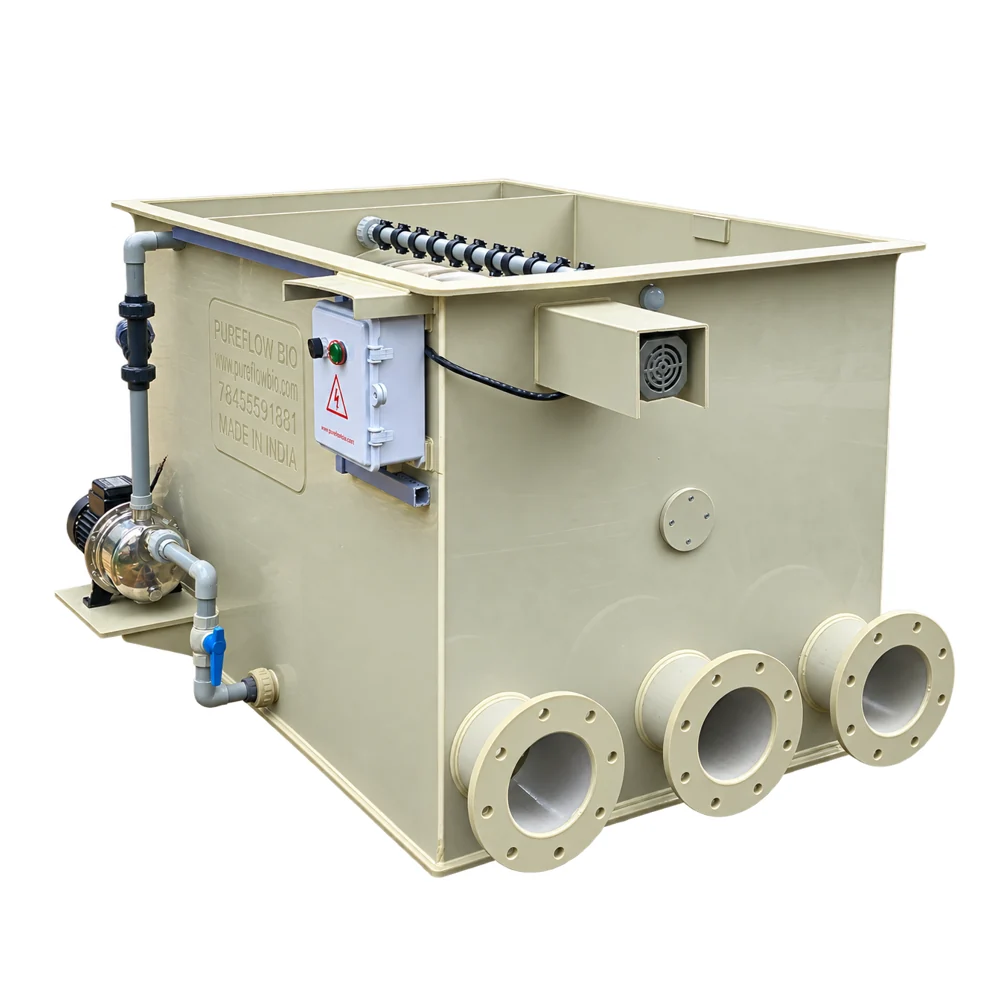
RDF-100
High-flow mechanical filtration for commercial fish farms and RAS, with automatic screen washing and flanged connections.
View RDF-100 details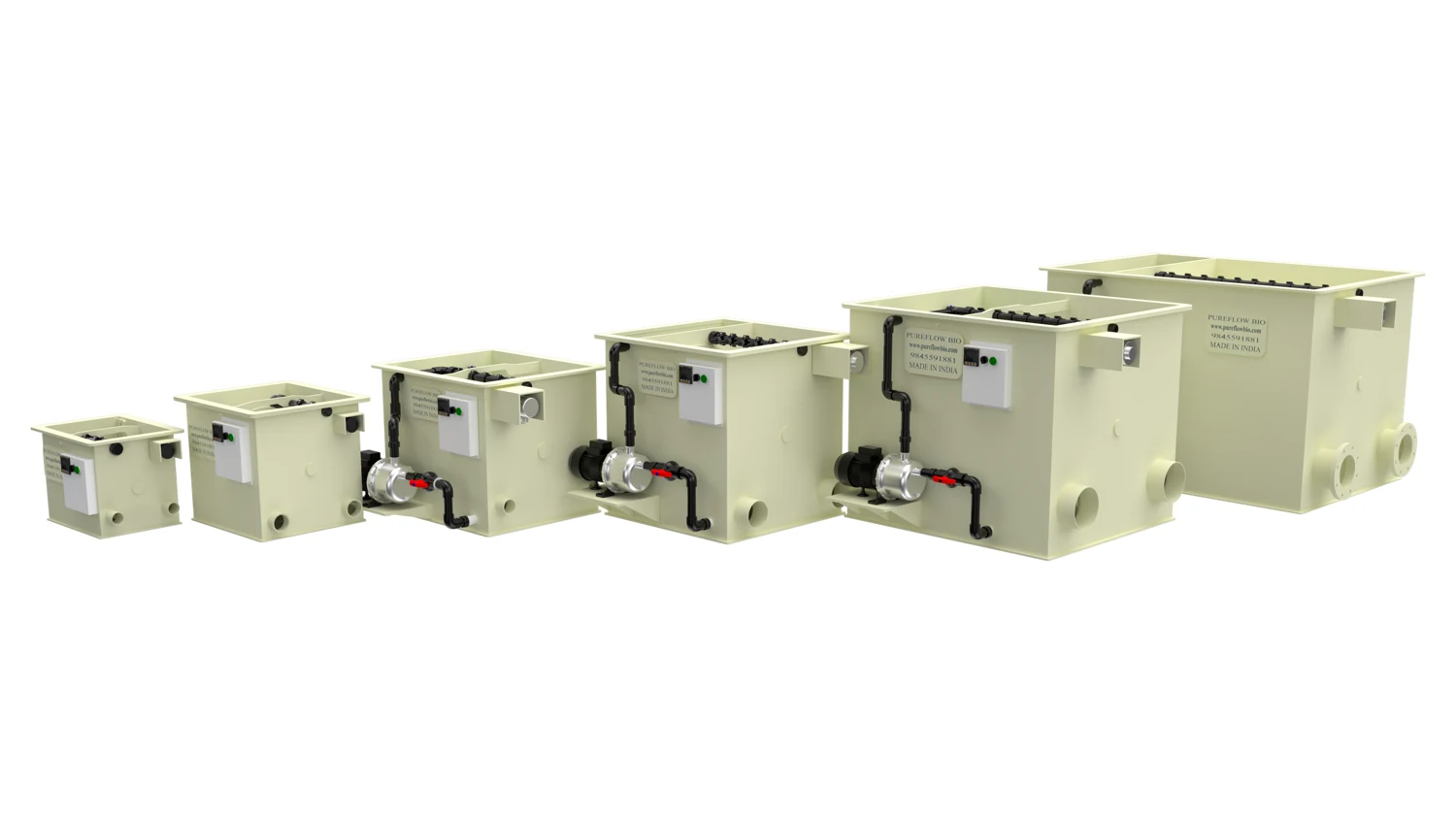
RDF-150 · RDF-200 · RDF-250 · RDF-300
Larger models for commercial farms and hatcheries with higher flow requirements. Compare each model’s dimensions and connections below.
*Catalogue maximum-flow listings are comparison points, not guaranteed operating flow at every mesh or solids load. Images are equipment illustrations; the selected model specification and agreed project drawing confirm dimensions, connections and supplied equipment. Looking for drum filters with UV? Compare the separate Pro range.
Rotary Drum Filter Models and Specifications
Source: supplied Standard RDF catalogue (printed pages 22–23) and Pro RDF with UV catalogue (printed pages 25–26). UV values are lamp watts × quantity.
Compare ten Standard RDF models and ten Pro models with UV. All values below follow the supplied Standard and Pro catalogues.
Standard RDF models
Scroll the table sideways to view all specifications.
| Model | L × W × H mm | Maximum flow m³/h | Listed volume m³ | Inlet mm × quantity | Outlet mm × quantity | Action |
|---|---|---|---|---|---|---|
| RDF-3 | 430 × 330 × 370 | 3 | 3 | 32 × 1 | 50 × 2 | Enquire ↗ |
| RDF-10 | 500 × 450 × 500 | 10 | 10 | 50 × 1 | 63 × 2 | Enquire ↗ |
| RDF-20 | 655 × 555 × 590 | 20 | 20 | 50 × 2 | 63 × 2 | Enquire ↗ |
| RDF-30 | 660 × 655 × 725 | 30 | 30 | 63 × 2 | 75 × 2 | Enquire ↗ |
| RDF-50 | 955 × 855 × 850 | 50 | 50 | 90 × 2 | 110 × 2 | Enquire ↗ |
| RDF-100 | 1280 × 930 × 910 | 100 | 100 | 110 × 2 | 160 × 2 | Enquire ↗ |
| RDF-150 | 1650 × 1050 × 1000 | 150 | 150 | 160 × 2 | 160 × 2 | Enquire ↗ |
| RDF-200 | 1850 × 1150 × 1100 | 200 | 200 | 200 × 2 | 200 × 2 | Enquire ↗ |
| RDF-250 | 2050 × 1250 × 1150 | 250 | 250 | 220 × 2 | 220 × 2 | Enquire ↗ |
| RDF-300 | 2350 × 1450 × 1350 | 300 | 300 | 250 × 2 | 250 × 2 | Enquire ↗ |
Pro models with UV
Scroll the table sideways to view all specifications.
| Model | L × W × H mm | Maximum flow m³/h | Listed volume m³ | Inlet mm × quantity | Outlet mm × quantity | UV listing Watts × quantity | Action |
|---|---|---|---|---|---|---|---|
| Pro RDF-3 | 430 × 330 × 370 | 3 | 3 | 32 × 1 | 50 × 2 | 11 × 2 | Enquire ↗ |
| Pro RDF-10 | 500 × 450 × 500 | 10 | 10 | 50 × 1 | 63 × 2 | 15 × 2 | Enquire ↗ |
| Pro RDF-20 | 655 × 555 × 590 | 20 | 20 | 50 × 2 | 63 × 2 | 30 × 2 | Enquire ↗ |
| Pro RDF-30 | 660 × 655 × 725 | 30 | 30 | 63 × 2 | 75 × 2 | 40 × 2 | Enquire ↗ |
| Pro RDF-50 | 955 × 855 × 850 | 50 | 50 | 90 × 2 | 110 × 2 | 60 × 2 | Enquire ↗ |
| Pro RDF-100 | 1280 × 930 × 910 | 100 | 100 | 110 × 2 | 160 × 2 | 80 × 2 | Enquire ↗ |
| Pro RDF-150 | 1650 × 1050 × 1000 | 150 | 150 | 160 × 2 | 160 × 2 | 90 × 2 | Enquire ↗ |
| Pro RDF-200 | 1850 × 1150 × 1100 | 200 | 200 | 200 × 2 | 200 × 2 | 100 × 2 | Enquire ↗ |
| Pro RDF-250 | 2050 × 1250 × 1150 | 250 | 250 | 220 × 2 | 220 × 2 | 100 × 4 | Enquire ↗ |
| Pro RDF-300 | 2350 × 1450 × 1350 | 300 | 300 | 250 × 2 | 250 × 2 | 100 × 5 | Enquire ↗ |
UV entries show lamp wattage × quantity. Confirm the treatment duty for your application. The supplied catalogues list matching dimensions and connections for the corresponding Standard and Pro model codes.
Custom equipment configuration
Dimensions and connection arrangements can be reviewed for your site. The quotation defines the approved changes.
SCADA integration
The catalogue lists SCADA integration. Agree signals, communication requirements and the control scope for your project.
Pro series with UV
Choose from ten Pro models with UV, as listed in the supplied Pro catalogue. Confirm lamp ratings and the required UV treatment duty before ordering.
Options are quoted separately unless expressly included. Suitability and included components are confirmed for the chosen series.
Project specification checklist
| Hydraulic duty | Peak filter flow, gravity-fed or pump-fed arrangement, inlet and outlet water levels, available head and bypass requirements. |
|---|---|
| Screen and solids | Catalogue screen: SS 316 grade 75-micron mesh. Confirm suspended-solids characteristics, feed input, expected loading and wash-cycle requirements. |
| Materials | Confirm body, screen, seals and pipework for freshwater or seawater duty. The published screen is SS 316; the drive gear is PP. |
| Backwash and drainage | Wash-water source, pressure, flow, waste outlet and drain capacity. |
| Electrical and controls | Drive motor, wash-pump ratings, voltage, phase, frequency, protection and control functions. |
| UV treatment, where selected | Lamp ratings, quantity, UV transmittance, design flow and treatment objective. |
| Installation and service | Footprint, service clearance, foundation, access to the screen and nozzles, operating instructions and spare parts. |
Specifications may change as equipment is updated. Confirm current technical data, regional electrical requirements and scope of supply in your quotation. Options are quoted separately unless expressly included.
Download Standard RDF Catalogue (PDF)Confirm the layout before the model
Gravity-Fed or Pump-Fed Drum Filter Installation?
The installation arrangement changes the water levels and pump position that must be coordinated. Confirm that the selected model and its installation drawing suit the proposed layout.
Start with the operating water levels
Confirm pond or tank water level, filter operating level, the available level difference and the route through the treatment train. Review gravity pipe runs, fittings, isolation and peak branch flow together.
Send us: a plan and section showing water levels, pipe sizes, lengths and pump position.
Start with the actual pump duty
Use the pump flow at the installed head, rather than its unrestricted catalogue flow. Check inlet delivery, the required outlet or return route, operating levels and how the system responds when the pump stops.
Send us: the pump duty, pipe route, filter position and proposed return arrangement.
Check these interfaces in either layout
- Wash water: source, required pressure and flow, plus the separate waste-drain capacity.
- Service access: clearance to inspect and remove the screen, clean nozzles and reach the drive and controls.
- Power and control: voltage, phase, frequency, protection and agreed control functions.
- The full treatment train: biological filtration, gas control and any selected UV treatment, reviewed for the application.
For a combined screening and biological chamber, compare the Combi drum filter configurations. Final operating levels and connections belong in the agreed project drawing.
How to Size a Rotary Drum Filter
If your system design specifies a turnover time, calculate treatment flow as Q = V ÷ T, where Q is m³/h, V is water volume in m³ and T is hours. Use the actual planned filter flow where it is already known.
Compare that flow with the catalogue, then review solids loading, mesh opening, operating water levels and cleaning demand. Tank volume alone is not a reliable final selection.
- Application, species and water volume.
- Required treatment flow and design turnover time.
- Daily feed, suspended solids and water conditions.
- Proposed screen opening, pipe levels and installation space.
- Wash-water supply, drainage and electrical requirements.
Drum Filter Flow & Model Calculator
Work out the flow through your drum filter and compare it with our catalogue models. Add your mesh size and water conditions so we can review the right configuration for your project.
How this calculator works
Flow from turnover: Q = water volume ÷ turnover time. Comparison flow: Q × (1 + your allowance ÷ 100). If inlet TSS is entered, the suspended-solids mass passing to the filter is Q × TSS ÷ 1,000 kg/hour. This is circulating inlet mass, not captured waste or daily solids production.
The first catalogue model at or above the comparison flow is shown for discussion. Changing mesh does not apply an assumed capacity multiplier. UV treatment performance is not assessed.
Research shows that screen selection depends on particle characteristics and operating conditions: Dolan et al., 2013; Gregersen et al., 2025; Tawfik et al., 2023. These studies inform the method; they do not certify Pureflow model capacities.
A clearer quotation starts with the duty
What Goes Into a Rotary Drum Filter Quotation?
A quotation needs the required duty and supply scope. Compare the same configuration, operating conditions and installation responsibilities when reviewing options.
Model and screen selection
State the range, required flow, screen opening and water conditions. Confirm the model dimensions and connections against the installation space.
Equipment and options
Confirm the drum, wash pump, controls and any selected UV equipment. Identify custom connections, monitoring and other options separately.
Delivery and installation
State the delivery location, site access and whether installation, commissioning or wider system integration is required.
Equipment dispatch is within 15 working days after order confirmation. Transit, installation and commissioning are agreed separately. Warranty terms and exclusions are set out below and confirmed in the quotation.
Send your requirements
Request a Rotary Drum Filter Quote
Share your preferred RDF model, treatment flow and installation requirements. Our team will review your requirements and respond using the contact details you provide.
Why Pureflow Bio
Made in India
Work directly with an Indian manufacturer of aquaculture and aquarium filtration equipment, with worldwide service and support.
Equipment and complete systems
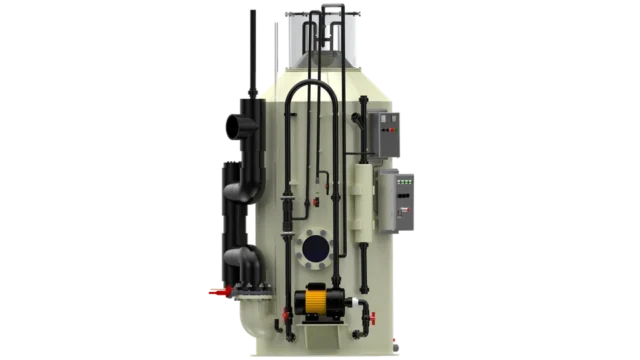
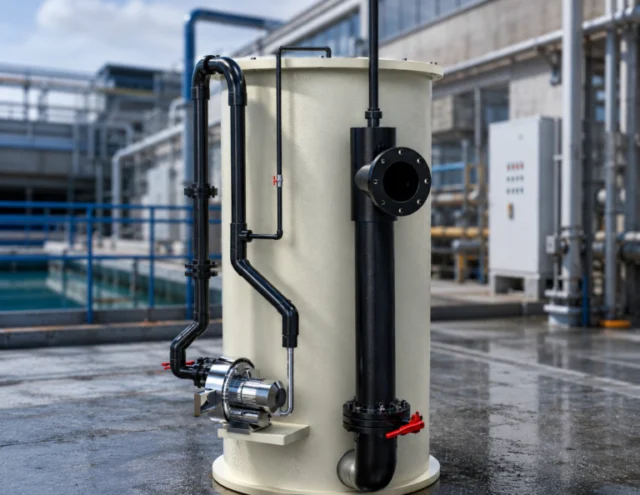
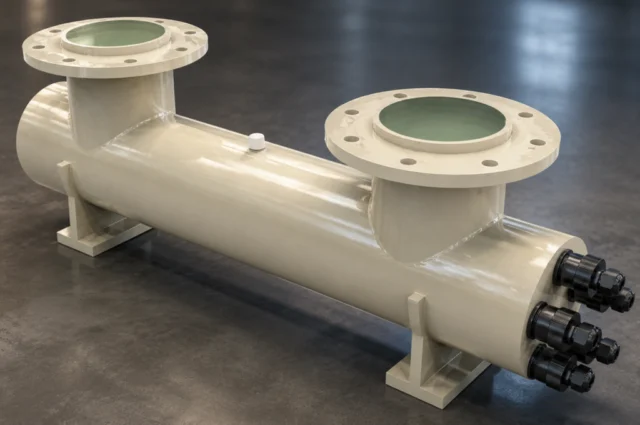
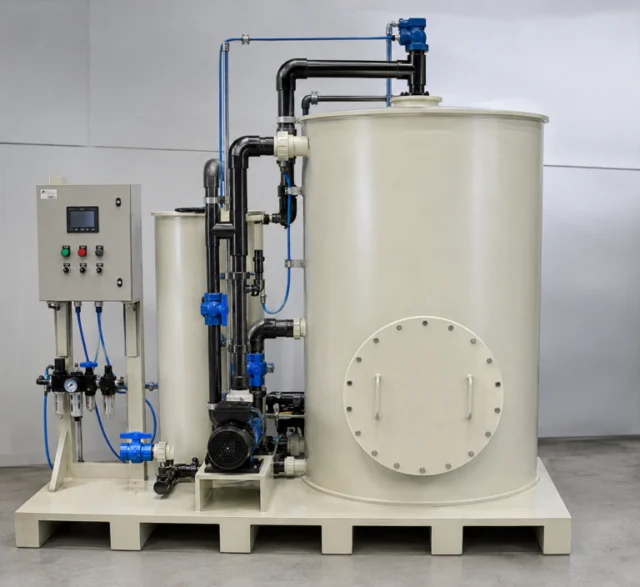
Combine drum filtration with biofilters, UV, ozone, tanks and turnkey project support.
Built around the project
Confirm dimensions, connections, controls and installation responsibilities for your site before manufacture.
Your quotation confirms warranty, dispatch and installation scope.
Warranty and Dispatch
Warranty and service
One-year warranty from the invoice date covers the filter body, pump and electrical components. Exclusions include normal wear, dry running, voltage issues, improper operation and physical damage. Keep the invoice and operating records with the equipment documentation.
After-sales support is available for installed equipment. Contact Pureflow Bio with your model, invoice details and a description of the issue.
Manufacturing and dispatch
Dispatch is within 15 working days after order confirmation. Your quotation confirms the configuration, scope of supply and delivery terms.
Dispatch is the date equipment leaves our facility. Transit time depends on the destination.
Rotary Drum Filter FAQs
What does a rotary drum filter actually do?
It strains fish waste and uneaten feed out of the water through a fine stainless steel screen, then washes that dirt off the screen and sends it to drain automatically. Because solids leave the system within minutes, they don't sit in a filter rotting away and releasing ammonia, nitrate and phosphate back into the water.
Is a drum filter worth it compared with a sieve or bead filter?
For most koi ponds and every fish farm we work with, yes. A sieve or bead filter traps the same dirt but someone has to clean it, and until they do the waste keeps breaking down inside. A drum filter cleans itself whenever its screen gets loaded, so water stays clearer, the biofilter has less work to do and you spend far less time on maintenance.
What screen size do your drum filters use?
Our Standard and Pro drum filters use a 75-micron screen in SS 316 stainless steel. That is fine enough to give koi-show clarity and to protect a RAS biofilter, without washing so often that you waste a lot of water. Finer screens catch a little more but wash more often; coarser screens wash less but let more fine dirt through.
How do I choose the right size of drum filter?
Size it by the flow you will actually push through it, not by pond volume. Work out your pump or gravity flow in m³/h, then pick a model whose rated flow sits comfortably above it. If you feed heavily, as on a fish farm, go one size up, because more solids means the screen loads faster.
What's the difference between the Standard and Pro drum filters?
They share the same body sizes, flows and connections. The Pro version adds UV lamps built into the unit, which saves you buying and plumbing a separate UV steriliser. If you already have UV, or want to size it separately, the Standard model is the simpler choice.
Should I go gravity-fed or pump-fed?
Gravity-fed is better if you are building a new pond with a bottom drain: water flows into the filter by itself, waste arrives whole and the pump only handles clean water. Pump-fed suits existing ponds without a bottom drain, because the filter can sit above water level, although the pump chops up some waste before it reaches the screen.
Why does my drum filter keep washing all the time?
Usually it is one of four things: clogged spray nozzles, a dirty or badly set level sensor, more flow than the model is rated for, or simply too much feed going in. Clean the nozzles and sensor first. If it still washes constantly, check your flow and feeding, as the filter may be undersized for the load.
What maintenance does a drum filter need?
Very little. Check the spray nozzles every few weeks and clear any blockage, keep the level sensor clean, and look over the screen for damage. Make sure the waste line runs freely to drain. Stainless screens last for years, but replace one straight away if it tears, because dirt will bypass it.
Need a Complete Filtration System?
Pureflow Bio manufactures filtration equipment and delivers turnkey aquaculture and aquarium projects. Discuss tanks, drum filters, biofilters, UV, ozone and system integration in one project enquiry.