
Pureflow Bio · Manufacturer in India
Moving Bed Biofilters (MBBR)
Moving bed biofilters use moving carrier media to support biological treatment in an aerated vessel. Pureflow Bio manufactures MBBR equipment in India for RAS, hatcheries and aquarium life support.
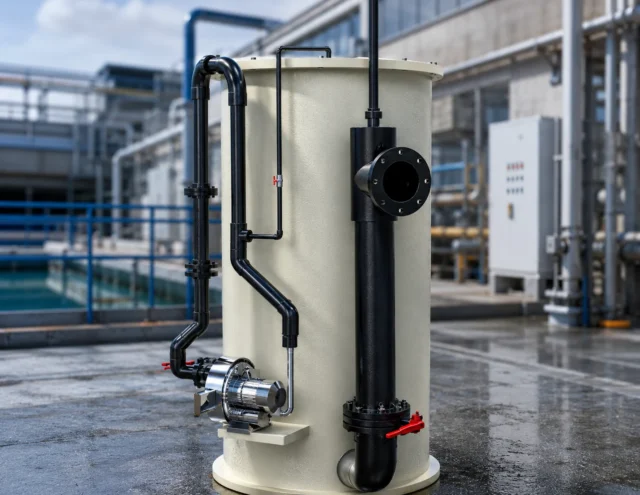
What are Moving Bed Biofilters (MBBR)?
A moving bed biofilter uses aerated, moving media to support biological conversion of feed-derived ammonia under the specified operating conditions.
Moving Bed Biofilters (MBBR) applications
RAS fish farms
Best for a biological stage sized against daily feed and ammonia load.
Hatcheries
Best for defined water conditions with a commissioning and maturation plan.
Public aquariums and research systems
Best for exhibit-specific or experimental biological duty.
How Moving Bed Biofilters (MBBR) work
Feed prefiltered water
Remove the agreed solids load before water enters the reactor.
Move and aerate the media
The selected aeration and mixing arrangement keeps carrier media in contact with the water.
Retain media and return water
Outlet screens retain the carriers while treated water passes to the next stage.
Moving Bed Biofilters (MBBR) features and benefits
Moving carrier media
Provides surfaces for an established treatment biofilm.
Aeration arrangement
Supports mixing and oxygen supply when selected for the duty.
Media retention
Keeps carriers within the reactor through the agreed outlet screen.
Published hydraulic dimensions
Helps coordinate the vessel, pipework and installation levels.
Moving Bed Biofilters (MBBR) gallery
Explore equipment views and configuration examples. Images do not define the complete scope of supply or document a verified customer installation.
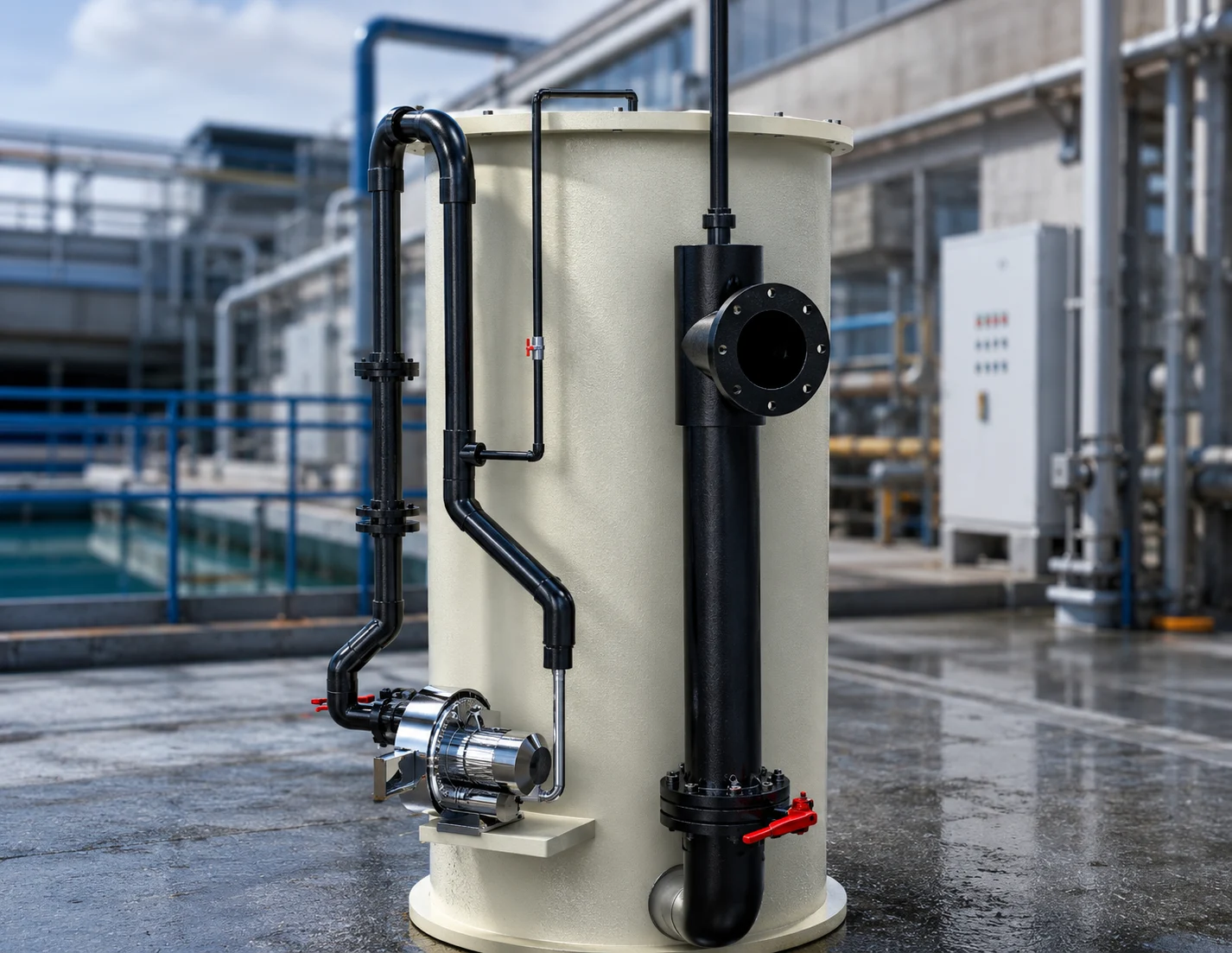
Moving Bed Biofilters (MBBR) — assembly view
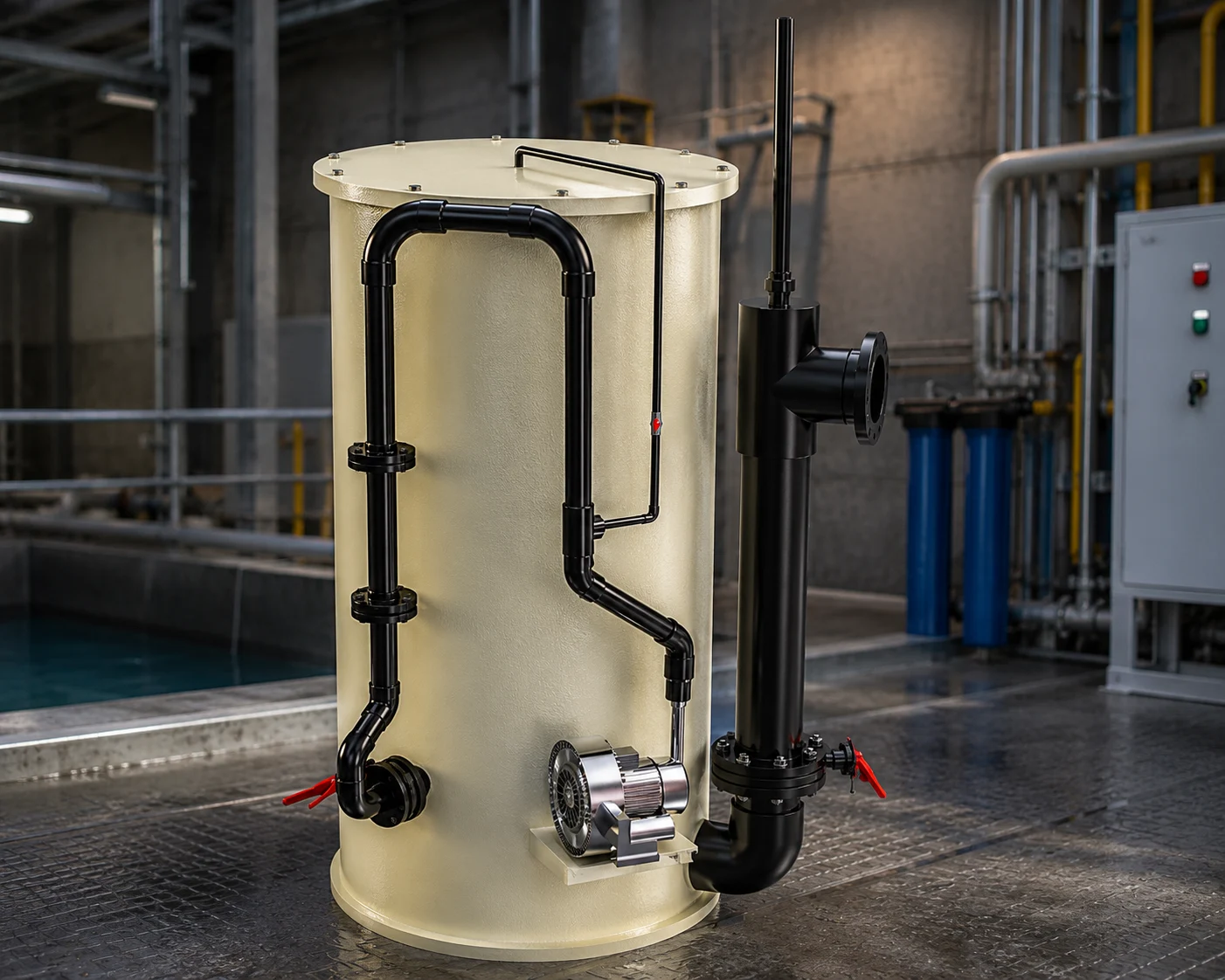
Moving Bed Biofilters (MBBR) — configuration example
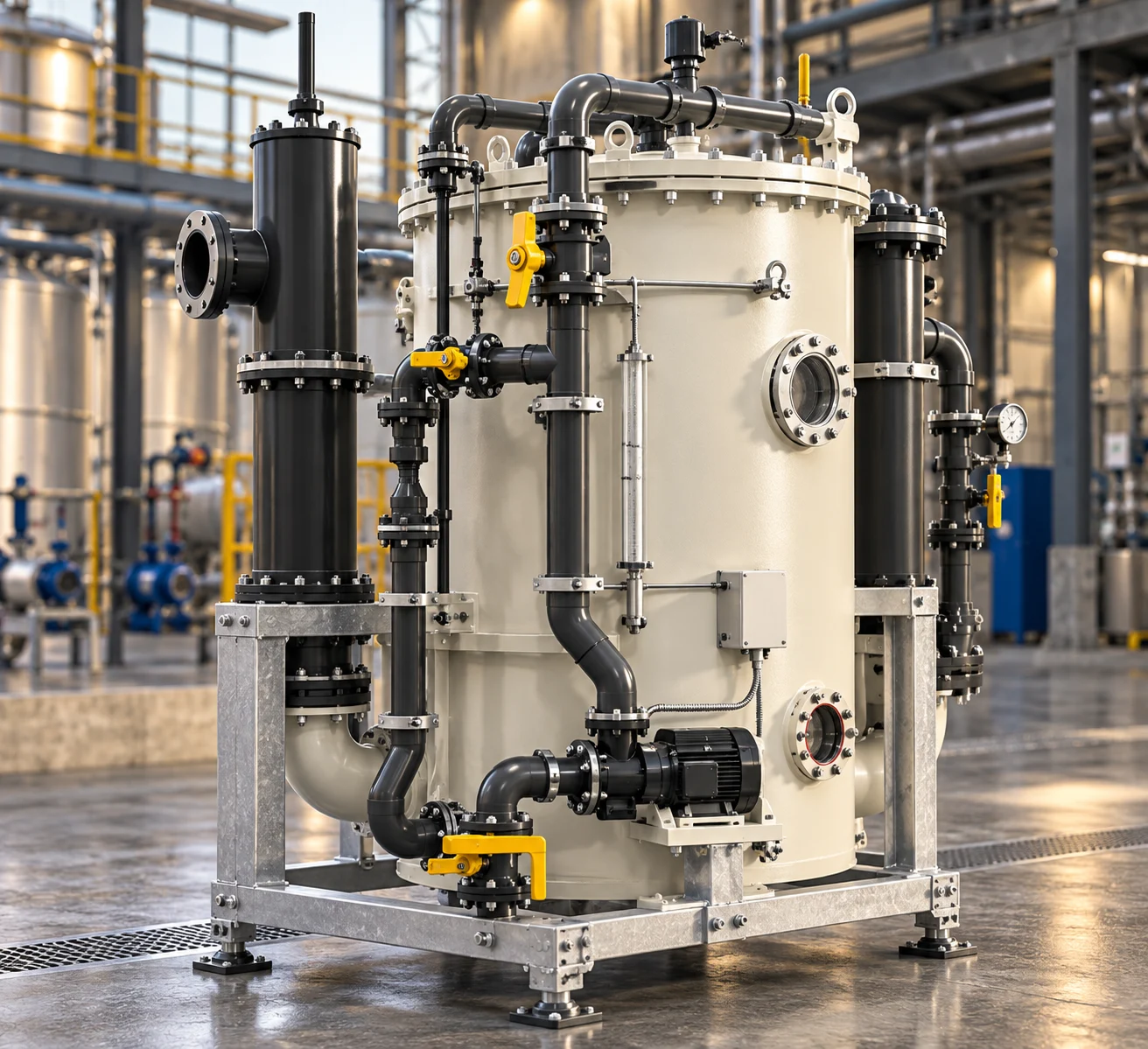
Moving Bed Biofilters (MBBR) — equipment detail
Moving Bed Biofilters (MBBR) models and specifications
PF MBB reactor series
| Model | Diameter (mm) | Height (mm) | Inlet (mm) | Outlet (mm) | Maximum water flow (m³/h) | Maximum air flow at 50 Hz (m³/h) | Footprint depth (mm) | Footprint width (mm) | Outlet level (mm) | Inlet level (mm) | Enquiry |
|---|---|---|---|---|---|---|---|---|---|---|---|
| PF MBB-20 | 450 | 1650 | 90 | 90 | 20 | 19 | 930 | 830 | 1200 | 1250 | Enquire about PF MBB-20 |
| PF MBB-60 | 730 | 1850 | 110 | 110 | 60 | 30 | 1150 | 1450 | 1350 | 1500 | Enquire about PF MBB-60 |
| PF MBB-215 | 950 | 2100 | 220 | 220 | 210 | 50 | 1400 | 1650 | 1350 | 1550 | Enquire about PF MBB-215 |
| PF MBB-275 | 1150 | 2300 | 250 | 250 | 280 | 120 | 1700 | 2215 | 1450 | 1750 | Enquire about PF MBB-275 |
Configuration and supply details
Confirm materials, connection standard, dimensions, electrical requirements and included components for the selected equipment. The quotation defines the approved scope.
Optional components
- Media, aeration and controls to agreed scope
Options are supplied only when included in the agreed quotation.
Engineering & procurement
MBBR sizing starts with ammonia load
The PF MBB model schedule lists hydraulic and air-flow values. Biological treatment must also be checked against a documented TAN-N load, media specification and operating conditions.
Calculate the biological load separately
Daily TAN-N load = peak feed (kg/day) × the project’s TAN-N generation factor (g/kg feed). Effective media area = TAN-N load (g/day) ÷ the selected removal loading (g TAN-N/m²/day). Both factors need an appropriate design or test basis.
Convert media area into an installable system
Required media volume depends on effective specific surface area. Working reactor volume then depends on the permitted media fill fraction. Confirm media movement, oxygen delivery, alkalinity, retention screens and hydraulic behaviour as part of the arrangement.
| Selection item | Specify or verify | Why it changes the selection |
|---|---|---|
| TAN-N and feed basis | Peak feed, feed composition and generation factor | Hydraulic flow is not a biological capacity rating. |
| Design conditions | Temperature, salinity, pH, dissolved oxygen and alkalinity | A removal rate is meaningful only with its operating conditions. |
| Media basis | Media type, effective surface area, working fill and allowable loading | Total advertised surface area may differ from the effective design area. |
| Aeration and maturation | Air delivery at working pressure, mixing and commissioning plan | Air-flow capacity alone does not verify oxygen transfer or an immediately mature biofilter. |
Coordinate upstream mechanical screening and downstream gas management with the biological stage.
Discuss the technical requirements →How to select Moving Bed Biofilters (MBBR)
MBBR selection needs the ammonia load and media design basis as well as hydraulic flow.
Selection example
At a proposed water flow of 60 m³/h, PF MBB-60 is listed at 60 m³/h with a maximum air-flow listing of 30 m³/h at 50 Hz. This does not establish its TAN removal capacity or the blower pressure required.
- Peak daily feed and TAN load
- Water temperature and salinity
- Dissolved oxygen and alkalinity
- Media type, fill and design loading
- Hydraulic flow and operating levels
Build your moving bed biofilters (mbbr) enquiry brief
Record your design requirements for review. This tool does not calculate an unverified treatment capacity or automatically approve a model.
Moving Bed Biofilters (MBBR) installation and maintenance
Installation and integration
Check inlet and outlet elevations, support loading and access to the retention screens. Confirm the blower duty and pipe losses against the selected installation.
Routine maintenance
Monitor water chemistry during maturation and loading changes. Inspect aeration, carrier movement and media-retention screens using the supplied operating instructions.
Warranty, dispatch and installation
One-year equipment warranty
Confirm coverage and operating requirements in the quotation.
Dispatch within 15 working days
Dispatch follows order confirmation. Transport and site delivery time are additional.
Made in India
Manufactured by Pureflow Bio in India. Installation, commissioning and service across India are agreed for your project.
For complete turnkey projects, confirm the project schedule, utilities, site preparation, installation and commissioning responsibilities separately.
Request an MBBR biofilter quote
Share your application, preferred model and site requirements. Pureflow Bio will confirm the selected configuration and scope in your quotation.
Moving Bed Biofilters (MBBR) FAQs
What is a moving bed biofilter (MBBR)?
It is a tank part-filled with small plastic carriers that tumble around in aerated water. Nitrifying bacteria grow on the carriers and convert toxic ammonia into nitrite and then much less harmful nitrate. The constant movement keeps the media from clogging.
How much media do I need?
It depends on your daily feed, since ammonia comes from feed, and on water temperature and the media's surface area. Most MBBR tanks are filled to around 40 to 60 percent with media so it can still move freely. We size the reactor from your feed rate.
How long does a new MBBR take to start working?
Usually four to eight weeks for the bacteria to establish, a little faster in warm water. Start with a light stocking, feed sparingly and test ammonia and nitrite regularly. Seeding with media from a running system speeds things up.
Why choose an MBBR over a trickle or fixed-bed filter?
MBBRs are compact, self-cleaning and handle heavy loads well, which is why they're common in RAS. Trickle filters strip more carbon dioxide and need no blower, but take more height. Many systems use both.
What happens if the air stops?
The media stops moving and the bacteria run short of oxygen, so ammonia removal drops quickly. Keep a backup blower or an emergency air supply, and fit an alarm on air pressure if your stock is valuable.
Can I use an MBBR in a koi pond?
Yes. Moving bed filters are popular with koi keepers because they're low maintenance and very effective once established. Put a drum filter before it so it isn't loaded with solids.
Related equipment
Plan your complete aquaculture or aquarium system
Connect moving bed biofilters (mbbr) to the wider treatment process
Discuss equipment integration, utilities and a coordinated project scope with Pureflow Bio.