
Pureflow Bio · Integrated pond filtration
Combi Drum Filters for Koi Ponds, Hatcheries & RAS
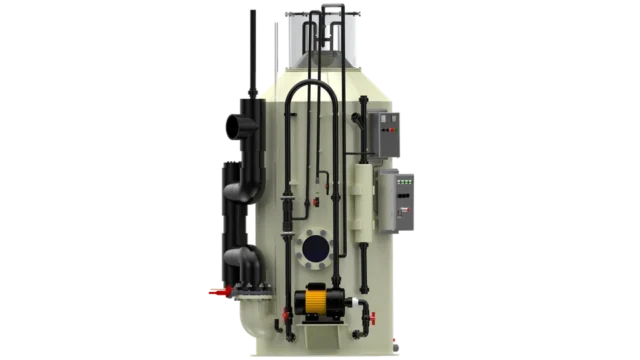
Combine microscreen drum filtration and a biological treatment chamber in one coordinated layout. Pureflow Bio is a combi drum filter manufacturer in India for koi ponds, ornamental ponds and aquaculture projects.
Match the mechanical stage to your water flow and solids load. Then confirm the biochamber, media, aeration and any UV option for your feeding and treatment needs.
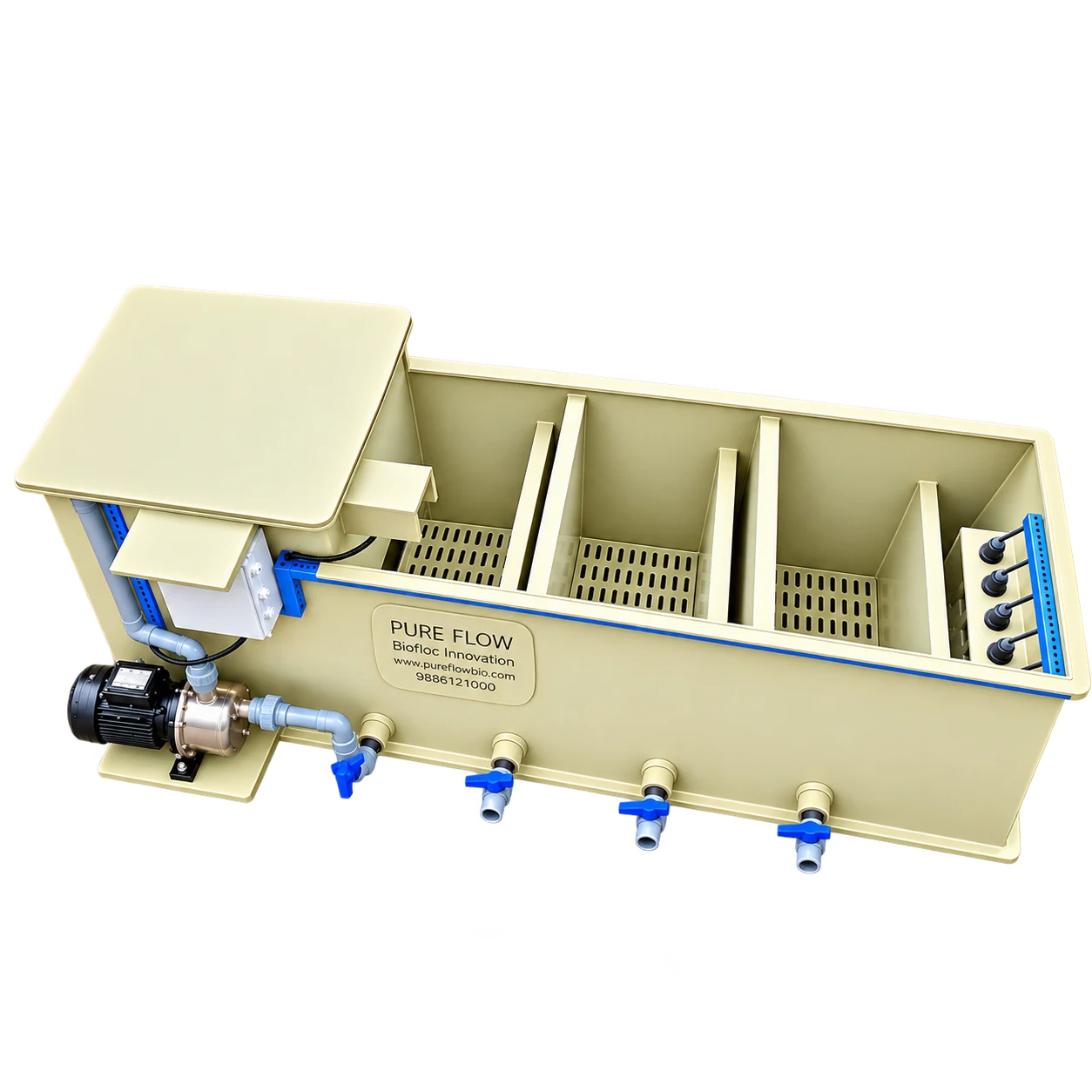
Three Combi Drum Filter ranges
8 models
Pump Feed CRDF
Automatic drum screening and biological filtration in a pump-fed combi drum filter layout. Choose from eight CRDF models for koi ponds, ornamental ponds and aquaculture filter circuits, with catalogue maximum flows from 3 to 100 m³/h.
Explore Pump Feed CRDF →6 models
Gravity Feed CRDF
A gravity-fed combi drum filter range with automatic drum screening and biological treatment chambers. Compare six GCRDF models from 10 to 100 m³/h catalogue maximum flow, with model-specific inlet, outlet and UV listings.
Explore Gravity Feed CRDF →6 models
Pro Series CRDF
The Pro Series pump-fed combi range combines drum screening, biological chambers and three-lamp UV listings across six models. Compare 10–100 m³/h catalogue maximum flows with the dedicated Pro dimensions and connections.
Explore Pro Series CRDF →What Is a Combi Drum Filter?
A combi drum filter is an integrated drum filter and biological filter for koi ponds and aquaculture systems. It brings two treatment stages together: a rotating screen for suspended solids and a chamber for biological treatment. It allows the stages to be planned as one equipment arrangement.
First, the automatic drum screen separates material that the selected mesh can retain. The biological stage then supports treatment of dissolved waste, provided the media and operating conditions suit the load. The biological chamber can use fixed-bed media or moving-bed media (MBBR).
UV is a separate option to confirm. Therefore, check the actual process order and included components against the selected configuration.
Combi Drum Filter Applications
Koi and ornamental ponds
For a koi pond, coordinate solids removal and biological treatment around pond flow and feeding. Also allow access for screen cleaning and media maintenance.
Public aquarium and oceanarium projects
Review the unit as part of the complete life support system for each exhibit. Match water chemistry, drainage and treatment needs to the selected configuration.
Fish farm, hatchery and research systems
Plan each fish farm, hatchery or research system around actual flow, daily feed and biological duty. For larger recirculating aquaculture systems (RAS), discuss a custom or multi-unit arrangement. Broodstock holding, nursery and marine systems differ, so a screen or UV choice for adult fish should not be assumed suitable for eggs or larvae without checking.
Mechanical and biological stages
How a Combi Drum Filter Works
Screen suspended solids
Water passes through the drum screen. Particles retained by the selected mesh stay on the screen until cleaning removes them.
Backwash solids to waste
The automatic backwash cleaning arrangement washes captured material into the waste route. Confirm the trigger, wash-water supply and controls for the selected unit.
Support biological treatment
Water passes through the agreed biological stage before returning to the system. In addition, any UV stage operates within its own specified conditions.
The approved drawing confirms the actual process order, operating levels and return-pump arrangement.
Combi Drum Filter Features and Project Benefits
Coordinated filter layout
Plan the drum, biochamber and connections together. As a result, the equipment can be matched to the available installation space.
Screen-cleaning arrangement
The automatic backwash system removes retained solids to the waste outlet. However, routine inspection of the screen, nozzles and drain is still needed.
Biological chamber
Choose fixed-bed or moving-bed (MBBR) media, then define the fill volume and aeration against the treatment load. Then agree the commissioning and water-quality checks.
UV and control options
Discuss UV, sensors and control requirements before ordering. These components are included only when stated in the quotation.
Accessible service components
Check clearance around the drive, screen, pumps and chamber. This makes the planned inspection and maintenance tasks easier to carry out.
Project-specific configuration
Review inlet and outlet levels, materials and electrical supply for the site. Finally, confirm the equipment arrangement before manufacture.
Explore the models
Choose a model to see its complete supplied image gallery and technical specifications. Pro models and Gravity models without separate image folders use clearly labelled catalogue series illustrations.
Pump Feed CRDF
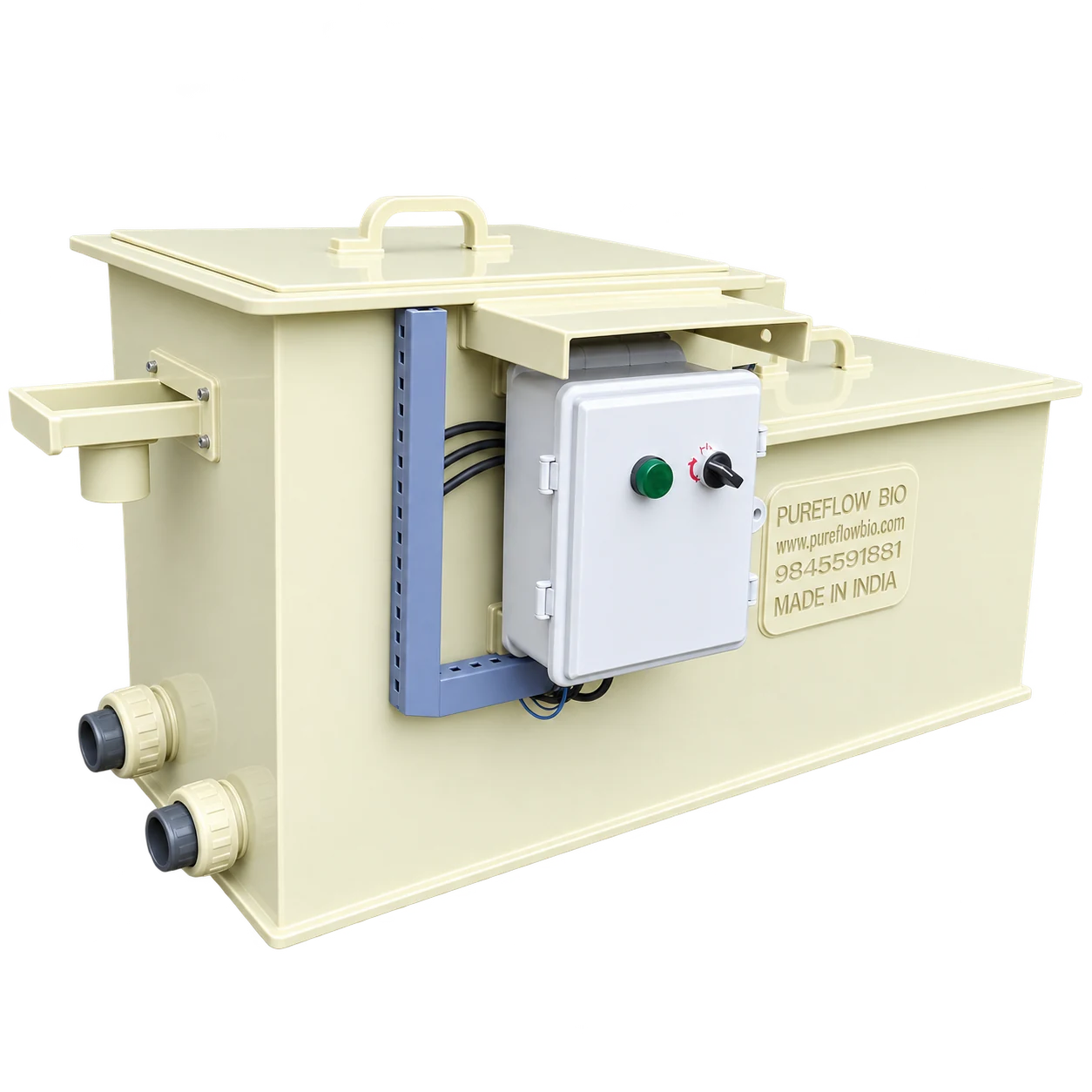
3 m³/h · 20 W × 2 UV
CRDF-3
Pump-fed combi filtration for compact koi ponds and quarantine circuits, with a 3 m³/h catalogue maximum-flow listing.
View CRDF-3 details →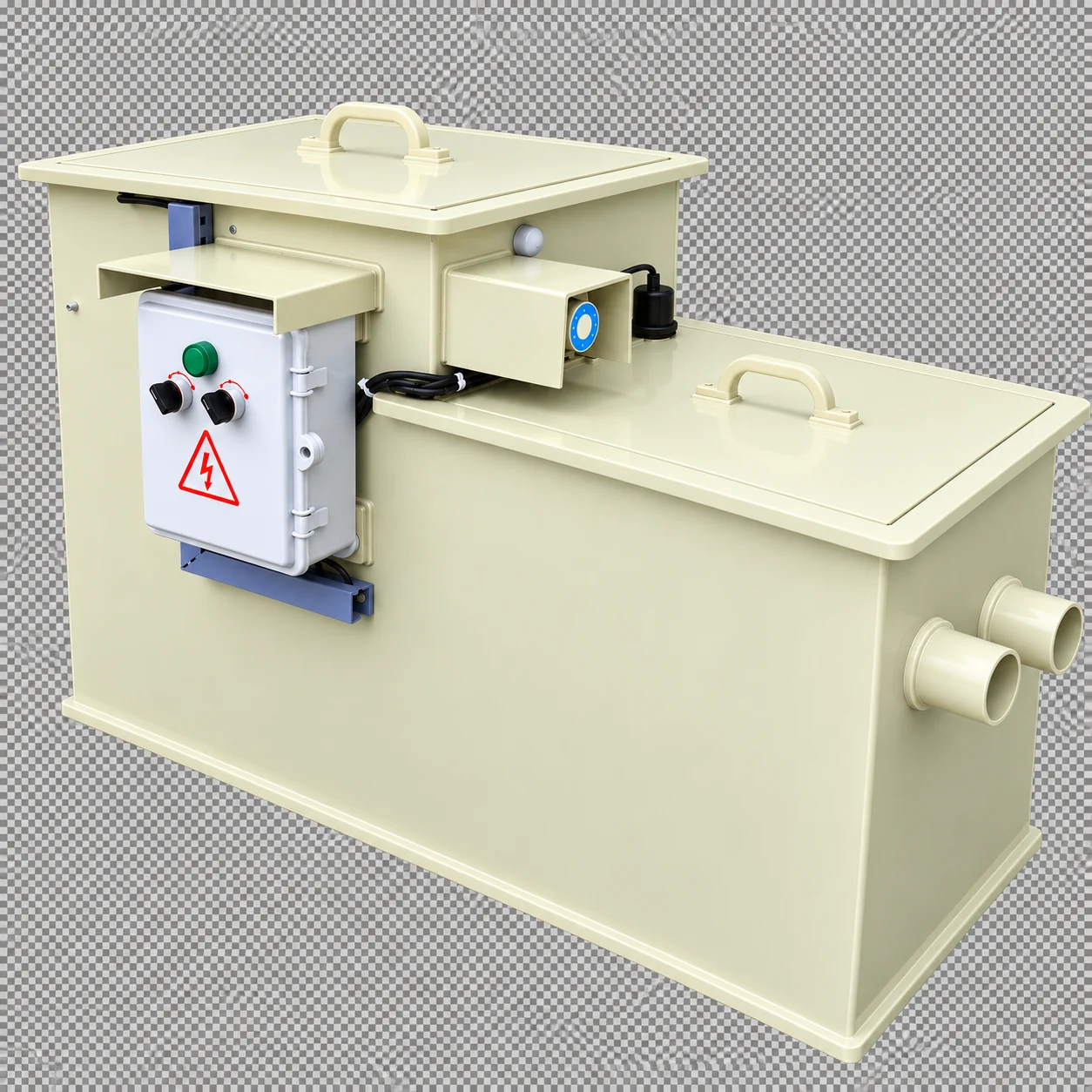
5 m³/h · 30 W × 2 UV
CRDF-5
Pump-fed combi filtration for compact koi ponds and quarantine circuits, with a 5 m³/h catalogue maximum-flow listing.
View CRDF-5 details →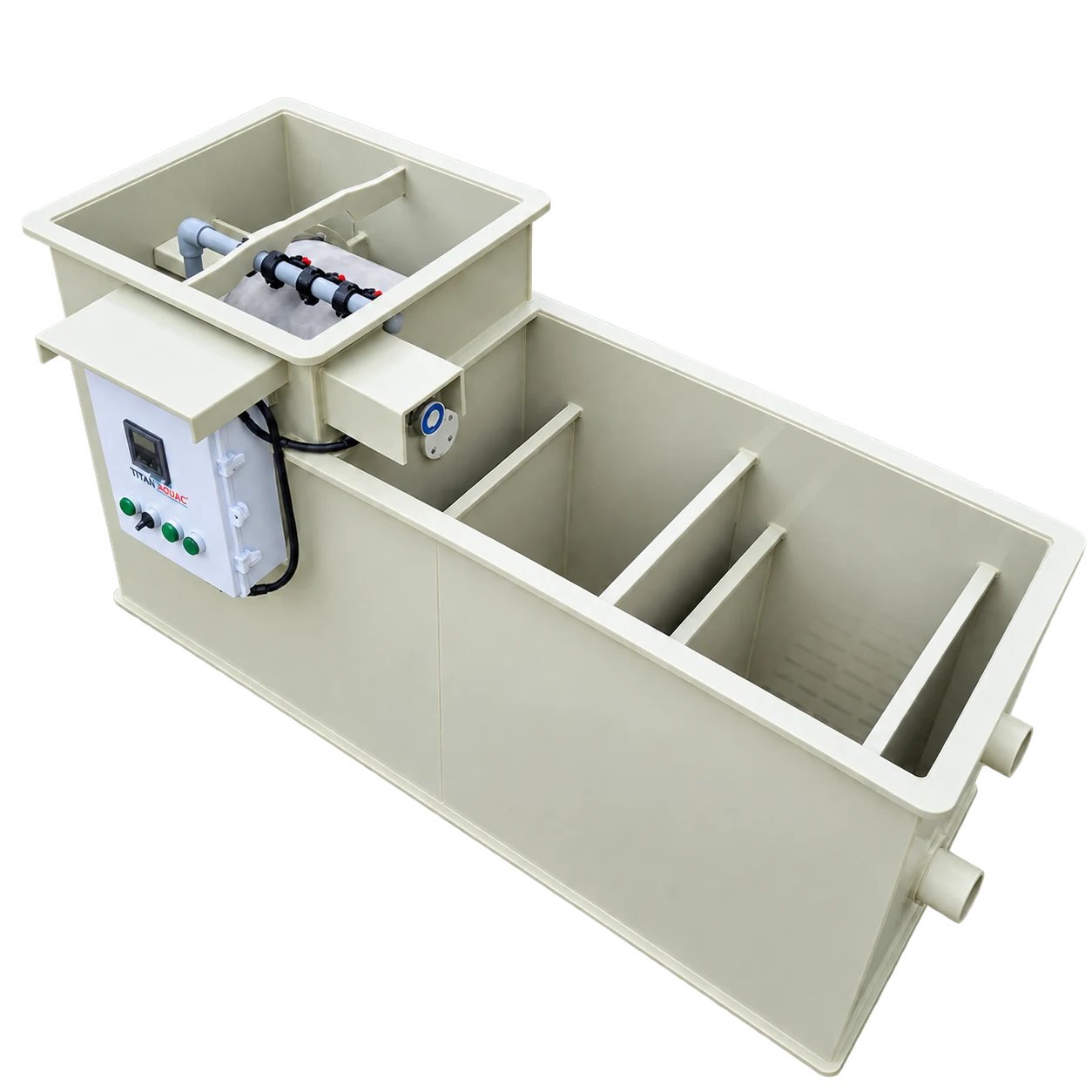
10 m³/h · 30 W × 2 UV
CRDF-10
Pump-fed combi filtration for koi ponds and small recirculating systems, with a 10 m³/h catalogue maximum-flow listing.
View CRDF-10 details →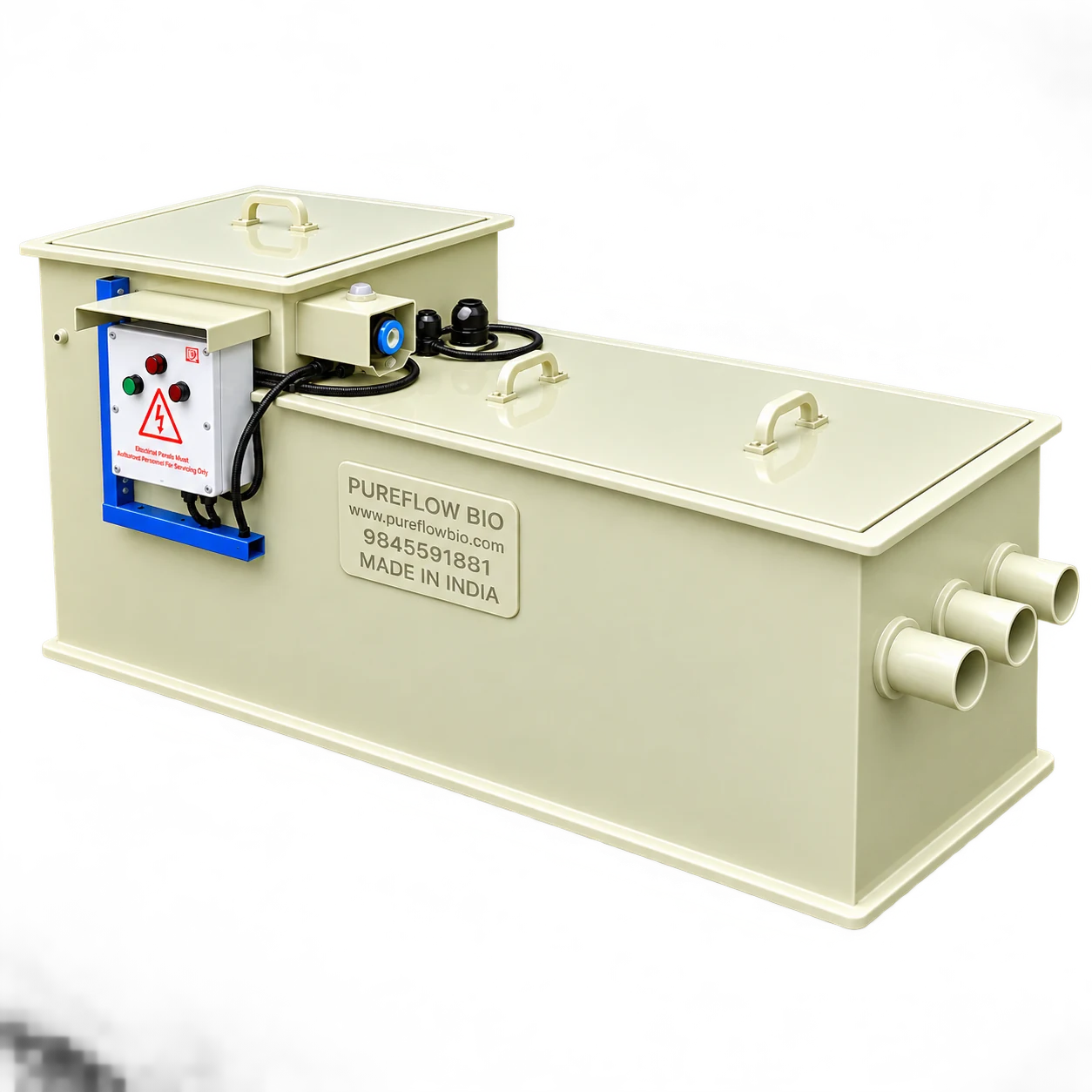
15 m³/h · 40 W × 2 UV
CRDF-15
Pump-fed combi filtration for koi ponds and small recirculating systems, with a 15 m³/h catalogue maximum-flow listing.
View CRDF-15 details →25 m³/h · 50 W × 2 UV
CRDF-25
Pump-fed combi filtration for larger koi ponds and nursery filter circuits, with a 25 m³/h catalogue maximum-flow listing.
View CRDF-25 details →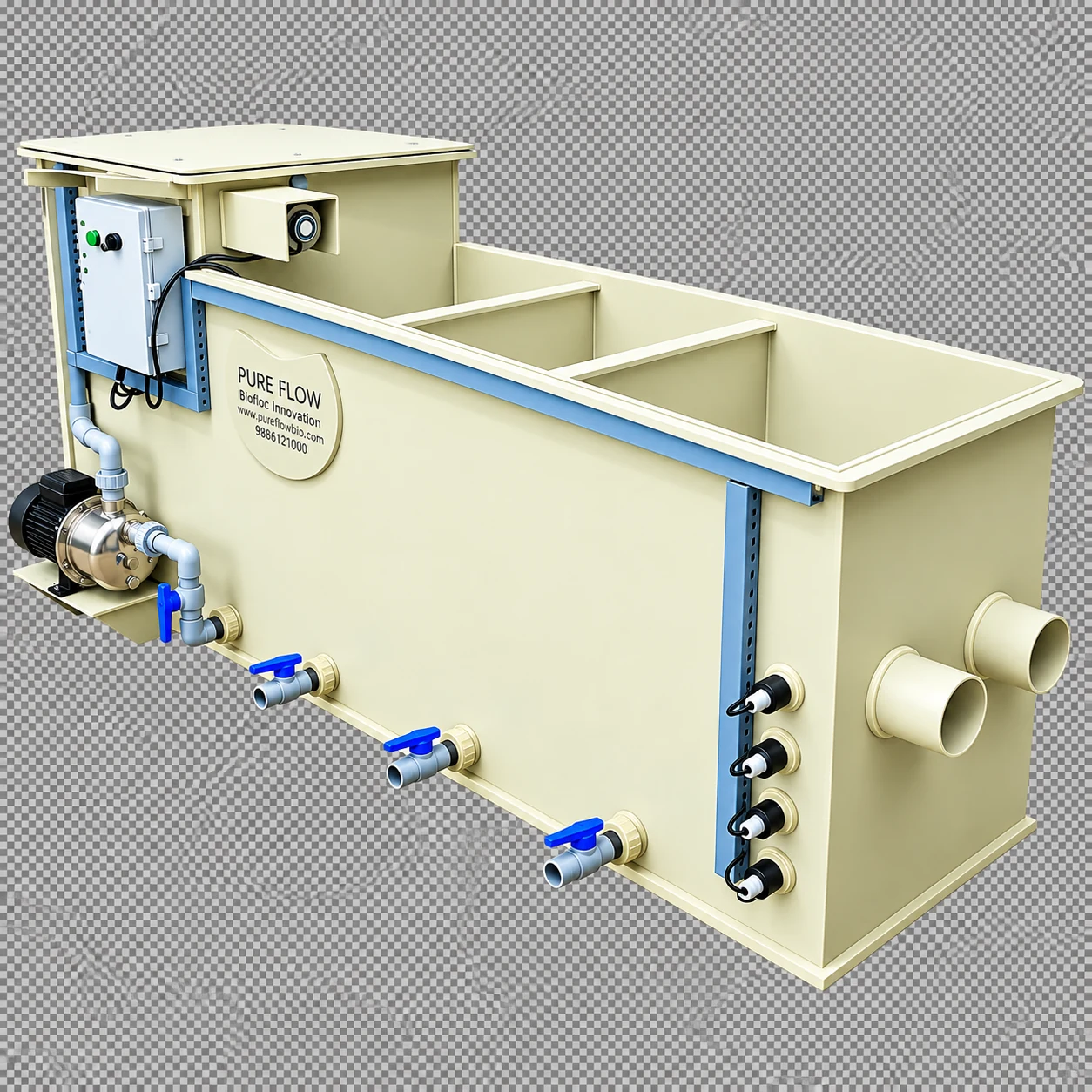
35 m³/h · 60 W × 2 UV
CRDF-35
Pump-fed combi filtration for larger koi ponds and nursery filter circuits, with a 35 m³/h catalogue maximum-flow listing.
View CRDF-35 details →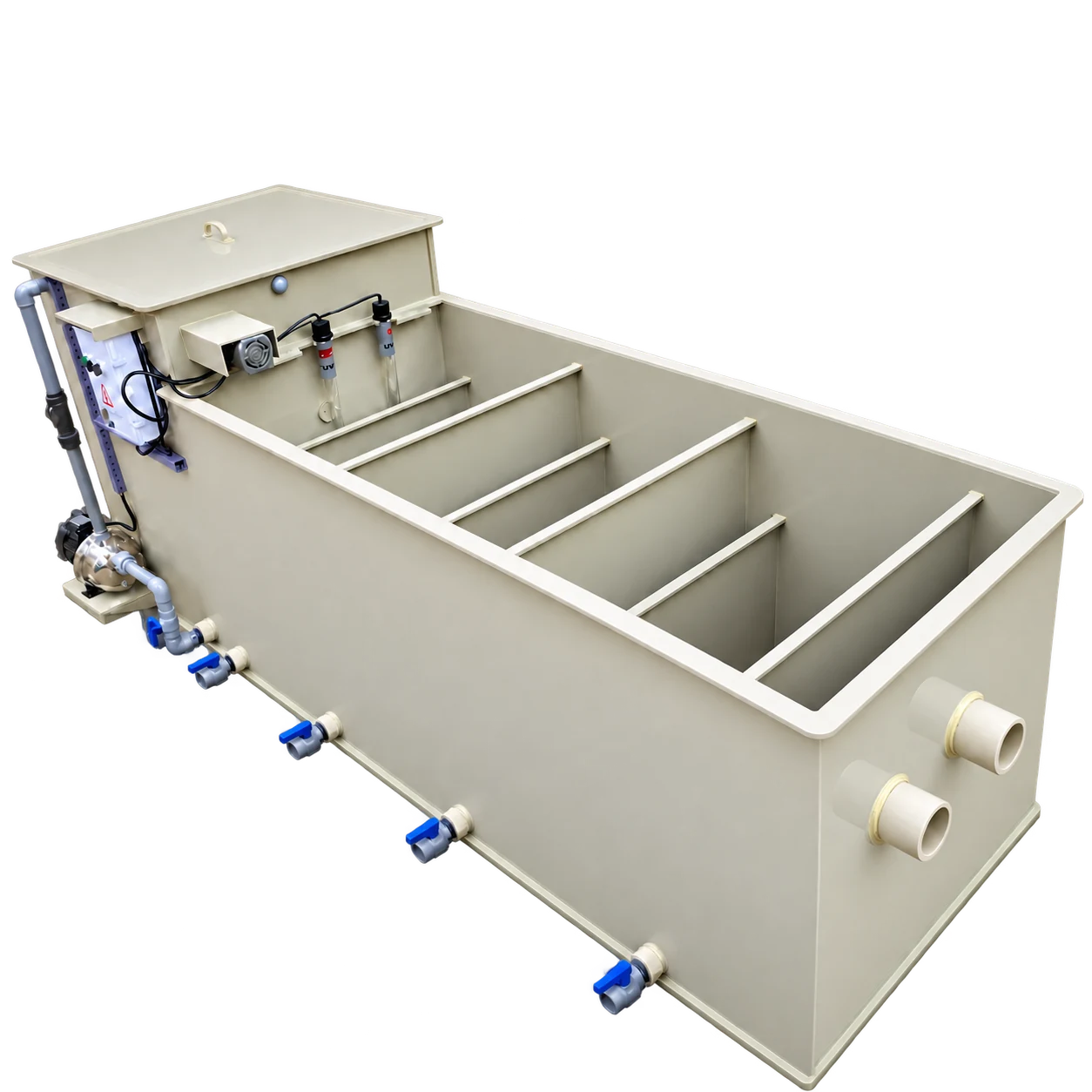
50 m³/h · 60 W × 3 UV
CRDF-50
Pump-fed combi filtration for fish-farm and hatchery treatment circuits, with a 50 m³/h catalogue maximum-flow listing.
View CRDF-50 details →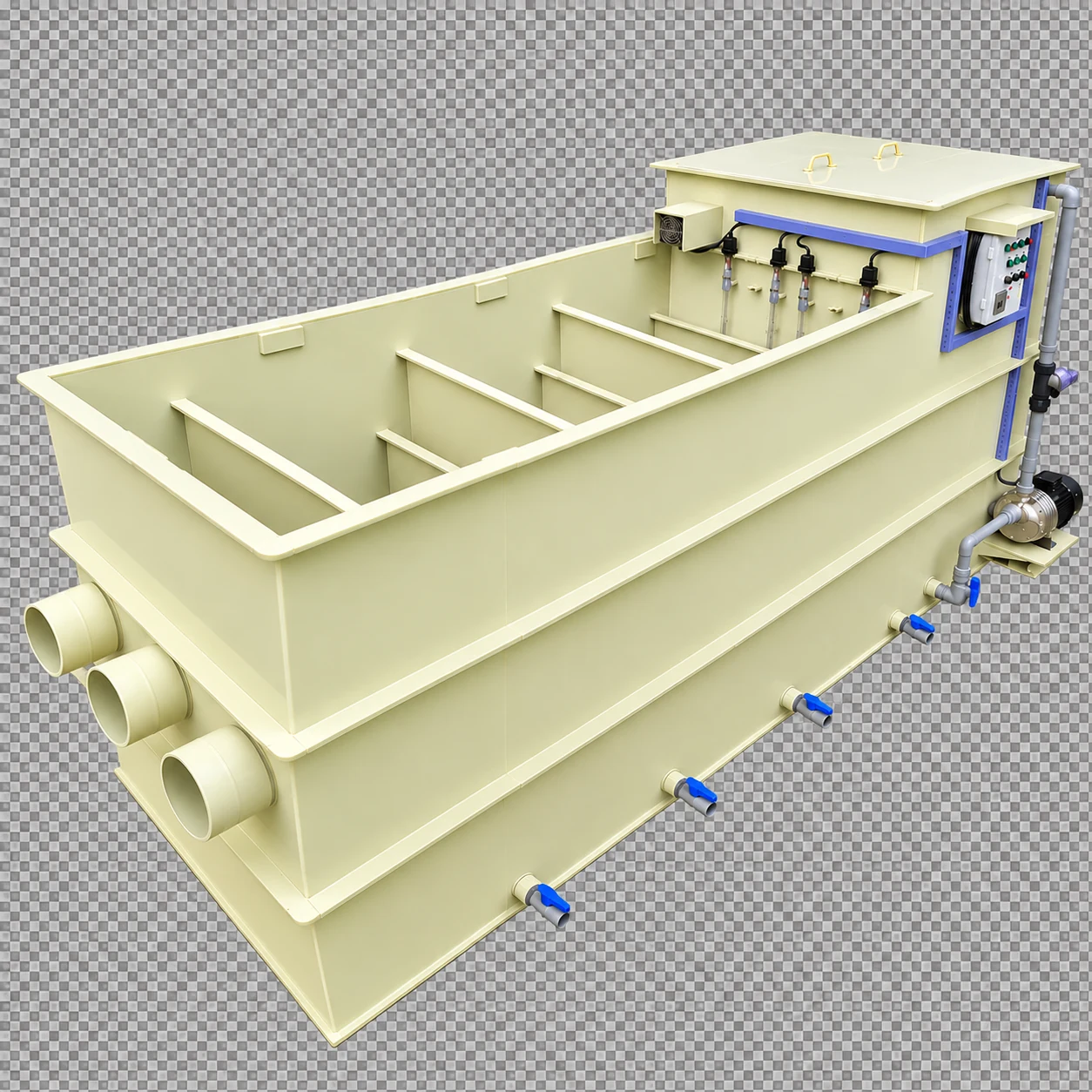
100 m³/h · 100 W × 3 UV
CRDF-100
Pump-fed combi filtration for fish-farm and hatchery treatment circuits, with a 100 m³/h catalogue maximum-flow listing.
View CRDF-100 details →Gravity Feed CRDF
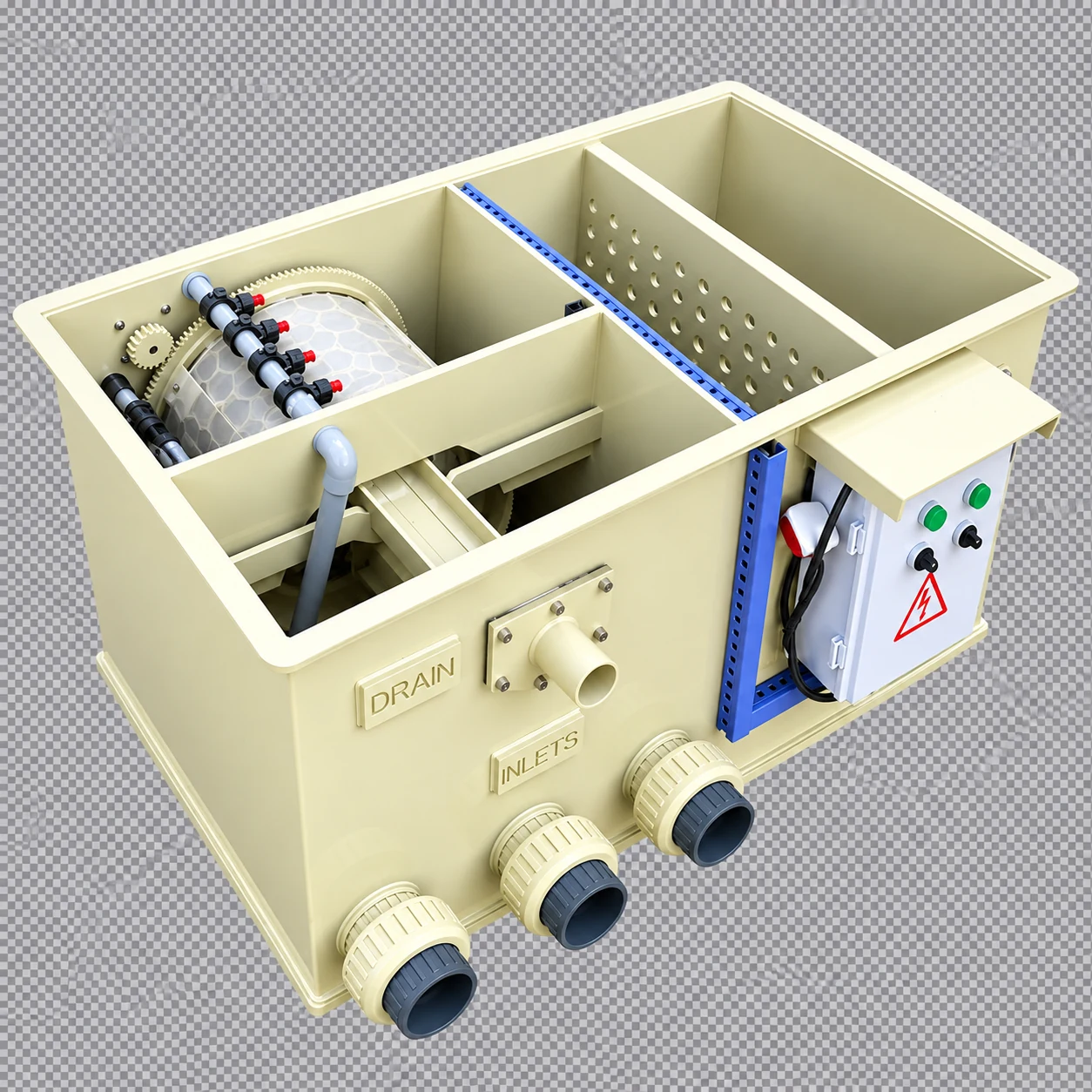
10 m³/h · 30 W × 2 UV
GCRDF-10
Gravity-fed combi filtration for koi ponds and small recirculating systems, with a 10 m³/h catalogue maximum-flow listing.
View GCRDF-10 details →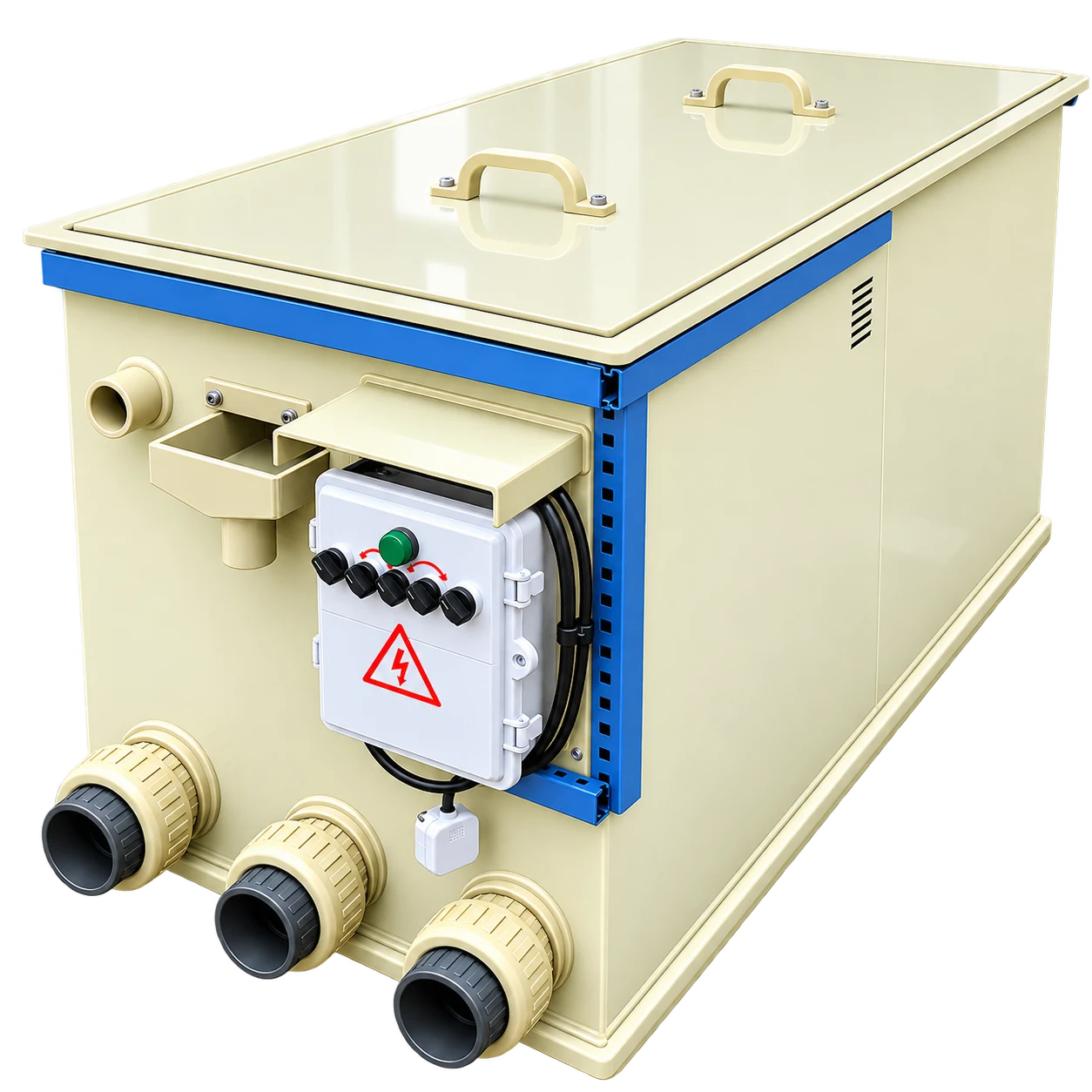
15 m³/h · 40 W × 2 UV
GCRDF-15
Gravity-fed combi filtration for koi ponds and small recirculating systems, with a 15 m³/h catalogue maximum-flow listing.
View GCRDF-15 details →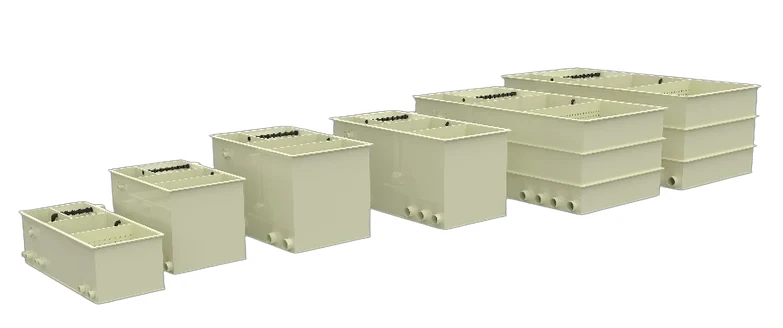
25 m³/h · 60 W × 2 UV
GCRDF-25
Gravity-fed combi filtration for larger koi ponds and nursery filter circuits, with a 25 m³/h catalogue maximum-flow listing.
Shared Gravity series illustration.
View GCRDF-25 details →35 m³/h · 60 W × 3 UV
GCRDF-35
Gravity-fed combi filtration for larger koi ponds and nursery filter circuits, with a 35 m³/h catalogue maximum-flow listing.
Shared Gravity series illustration.
View GCRDF-35 details →50 m³/h · 60 W × 4 UV
GCRDF-50
Gravity-fed combi filtration for fish-farm and hatchery treatment circuits, with a 50 m³/h catalogue maximum-flow listing.
Shared Gravity series illustration.
View GCRDF-50 details →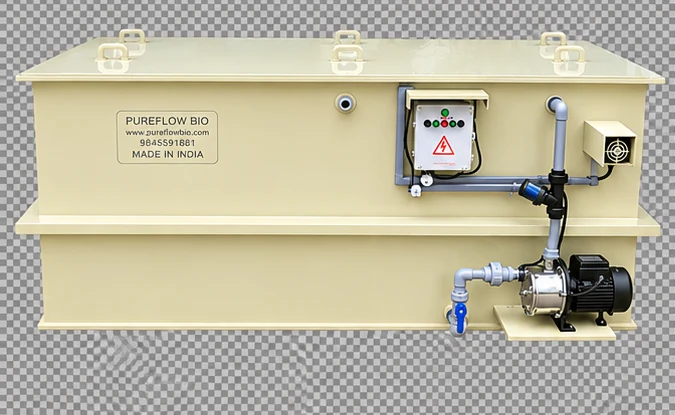
100 m³/h · 80 W × 3 UV
GCRDF-100
Gravity-fed combi filtration for fish-farm and hatchery treatment circuits, with a 100 m³/h catalogue maximum-flow listing.
View GCRDF-100 details →Pro Series CRDF
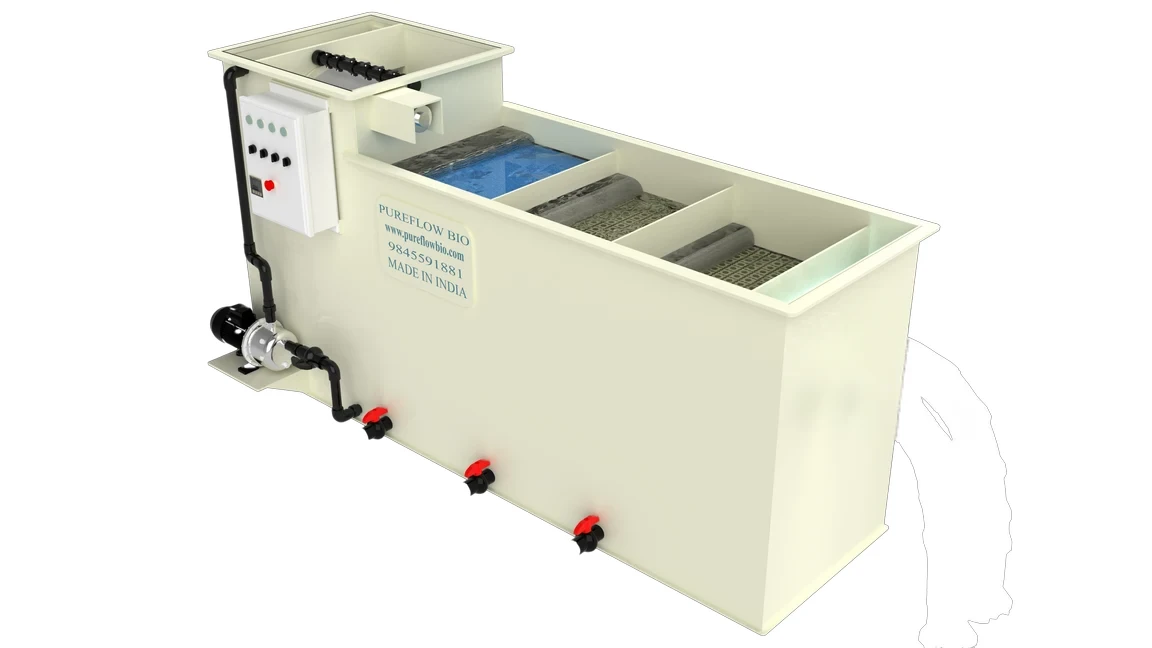
10 m³/h · 30 W × 3 UV
Pro CRDF-10
Pro Series pump-fed combi filtration for koi ponds and small recirculating systems, with a 10 m³/h catalogue maximum-flow listing.
Shared Pro series illustration.
View Pro CRDF-10 details →15 m³/h · 40 W × 3 UV
Pro CRDF-15
Pro Series pump-fed combi filtration for koi ponds and small recirculating systems, with a 15 m³/h catalogue maximum-flow listing.
Shared Pro series illustration.
View Pro CRDF-15 details →25 m³/h · 50 W × 3 UV
Pro CRDF-25
Pro Series pump-fed combi filtration for larger koi ponds and nursery filter circuits, with a 25 m³/h catalogue maximum-flow listing.
Shared Pro series illustration.
View Pro CRDF-25 details →35 m³/h · 60 W × 3 UV
Pro CRDF-35
Pro Series pump-fed combi filtration for larger koi ponds and nursery filter circuits, with a 35 m³/h catalogue maximum-flow listing.
Shared Pro series illustration.
View Pro CRDF-35 details →50 m³/h · 80 W × 3 UV
Pro CRDF-50
Pro Series pump-fed combi filtration for fish-farm and hatchery treatment circuits, with a 50 m³/h catalogue maximum-flow listing.
Shared Pro series illustration.
View Pro CRDF-50 details →100 m³/h · 100 W × 3 UV
Pro CRDF-100
Pro Series pump-fed combi filtration for fish-farm and hatchery treatment circuits, with a 100 m³/h catalogue maximum-flow listing.
Shared Pro series illustration.
View Pro CRDF-100 details →Combi Drum Filter catalogue specifications
Compare all 20 models from the supplied Pump Feed, Gravity Feed and Pro Series catalogues. Open a range to see its complete table, then select a model for dimensions, connections, UV details and images.
Pump Feed CRDF — 8 models
| Model | L × W × H (mm) | Listed water volume (m³) | Max. flow (m³/h) | Inlet (mm × qty) | Outlet (mm × qty) | UV lamp listing |
|---|---|---|---|---|---|---|
| CRDF-3 | 990 × 340 × 500 | 3 | 3 | 32 × 1 | 50 × 1 | 20 W × 2 |
| CRDF-5 | 1030 × 475 × 745 | 5 | 5 | 50 × 1 | 63 × 2 | 30 W × 2 |
| CRDF-10 | 1430 × 475 × 745 | 10 | 10 | 50 × 2 | 63 × 2 | 30 W × 2 |
| CRDF-15 | 1650 × 550 × 745 | 15 | 15 | 50 × 2 | 63 × 3 | 40 W × 2 |
| CRDF-25 | 2250 × 640 × 1000 | 25 | 25 | 63 × 2 | 75 × 2 | 50 W × 2 |
| CRDF-35 | 2300 × 680 × 1110 | 35 | 35 | 75 × 2 | 90 × 3 | 60 W × 2 |
| CRDF-50 | 3000 × 850 × 1200 | 50 | 50 | 90 × 2 | 110 × 2 | 60 W × 3 |
| CRDF-100 | 4000 × 1000 × 1500 | 100 | 100 | 90 × 2 | 110 × 3 | 100 W × 3 |
Catalogue maximum flow and listed water volume are comparison values. Final selection also depends on solids and feed loading, biological media, aeration and available hydraulic head. UV listings show watts per lamp × quantity; they are not the total electrical load or a validated disinfection dose.
Download the source catalogue (PDF) ↗ · Explore this range →Gravity Feed CRDF — 6 models
| Model | L × W × H (mm) | Listed water volume (m³) | Max. flow (m³/h) | Inlet (mm × qty) | Outlet (mm × qty) | UV lamp listing |
|---|---|---|---|---|---|---|
| GCRDF-10 | 1200 × 650 × 550 | 10 | 10 | 75 × 3 | 50 × 2 | 30 W × 2 |
| GCRDF-15 | 1200 × 900 × 750 | 15 | 15 | 90 × 3 | 75 × 2 | 40 W × 2 |
| GCRDF-25 | 1450 × 950 × 750 | 25 | 25 | 110 × 4 | 90 × 3 | 60 W × 2 |
| GCRDF-35 | 1600 × pending × 900 | 35 | 35 | 110 × 5 | 110 × 3 | 60 W × 3 |
| GCRDF-50 | 2050 × 1050 × 1000 | 50 | 50 | 110 × 6 | 110 × 3 | 60 W × 4 |
| GCRDF-100 | 2690 × 1450 × 1000 | 100 | 100 | 160 × 5 | 110 × 3 | 80 W × 3 |
GCRDF-35 width: pending confirmation. Dimensional verification is deferred; obtain the approved drawing before setting installation dimensions. The original catalogue entry is not an approved installation width.
Catalogue maximum flow and listed water volume are comparison values. Final selection also depends on solids and feed loading, biological media, aeration and available hydraulic head. UV listings show watts per lamp × quantity; they are not the total electrical load or a validated disinfection dose.
Download the source catalogue (PDF) ↗ · Explore this range →Pro Series CRDF — 6 models
| Model | L × W × H (mm) | Listed water volume (m³) | Max. flow (m³/h) | Inlet (mm × qty) | Outlet (mm × qty) | UV lamp listing |
|---|---|---|---|---|---|---|
| Pro CRDF-10 | 1630 × 500 × 745 | 10 | 10 | 50 × 2 | 63 × 2 | 30 W × 3 |
| Pro CRDF-15 | 1850 × 650 × 800 | 15 | 15 | 50 × 2 | 63 × 2 | 40 W × 3 |
| Pro CRDF-25 | 2500 × 700 × 1100 | 25 | 25 | 63 × 2 | 75 × 2 | 50 W × 3 |
| Pro CRDF-35 | 2600 × 750 × 1210 | 35 | 35 | 75 × 2 | 90 × 2 | 60 W × 3 |
| Pro CRDF-50 | 3370 × 900 × 1270 | 50 | 50 | 90 × 2 | 110 × 2 | 80 W × 3 |
| Pro CRDF-100 | 4300 × 1050 × 1450 | 100 | 100 | 90 × 2 | 110 × 3 | 100 W × 3 |
Catalogue maximum flow and listed water volume are comparison values. Final selection also depends on solids and feed loading, biological media, aeration and available hydraulic head. UV listings show watts per lamp × quantity; they are not the total electrical load or a validated disinfection dose.
Download the source catalogue (PDF) ↗ · Explore this range →Installing a Combi Drum Filter
Match Water Levels and Pipework
- Confirm gravity-fed or pump-fed operation for the selected arrangement.
- Check inlet, outlet and pond levels, available head and pump duty.
- Provide the required wash-water supply and waste-drain route.
- Finally, allow access to the screen, drive, chamber and any UV equipment.
Commission the Biological Stage
Agree the media type, quantity, movement and oxygen supply before startup. Then follow a commissioning plan that accounts for biological maturation.
Monitor the water conditions and feed load as the system develops. The filter is one part of the wider stocking, feeding, oxygen and water-quality plan.
Engineering selection
Two capacities. One complete filtration decision.
Mechanical screening duty
Specify peak flow in m³/h, the 75-micron screen, expected solids loading and available hydraulic head. The catalogue maximum flow is a comparison point; confirm the operating flow and head loss for the installation.
Biological treatment duty
Specify peak daily feed and TAN-N loading independently of water flow. Agree media type, working fill volume, effective surface area and aeration, with temperature, salinity, pH and dissolved oxygen as design conditions.
What the catalogue confirms—and what your technical offer must confirm
| Item | Published basis | Required for project approval |
|---|---|---|
| Dimensions, connections and flow | Model-wise catalogue listings below | Approved drawing, operating levels and hydraulic duty; GCRDF-35 width remains pending confirmation |
| Biological chamber and media | Integrated biological stage; no verified model-wise volume or treatment rating in the supplied catalogues | Working chamber volume (L), media type and fill (L), rated g TAN-N/day or kg feed/day and test/design conditions |
| Backwash | Automatic screen-cleaning arrangement | L/wash, wash duration, expected cycles/day at the stated solids load, pressure and water source |
| Electrical demand | UV lamp watts × quantity are listed | Separate drum motor, wash pump, blower, UV and controls loads; connected kW, starting demand and operating duty |
| UV treatment | Lamp wattage is a component listing | Specified dose at design flow, UV transmittance, lamp-age and sleeve-cleaning basis |
A hydraulic flow listing does not establish biological capacity. UV lamp watts do not establish disinfection dose or complete equipment power consumption. These project ratings require a documented technical offer rather than an estimate from the model number.
Combi drum filter or standalone RDF?
Choose an integrated Combi layout
A Combi arrangement brings drum screening and a biological chamber into one coordinated unit. It suits projects where the mechanical duty, biological media and service access can be agreed together.
For a drum filter with moving-bed biofilter, specify the MBBR media fill and air requirement explicitly. Chamber presence alone does not confirm a nitrification rating.
Choose separate treatment stages
A standalone rotary drum filter screens suspended solids. A separate biofilter allows biological capacity, aeration and maintenance access to be sized independently where the project requires it.
Gravity-fed vs pump-fed Combi filters
Gravity Feed GCRDF
Water reaches the filter through the available level difference. Review pond and filter operating levels, drawdown, pipe losses and return-pump duty together. Select from the six Gravity Feed models.
Pump Feed and Pro Series
A feed pump delivers water to the filter. Check its actual flow at the installed head and provide sufficient outlet and overflow capacity. Compare the eight Pump Feed models and six Pro models by their own dimensions, connections and UV listings.
Planning Combi filtration for a hatchery or RAS
Start with the stock and feed plan
Identify species, life stage, biomass, peak daily feed and feed composition. Define acceptable solids, ammonia and nitrite levels before selecting the screening and biological stages. Egg and larval systems require their own retention and biosecurity review.
For koi installations, use the koi pond planning guide to prepare circulation and layout requirements.
Review the complete treatment loop
Coordinate oxygen supply, carbon dioxide removal, alkalinity, make-up water, waste handling and monitoring with the filter. Plan biological maturation and gradual feed increases; include isolation, bypass and alarm requirements in the installation review.
Explore the RAS design and commissioning guide for the wider system requirements.
What goes into a combi drum filter quotation?
A quotation depends on the selected model and the agreed supply: drum screen, chamber arrangement, biological media, wash equipment, controls, aeration, UV, electrical configuration and delivery destination. Installation, commissioning, spares and freight should be stated separately so competing quotations can be compared on the same basis.
Send a brief that supports a useful technical offer
Include your application, species and life stage, water volume, peak filter flow, daily feed, water temperature and salinity, proposed pipe levels, available footprint, electrical supply and delivery location. Ask for the operating duty, scope of supply and approved drawing with the quotation.
Request a model-specific technical offer →How to Size a Combi Drum Filter
First, define the actual peak flow through the filter branch. If a turnover time is specified for your project, calculate Q = V ÷ T, using water volume in m³ and time in hours.
Catalogue maximum flows run from 3 to 100 m³/h. For example, the CRDF-50 is a 50 m³/h combi drum filter and the CRDF-100 is a 100 m³/h combi drum filter, each by catalogue maximum flow.
Then check the mechanical and biological duties separately, as set out under “Two capacities” above. A larger tank volume or a faster pump does not establish either duty on its own.
- Application, species, water volume and planned filter flow.
- Peak daily feed, solids loading and water conditions.
- Preferred screen opening, media and aeration requirements.
- Pipe layout, operating levels, available space and drainage.
- UV objective, electrical supply and proposed controls.
Worked example: biological loading (illustration only)
Suppose a hatchery feeds 20 kg of feed a day and the design assumes 30 g of total ammonia nitrogen (TAN) produced per kg of feed. The daily load is 20 × 30 = 600 g TAN-N a day. If the design assumed a removal rate of 0.20 g TAN-N per m² of effective media surface a day, the media area needed would be 600 ÷ 0.20 = 3,000 m².
These numbers are assumptions to show the method, not a rating for any Pureflow model. Real values depend on feed, temperature, salinity, pH, oxygen and the media used. Send your own feed, species and water details and we will check the duties for your project.
Use the calculator to prepare your flow, feed and installation details for our team.
Combi Drum Filter Flow Calculator & Selection Brief
Calculate your filter flow or send a request for help with sizing. The result records mesh, feed and options so both the mechanical and biological duties can be reviewed.
How this calculator works
For turnover-based flow, Q = V ÷ T. The tool converts litres to cubic metres by dividing by 1,000. It then adds your chosen percentage allowance to the entered or calculated flow.
Mesh and daily feed are recorded for technical review. However, the tool does not select an unverified Combi model, apply a mesh multiplier, calculate biological media capacity or establish UV dose.
With “Help me determine the flow”, no flow rating is calculated. Instead, the brief requests a project review. Final model selection needs the current mechanical and biological design data.
Combi Drum Filter Maintenance
Screen and wash system
Inspect the screen, spray nozzles, wash-water supply and waste drain. Also check the drive and level-control arrangement using the supplied instructions.
Media and aeration
Check biological media and aeration where applicable. Follow the agreed cleaning method so servicing supports the biological treatment stage.
Pumps, controls and UV
Follow isolation and maintenance instructions for electrical equipment. In addition, service any UV lamps and sleeves according to the supplied unit’s schedule.
Request a Combi Drum Filter Quote
Send your preferred Combi model if known, filter flow, daily feed and installation details. Alternatively, add the calculator brief so our team can review the proposed screening and biological stages together.
Made in India, with Worldwide Service
Work with the Manufacturer
Pureflow Bio is a combi drum filter manufacturer in India. Discuss your koi pond or aquaculture project directly with the team that makes the equipment. We manufacture aquaculture and aquarium filtration equipment in India.
Worldwide Service and Support
Share your project location so we can confirm delivery, installation responsibilities, spare parts and service arrangements in the quotation.
Complete Filtration Projects
Coordinate drum screening, biological treatment, pumps and any UV option. Then review how the equipment connects to the complete pond or RAS installation.
Warranty and Dispatch
One-Year Warranty
The warranty runs for one year from the invoice date and covers the body and supplied components. Normal wear, improper operation and physical damage are excluded. Operating outside the agreed conditions can affect cover.
Manufacturing and Dispatch
Dispatch is within 15 working days after order confirmation. This is the date the equipment leaves our facility; transit time depends on the destination. Your quotation confirms the configuration, delivery and installation scope.
Combi Drum Filter FAQs
What is a combi drum filter?
It is a drum filter and a biological filter built into one unit. The drum screen takes out solid waste, the biological chamber deals with dissolved ammonia, and integrated UV lamps take care of green water. It's a complete pond filter in one box.
Who is a combi drum filter right for?
It suits koi ponds, quarantine systems and smaller fish farms or RAS where space is tight and you want one machine instead of a row of separate filters. Very large farms usually do better with separate drum filters and biofilters sized independently.
What's the difference between Pump Feed, Gravity Feed and Pro Series?
Pump Feed models sit above water level and take water from a pump, which suits existing ponds. Gravity Feed models sit at pond level and are fed by bottom drains, the classic koi setup. Pro Series models are pump-fed with a heavier UV arrangement of three lamps.
How many koi can a combi filter handle?
Fish count is a rough guide; what really matters is how much you feed. Size the filter by your flow rate first, then tell us your fish load and daily feed so we can check the biological chamber is large enough. When in doubt, choose the next size up.
Does the combi filter come with biological media?
The biological chamber is part of the unit. Tell us whether you need media supplied or already have your own, and we'll confirm the volume and type in your quotation.
How long before the biological chamber starts working?
Like any new biofilter, it needs about four to six weeks for nitrifying bacteria to build up. During that time stock lightly, feed sparingly and test for ammonia and nitrite every few days.
How much maintenance does a combi filter need?
The drum cleans itself, so routine work is light: check the spray nozzles and level sensor, keep the waste line clear and replace the UV lamps about once a year. Rinse biological media only if it clogs, and then only in pond water, never tap water.
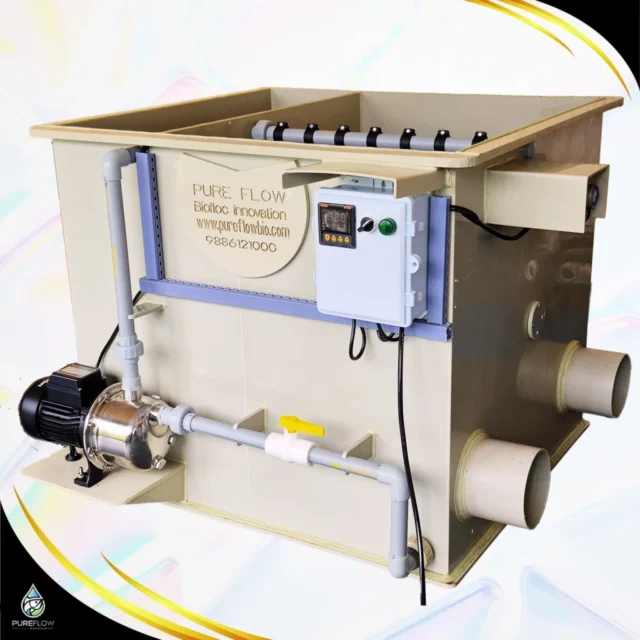
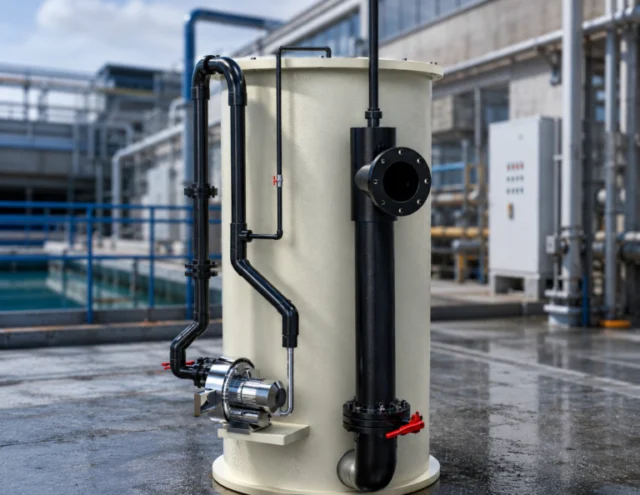
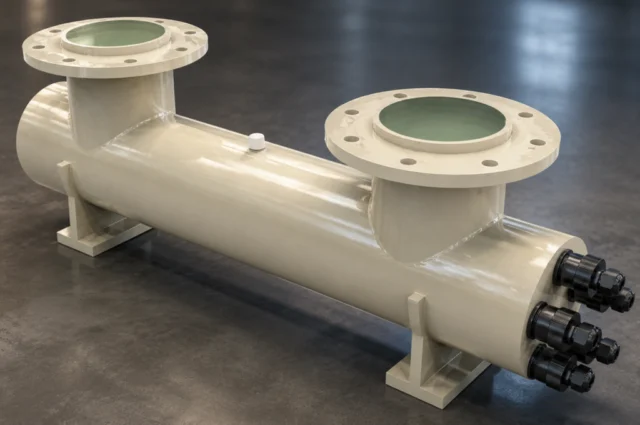
Need a Complete Pond or Aquaculture System?
Plan tanks, pumps, combi filtration, biological treatment and any UV equipment as one project. Share your layout so Pureflow Bio can review equipment supply and integration together.