
Pureflow Bio · Marine filtration
Saltwater Protein Skimmer
Pureflow Bio is a protein skimmer manufacturer in India. We manufacture equipment for marine hatcheries, saltwater RAS and aquarium life support systems.
Compare nine PSM models from 5 to 150 m³/h, then confirm the configuration for your water conditions.
Pair the skimmer with a microscreen drum filter and biological treatment as part of your filtration system.
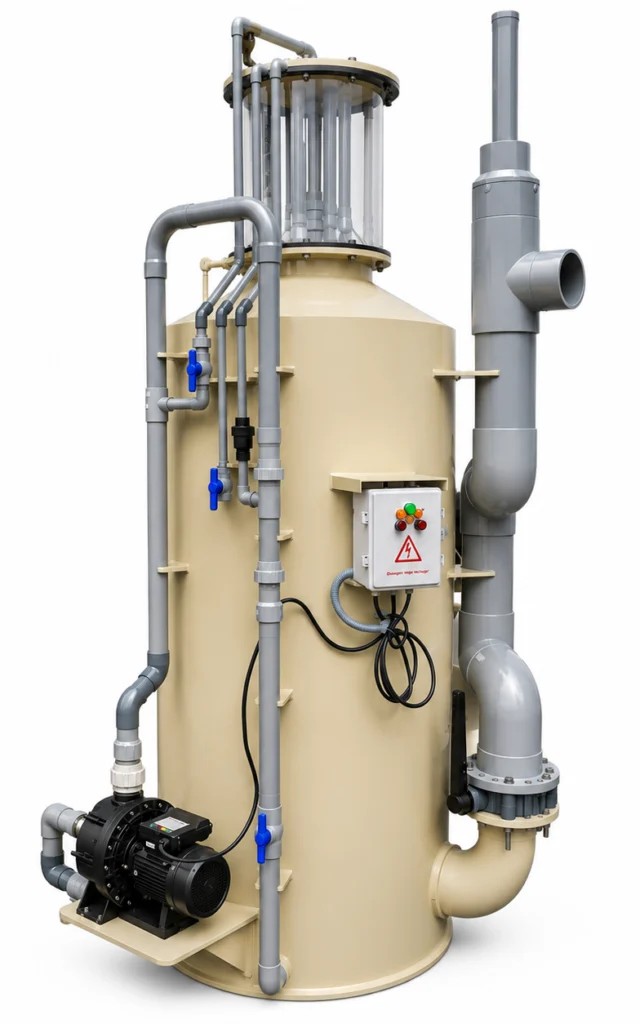
What Is a Saltwater Protein Skimmer?
A saltwater protein skimmer separates foam-active organic matter and associated particles from marine water using foam fractionation. Choose it as part of a complete filtration process, with a defined treatment flow and waste collection arrangement.
Saltwater Protein Skimmers for Marine RAS, Hatcheries and Aquariums
Marine hatcheries
Best for: Hatchery teams reviewing foam fractionation alongside their existing solids and biological treatment.
Saltwater RAS
Best for: Recirculating aquaculture systems assessing organic loading, daily feed and treatment flow.
Marine and reef aquariums
Best for: Marine aquarium and reef aquarium operators integrating skimming into an exhibit life support system.
Oceanariums
Best for: Contractors planning equipment access, drainage and service requirements for large marine exhibits.
Marine ornamental systems
Best for: Breeders and holding facilities evaluating a skimmer for shared saltwater filtration loops.
Turnkey marine projects
Best for: Buyers coordinating tanks, pumps, filters, UV and any ozone treatment as one installation.
How a Saltwater Protein Skimmer Works
A saltwater protein skimmer, also called a marine foam fractionator, mixes air with water to create bubble surfaces. Foam-active organic material collects at the air–water interface and is carried into a waste foam stream.
Performance depends on salinity, organic loading, air and water flow, contact conditions and operating adjustments. Skimming complements microscreen drum filtration and biological treatment.
Create bubble surfaces
Bring the water and air into contact within the skimmer.
Separate the waste stream
Collect foam above the treatment zone and route it to suitable drainage.
PSM Skimmer Features and Project Benefits
Nine PSM models
Compare catalogue flow rates from 5 to 150 m³/h as a starting point for selection.
Published body sizes
Check the installation footprint and height against the available plant-room space.
Defined connections
Review inlet and outlet sizes and connection heights before planning pipework.
Injection-pump ratings
See the pump rating and quantity for each model when preparing your electrical schedule.
Configuration options
Review collection, cleaning, monitoring and control requirements before ordering.
Project integration
Coordinate the skimmer with the rest of your aquaculture or aquarium filtration system.
Saltwater Protein Skimmer Gallery
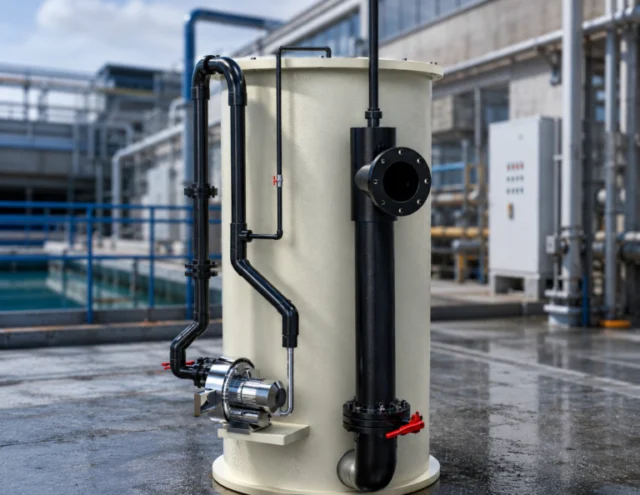
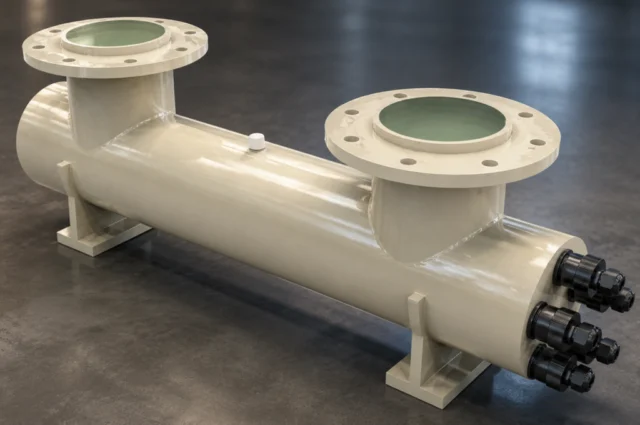
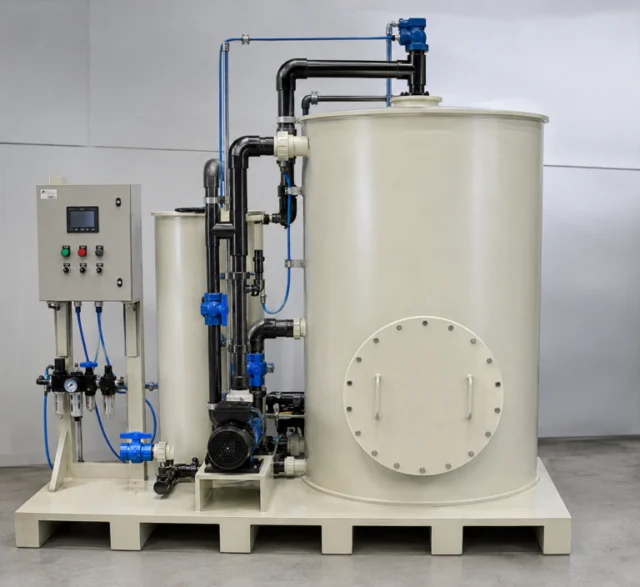
Explore equipment views and component details. Select an image to enlarge it. Illustrations show example configurations; your quotation confirms the supplied equipment.
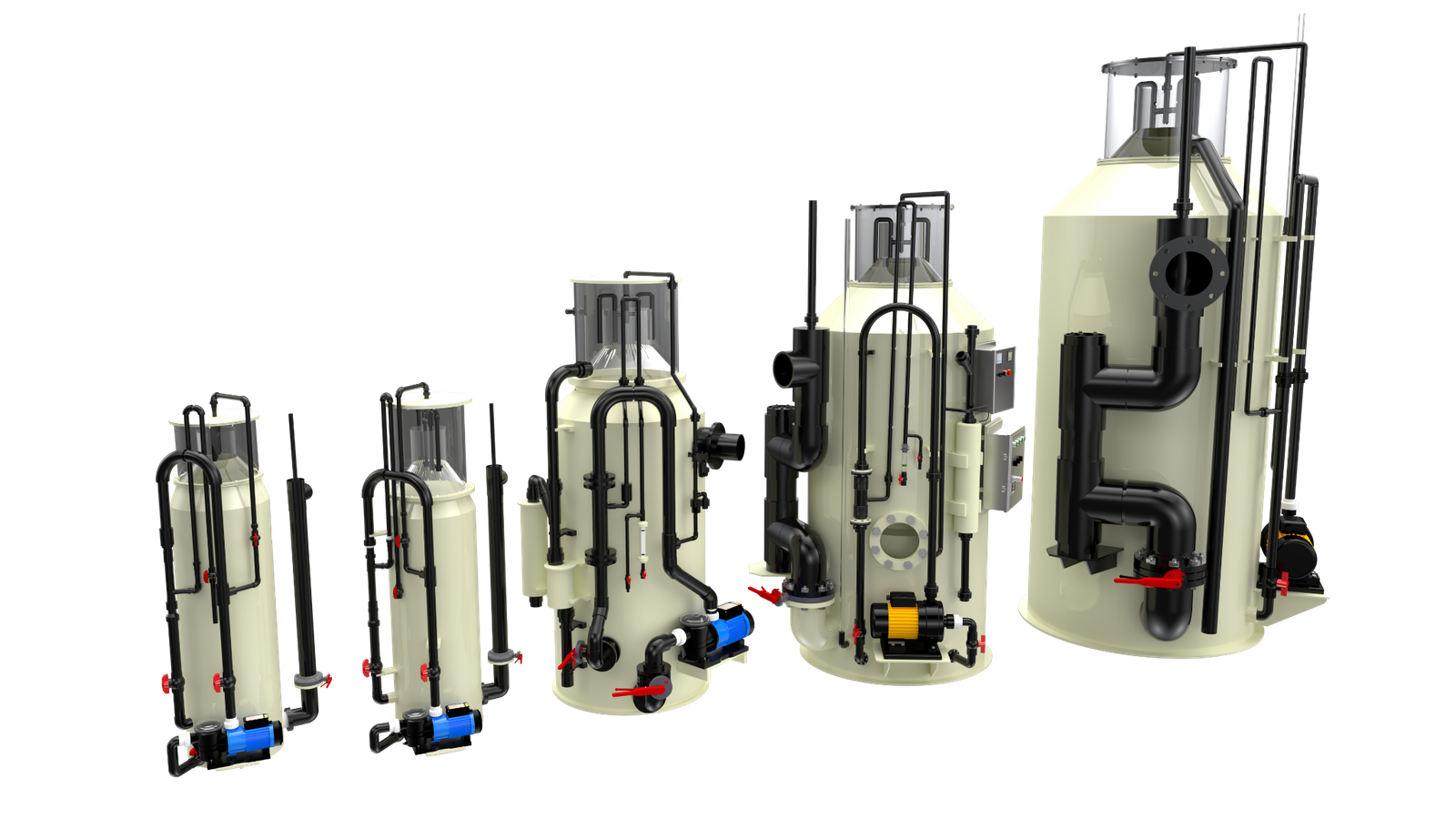
Skimmer range overview

Equipment views and details
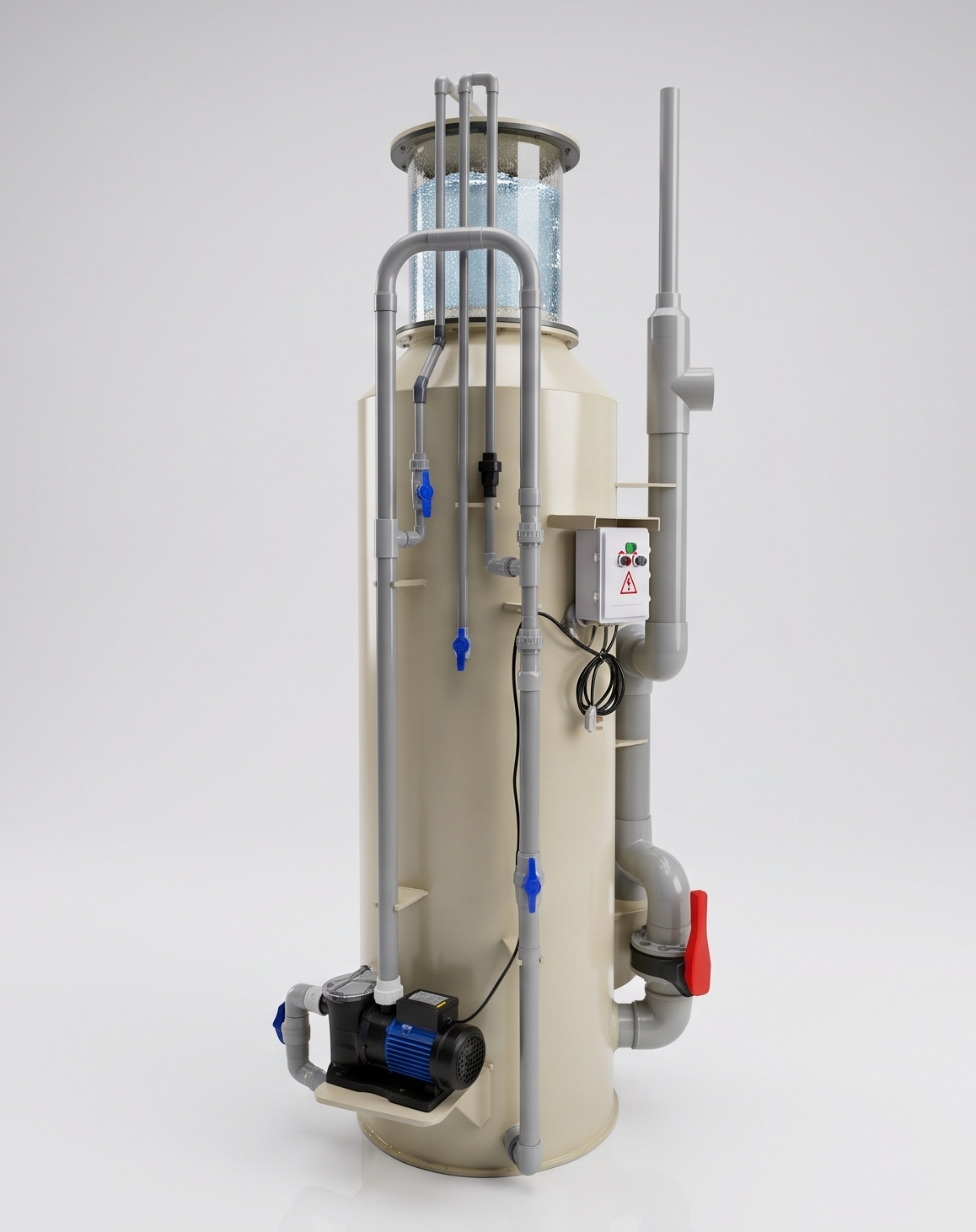
Compact skimmer assembly
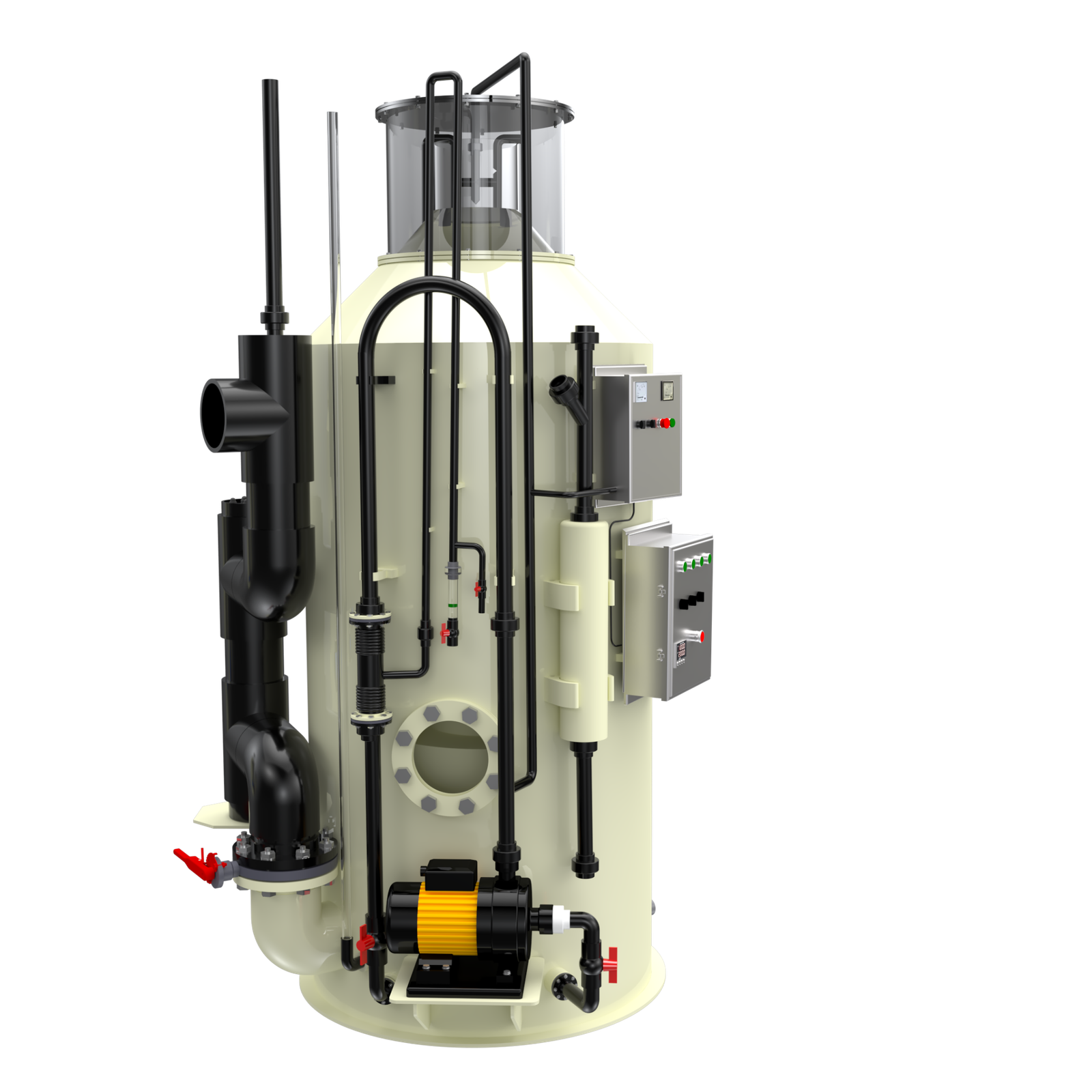
Skimmer and control panels
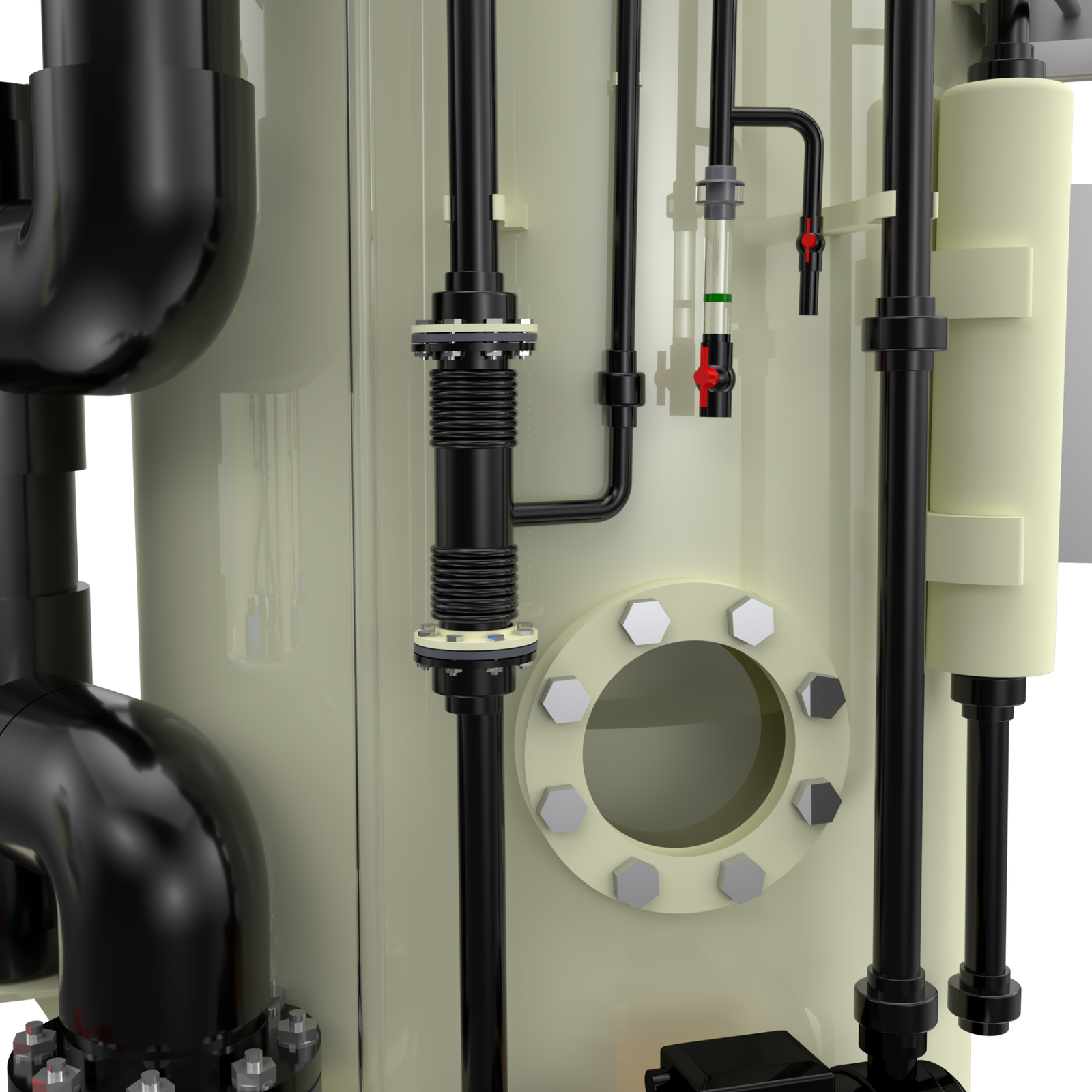
Inspection port and pipework
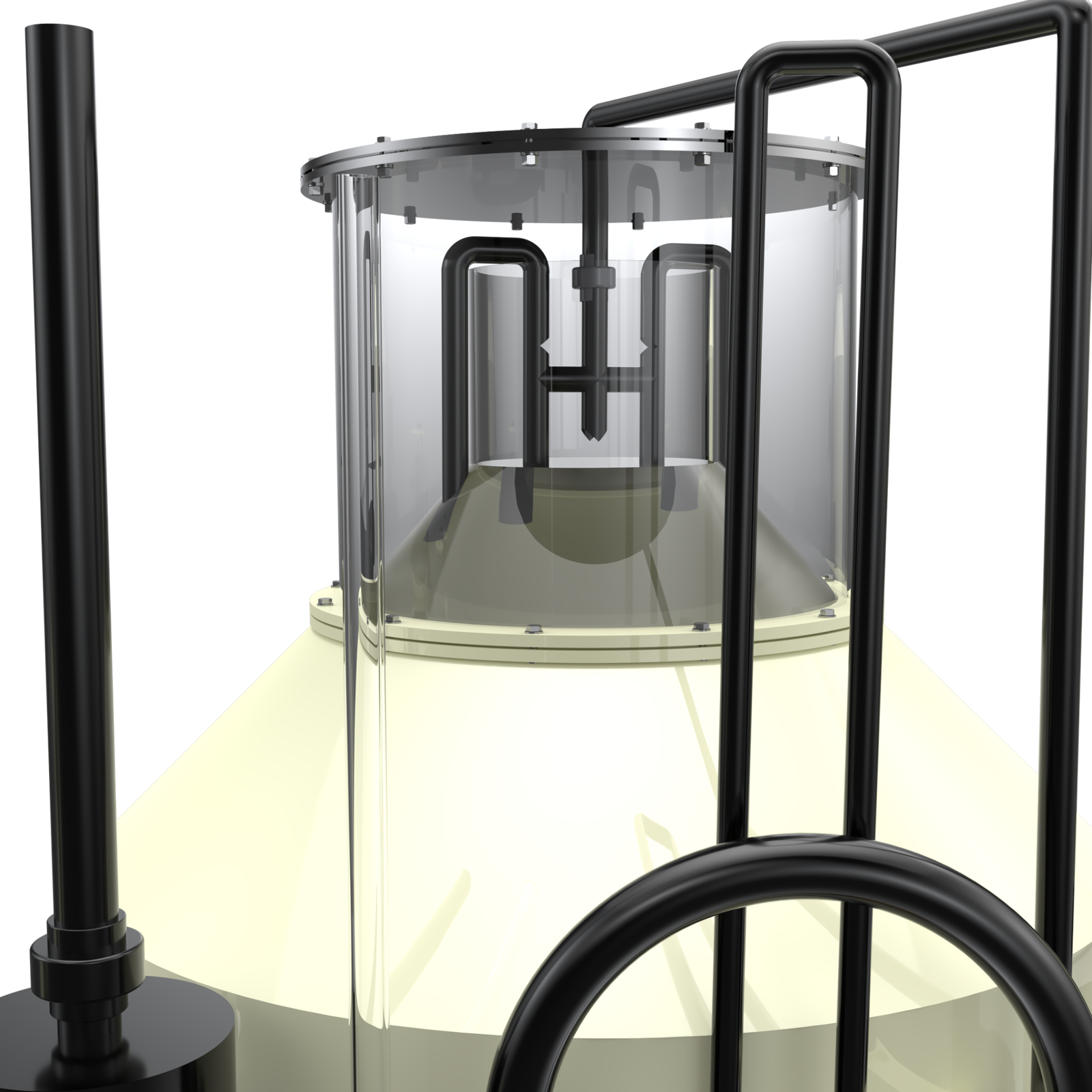
Foam collection chamber
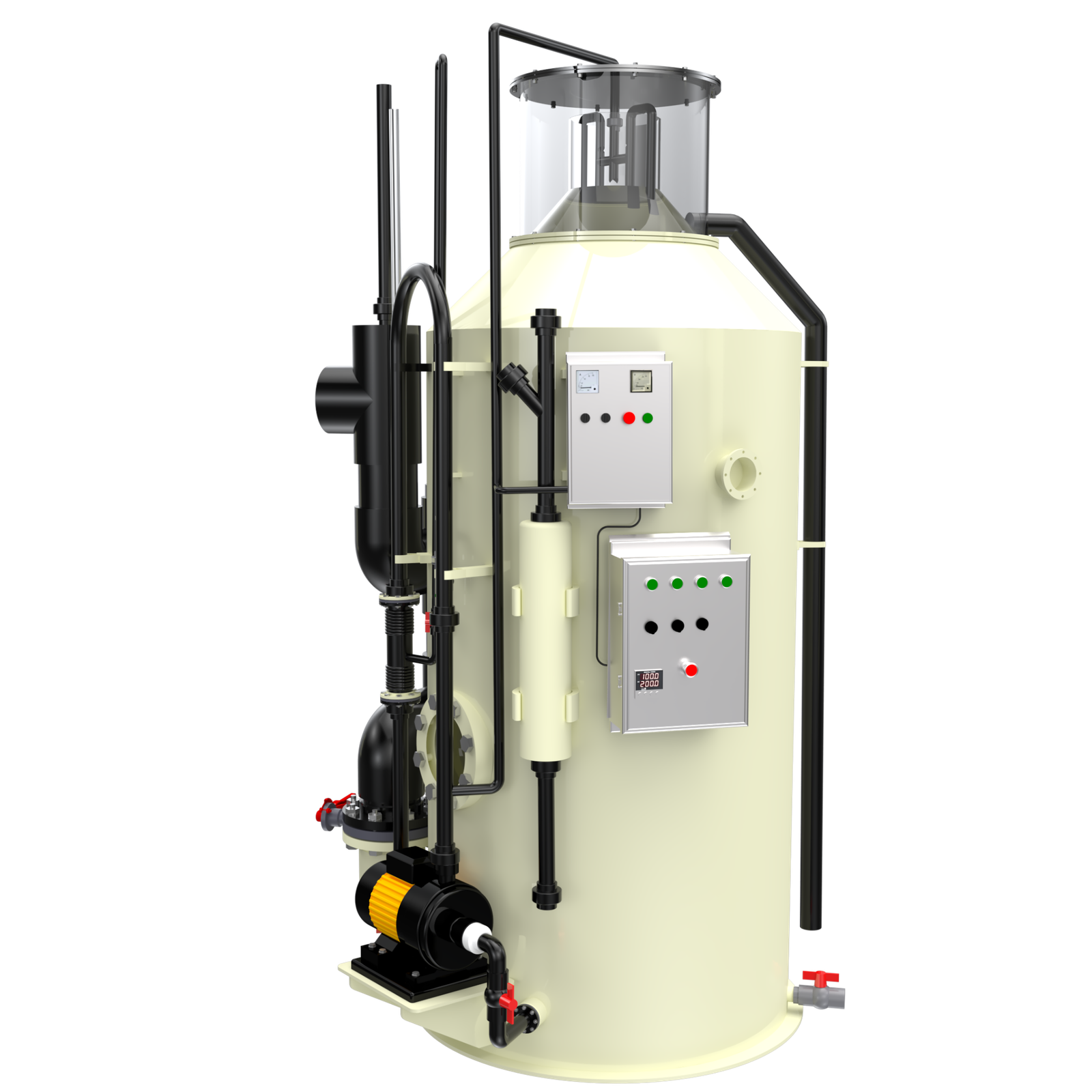
Side view and controls
PSM Saltwater Protein Skimmer Models and Specifications
Compare the catalogue figures below. Use the Optional Components tab to plan the equipment scope for your project.
PSM model specifications
| Model | Body size mm | Water flow m³/h | Inlet mm | Outlet mm | Injection pump kW × quantity | Inlet height mm | Outlet height mm |
|---|---|---|---|---|---|---|---|
| PSM-5 | 400 × 1400 | 5 | 50 | 63 | 0.37 × 1 | 1000 | 1000 |
| PSM-10 | 400 × 1950 | 10 | 50 | 75 | 0.37 × 1 | 1500 | 1200 |
| PSM-15 | 500 × 1850 | 15 | 63 | 75 | 0.55 × 1 | 1500 | 1600 |
| PSM-20 | 600 × 2000 | 20 | 63 | 110 | 0.55 × 1 | 1600 | 1700 |
| PSM-30 | 650 × 2300 | 30 | 75 | 110 | 0.9 × 1 | 1900 | 2000 |
| PSM-50 | 700 × 2550 | 50 | 75 | 110 | 1.1 × 1 | 2000 | 2100 |
| PSM-80 | 950 × 2700 | 80 | 110 | 160 | 1.1 × 1 | 2100 | 2200 |
| PSM-100 | 1050 × 2950 | 100 | 160 | 200 | 1.1 × 2 | 1800 | 2000 |
| PSM-150 | 1160 × 3150 | 150 | 160 | 200 | 1.1 × 2 | 2000 | 2100 |
Body sizes and connection heights are reproduced from the catalogue in millimetres. Confirm the final arrangement drawing before setting pipe levels. Injection-pump entries show kW per pump × quantity; these are not total system electrical consumption. Materials, voltage, phase, air supply and operating range are confirmed in your quotation.
Optional components
Specify the options you need in your enquiry. Availability, compatibility and scope are confirmed for the selected PSM model and project. These items are not included in the basic equipment unless expressly stated in your quotation.
| Component or specification | Details to confirm |
|---|---|
| Electrical control panel | Electrical configuration and panel scope. |
| Electrical control panel footprint (mm) | Dimensions and mounting arrangement to be confirmed for the selected configuration. |
| Motorized foam collector autowash | Cleaning arrangement and controls. |
| Overflow switch | Switch location and interlock requirements. |
| ORP control | Probe, controller and control scope. |
| Foam level automation | Level sensing and automation scope. |
| Operational platform | Platform dimensions and access arrangement. |
| Passive ozone destruct | Compatibility and ozone treatment duty. |
| Quick retractable ORP/pH probe fitting | Probe and fitting compatibility. |
| PS venturi pump | Pump duty and electrical requirements. |
| Ozone gas rotameter | Gas flow range and connection sizes. |
| Outer wash port and valve for chemical dosing | Connection arrangement and chemical compatibility. |
| Reuse of off-gassed ozone | Engineered gas routing, residual control and safety requirements. |
| Sight glass | Size, position and material. |
| Manhole with PP cover | Opening size, position and sealing arrangement. |
| Manhole with acrylic cover | Opening size, position and sealing arrangement. |
| Ozone inlet solenoid valve with SS 316 body | Valve size, voltage and ozone compatibility. |
| PS camera | Camera specification and monitoring arrangement. |
| PS PLC controller | Control functions, inputs/outputs and integration scope. |
Control-panel dimensions and model-specific availability are confirmed in the quotation. Ozone-related options require a complete treatment and safety review.
Specifications
We aim to keep all product information accurate and current. Specifications may change as products are updated. Before ordering, please confirm the latest technical details, electrical requirements for your region with our team.
Displayed specifications cover the basic equipment only. Optional components are quoted separately unless expressly included. Your quotation confirms the final configuration, scope of supply and delivery terms.
Project specification checklist
| Hydraulic duty | Design flow, operating water level, inlet and outlet conditions, head requirement and proposed treatment arrangement. |
|---|---|
| Treatment conditions | Water temperature, salinity, organic loading, feed input and the agreed treatment objective. |
| Air and contact system | Bubble-generation method, air requirement, contact arrangement and adjustment range. |
| Dimensions and connections | Overall height, footprint, service clearance, inlet, outlet, drain and foam-waste connections. |
| Materials | Polypropylene (PP) vessel across all nine PSM models. Confirm pipework, seals and compatibility with the actual water chemistry, cleaning method and any proposed ozone duty. |
| Pump and electrical supply | Selected pump, duty point, installed power, voltage, phase, frequency and control-panel scope. |
| Collection and cleaning | Foam collection, drainage, inspection access and the cleaning arrangement supplied. |
| Controls and accessories | Included instruments, level controls, alarms, interlocks and any separately quoted options. |
| Documentation and supply | Model data sheet, arrangement drawing, operating instructions, commissioning scope and delivery terms. |
Catalogue specifications are shown above. Final equipment selection, customization and scope are confirmed in the quotation for your application.
Integrating a Skimmer into a Marine Life Support System
Mechanical and biological filtration
Review the skimmer alongside solids removal and biofiltration. Foam fractionation does not replace these stages.
Hydraulics and maintenance
Confirm feed flow, available head, operating water level, drain routing and safe access around pumps and the collector.
Optional ozone integration
Specify compatible materials, dosing control, residual monitoring, off-gas treatment and interlocks as part of the complete ozone design.
Engineering & procurement
Specify the skimmer duty, not just the vessel size
A marine protein skimmer belongs to a defined treatment branch. Compare the PSM catalogue flow and injection-pump listings, then agree the contact conditions and complete electrical schedule for that branch.
- Screen suspended solids
- Skimmer branch: air–water contact
- Collect foam to waste
- Continue through the agreed LSS
Contact volume is a working volume
Hydraulic residence time uses the effective water-filled contact volume, not the outside cylinder dimensions. Nominal time in minutes = 60 × working volume (m³) ÷ through-flow (m³/h). Internal fittings, water level and flow distribution affect the usable volume.
Record air and water separately
Measure injected air and water flow on a stated reference basis. An air-to-water ratio is useful only when both quantities use compatible units and the gas pressure and temperature basis are known. A pump motor rating does not establish delivered air flow.
| Selection item | Specify or verify | Why it changes the selection |
|---|---|---|
| Marine operating conditions | Salinity, temperature, daily feed and the organic-removal objective | Foam behaviour and waste load change with the actual water conditions. |
| Through-flow and recirculation | Feed-water flow, venturi recirculation and contact-volume basis | These are different duties; adding pump flows can misstate treatment throughput. |
| Pump and service requirements | Injection pump, feed pump, head, electrical supply and removal clearance | The injection-pump kW listing is not the whole installation load. |
| Optional ozone integration | Materials, gas dosing, residual control, off-gas destruction and interlocks | An ozone connection does not constitute a complete treatment or safety system. |
Compare freshwater PSF skimmers separately; freshwater and marine duties are not interchangeable.
Discuss the technical requirements →How to Size a Saltwater Protein Skimmer
Begin with the proposed skimmer-loop flow and the material you need to remove. Match the hydraulic duty first, then review the water conditions and loading with the selected configuration.
- Application, species and total system volume.
- Planned skimmer flow, daily feed and expected organic loading.
- Salinity, temperature and available water-quality measurements.
- Existing mechanical filters, biofilters, UV and ozone equipment.
- Plant-room space, pipe levels, drainage and electrical supply.
Find a starting model
Saltwater Protein Skimmer Model Selector
Enter your planned skimmer flow to find a PSM catalogue candidate and its body size, connections and injection-pump ratings.
Still planning the flow? Use your system volume and a skimmer-loop turnover time specified for your project. If you do not know either, send your requirements for sizing.
How the selection works
Planned flow: use the actual flow through the skimmer, not the main circulation pump’s nameplate flow.
Volume method: Q = V ÷ T, where Q is skimmer-loop flow in m³/h, V is system water volume in m³ and T is your specified equivalent turnover time in hours. There is no default turnover time. This hydraulic calculation does not predict removal efficiency.
The selector returns the smallest published PSM flow rating at or above Q within 5–150 m³/h. Catalogue ratings are selection references, not verified operating ranges; confirm allowable flow and pump duty before ordering. Flows outside this range need a custom or parallel-system review.
Contact time is a different calculation: nominal hydraulic residence time in seconds = 3,600 × active water volume inside the skimmer (m³) ÷ flow (m³/h). Overall vessel dimensions do not establish active water volume. We do not infer contact time or feed capacity from them.
Research background: effects of operating conditions in seawater RAS (2023). This study does not validate Pureflow model capacities.
Send your requirements
Request a Saltwater Protein Skimmer Quote
Share your preferred PSM model, flow and water conditions. We reply within 1 business hour.
Warranty, Dispatch and Installation
Warranty and service
One-year warranty from the invoice date covers the vessel, pump and electrical components. Exclusions include normal wear, dry running, voltage issues, improper operation and physical damage. Keep the invoice and operating records with the equipment documentation.
Manufacturing and dispatch
Dispatch is within 15 working days after order confirmation. Your quotation confirms the configuration, scope of supply and delivery terms.
Installation and commissioning
Installation and commissioning support is available across India. Agree equipment positioning, pipework, electrical connections, drainage and site responsibilities in your project scope. We respond to enquiries within one business hour.
Saltwater Protein Skimmer FAQs
What does a saltwater protein skimmer do?
It injects fine air bubbles into a column of water. Proteins, fats and fine particles stick to the bubbles and rise as foam, which overflows into a cup and is removed. Waste is taken out of the water before it can break down into ammonia and nitrate.
Is a skimmer necessary on a marine fish farm or public aquarium?
For most marine systems, yes. Seawater foams well, so a skimmer is one of the most efficient ways to remove dissolved organics. It keeps water clear, supports a stable biofilter and cuts down how much water you need to change.
How do I size a saltwater skimmer?
Size it by the flow you'll run through it and the organic load, which comes mainly from daily feed. Display aquariums often size by system volume and turnover, while fish farms size by feed. Share both numbers with us if you have them.
Can I use ozone with the skimmer?
Yes, and it's the most common way to add ozone to marine systems. Ozone improves foam production and clarity. The skimmer's off-gas then goes through an ozone destruct unit, and the water through a residual-ozone removal stage.
Why has my skimmer stopped producing foam?
Common reasons are a recent water change or medication, a blocked air intake, a change in water level in the sump, or simply a lower feeding load. Check the air intake first, then the water level. Skimmers also take a few days to settle after cleaning.
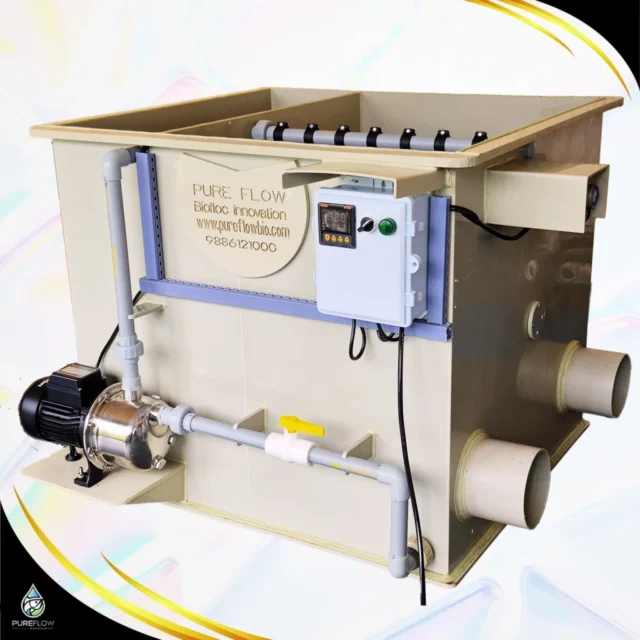
Need a Complete Marine Filtration System?
Pureflow Bio manufactures filtration equipment and delivers turnkey aquaculture and aquarium projects. Discuss tanks, drum filters, biofilters, UV, ozone and system integration in one project enquiry.