
Swimming Pond FiltersChoosing Mechanical and Biological Filtration
Swimming pond filters: how a drum filter and moving bed biofilter keep natural pool water clear, how to choose a system and gravity vs pump-fed layouts.
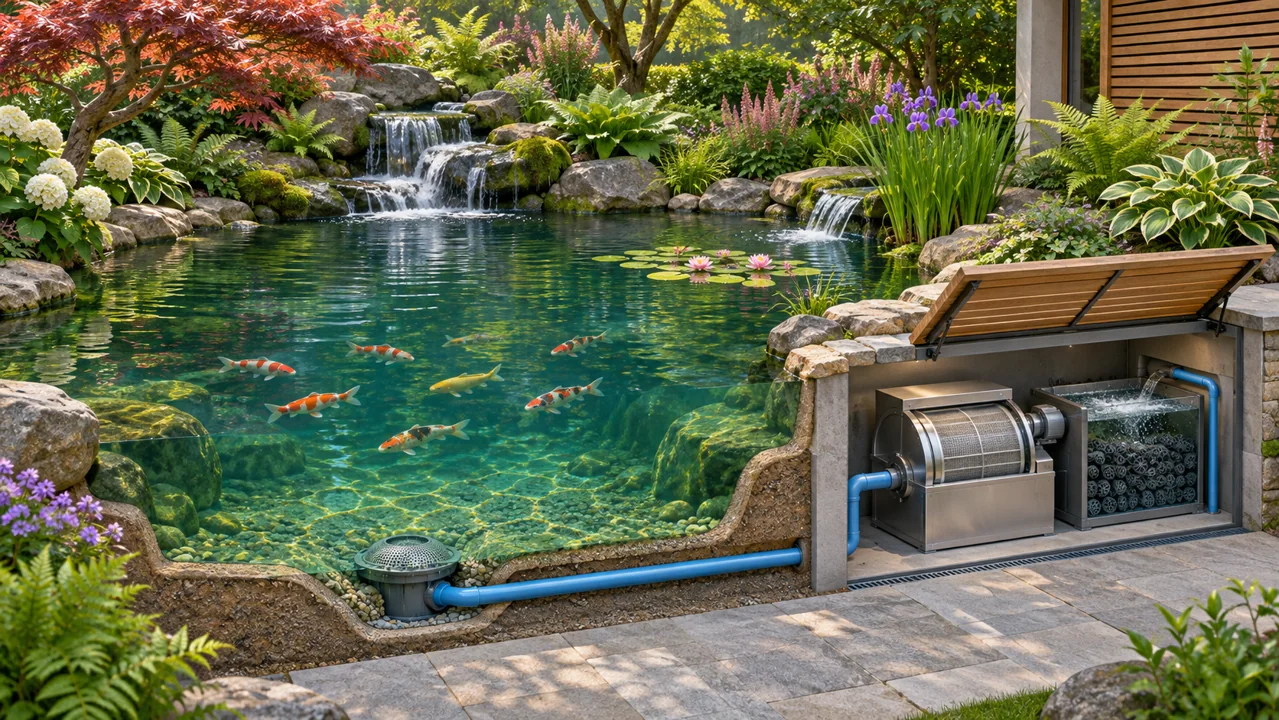 SYSTEM CONCEPT
See the mechanism.
Understand the duty.
Select a route or a stage to inspect the process. The cutaway explains the equipment and water environment; it is a teaching illustration, not a project drawing.
Collect surface debris
Use the operating pond volume and actual loading.
A skimmer can collect floating debris. Its duty and position depend on the pond layout.
- Use the operating pond volume and actual loading.
- Review collection, filtration, oxygen and return distribution.
- Record water chemistry and changes in fish behaviour.
Key takeaways
- A filter’s job: take dirt out first, break down dissolved waste, keep phosphorus low and keep water moving.
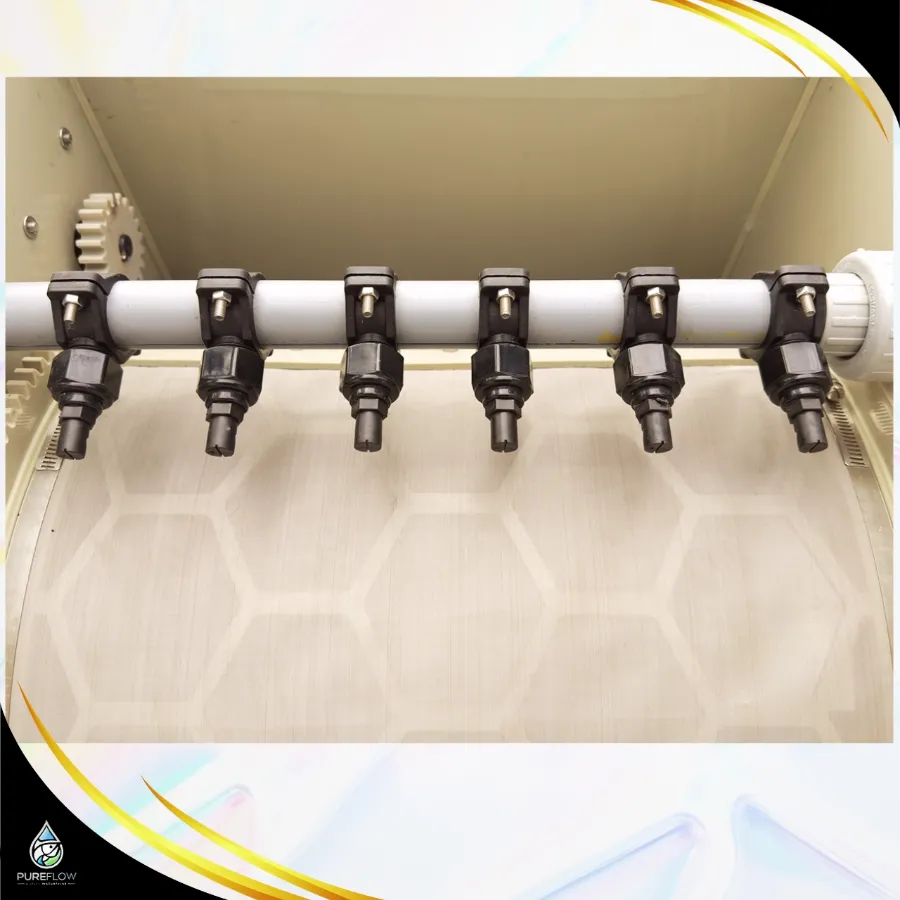
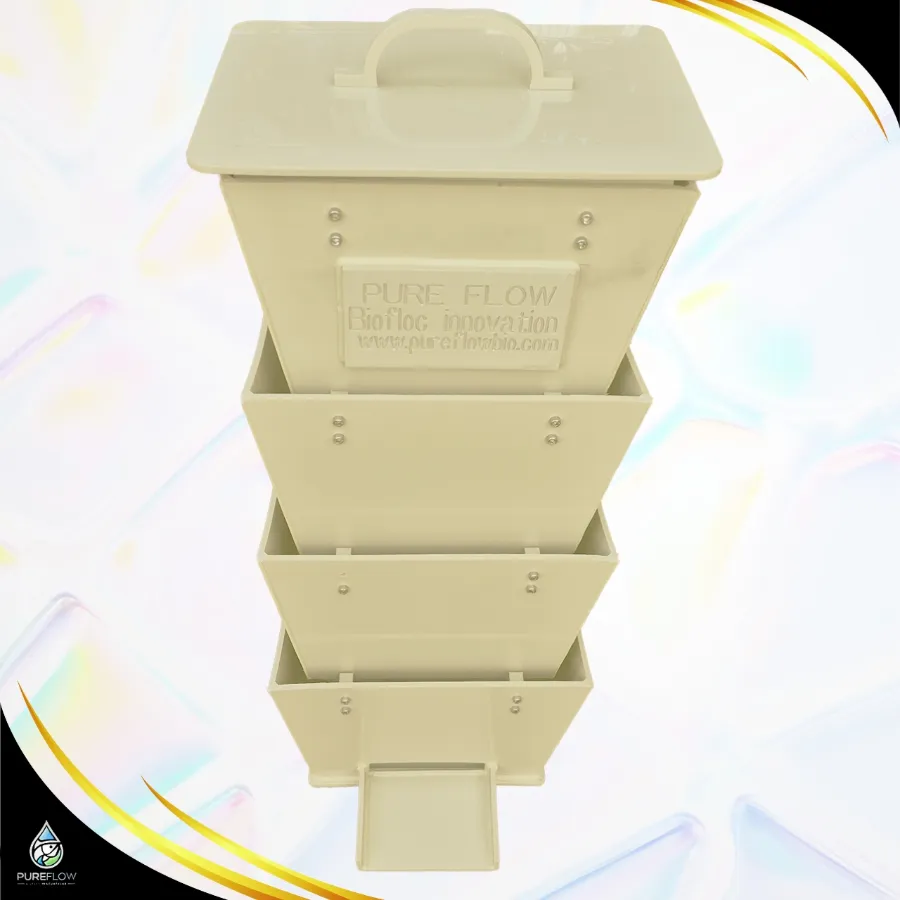
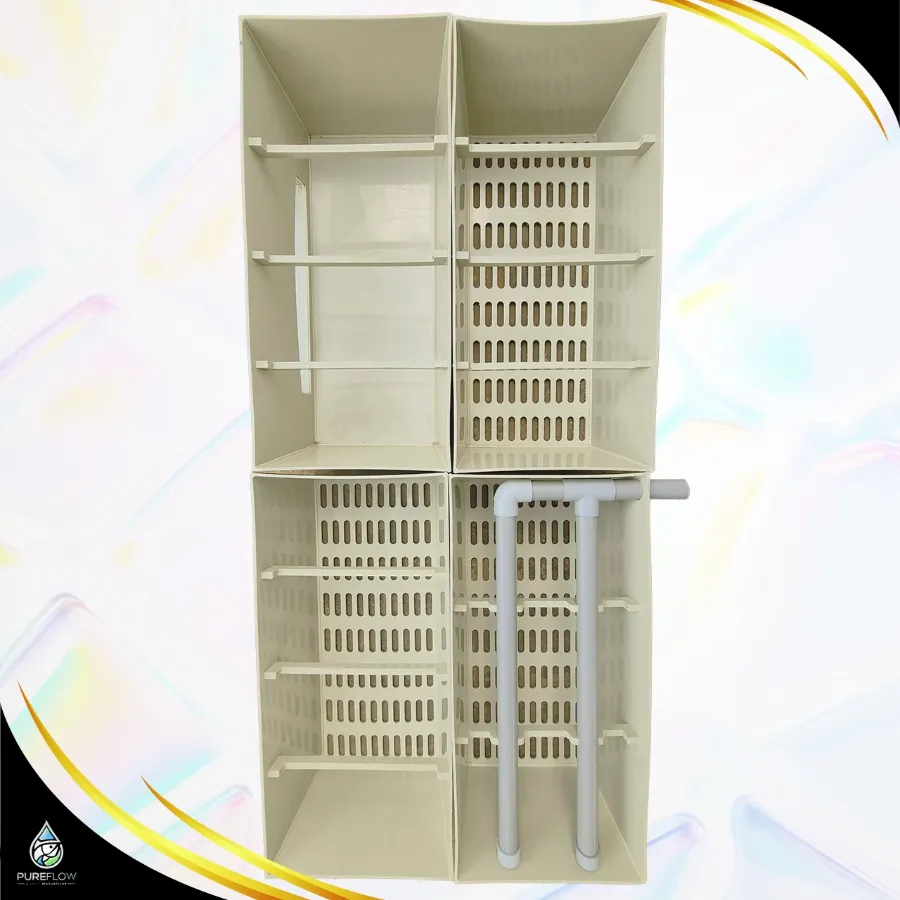
- A drum filter plus a moving bed biofilter is a common solution.
- Gravity-fed layouts are cleaner but need levels. Pump-fed layouts are more flexible.
- A filtered pond still benefits from a planted zone.
What does a swimming pond filter have to do?
- Take the dirt out firstLeaves, pollen and fine particles go before they dissolve.
- Break down dissolved wasteBacteria convert ammonia and nitrite.
- Keep phosphorus lowAlgae lose their fuel.
- Keep all the water movingNo dead zones, no stagnant pockets.
Which system do i need?
Size by pond volume and use. The more people swim, the faster the turnover you want. Turnover of about four hours suits occasional use, three hours regular family use and two hours intensive use or warm climates. See turnover rate.
Work with your own numbers.
Use the tools below to explore the relevant arithmetic. Enter measured values or declared assumptions. An estimate does not establish equipment capacity, biological performance or a safe operating limit.
Flow & turnover planner
Relate a measured water volume to a selected turnover time. Confirm the time from the application and hydraulic design.
Assumptions and limits
A planning allowance is your assumption. This calculation does not choose a filter, prove treatment capacity or account for pump head.
Pond or tank volume
Estimate a rectangular water volume from internal wetted dimensions and average operating depth.
Assumptions and limits
Irregular shapes, sloping walls, freeboard and displaced equipment change the usable water volume. Confirm with a fill meter where practical.
Convert units before you calculate
Planning arithmetic · inputs remain visible for review · example values are not operating recommendations
The building blocks
Gravity-fed or pump-fed?
| Gravity-fed | Pump-fed | |
|---|---|---|
| Layout | Filter below water level | Filter anywhere |
| Cleanliness | No pump in the dirty water | Pump handles solids |
| Flexibility | Needs level difference | Very flexible |
| Best for | New builds | Retrofits |
See also gravity or pump-fed.
With or without a planted zone
A filtered pond can be clear with no plants at all, but a planted zone adds a natural look, habitat and extra nutrient control. The two work well together.
Why an automatic filter takes so little work
The drum filter cleans itself, so the daily job is mostly looking and checking. Routine tasks are a monthly look at the spray nozzles, screen and drain, and a seasonal service. See maintenance schedule.
Review the whole water environment
Use these questions to prepare a project brief or an operating review. Check an item only when the information has been recorded for your installation.
This checklist is a working aid in the current page session, not a saved maintenance record.
Swimming Pond Filters FAQ
Do I need a drum filter for a swimming pond?
Not always, but it greatly improves clarity and reduces manual cleaning.
Can I use a pool filter instead?
Standard pool filters are designed for chlorinated water and often cannot handle organic load.
How often do I clean it?
Mostly automatic. Check it monthly.
More guides related to swimming pond filters
Discuss your system with Pureflow.
Share your application, operating volume, actual flow, loading and the question you are trying to resolve.