
Turnover Rate by System TypePonds, Aquariums, RAS and Natural Pools
A comparison of typical turnover times for koi ponds, display aquariums, RAS tanks, hatcheries and natural swimming ponds.
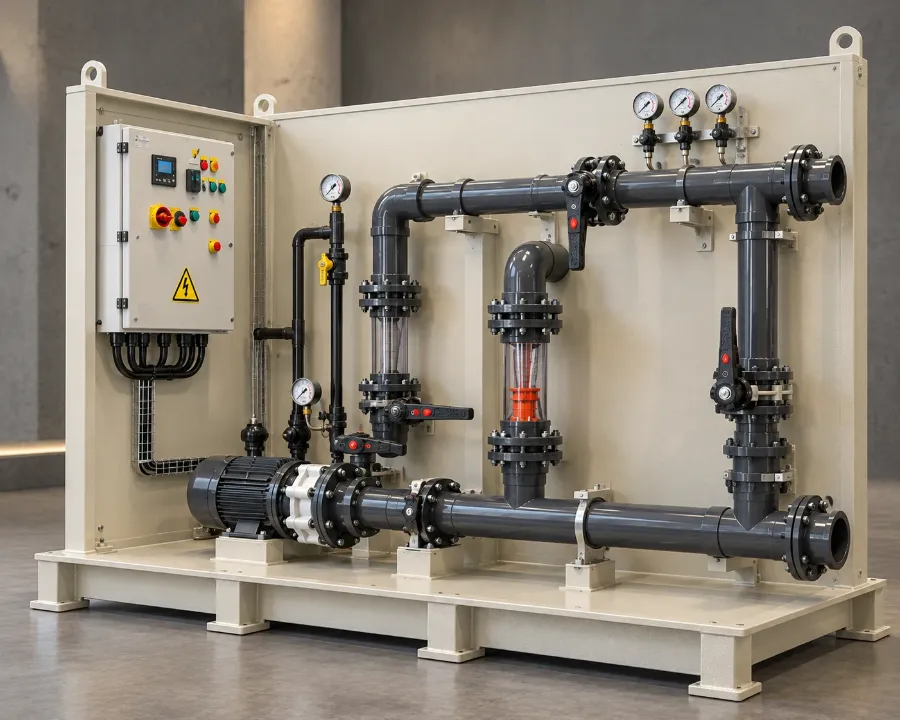 EQUIPMENT REFERENCE
See the mechanism.
Understand the duty.
Select a route or a stage to inspect the process. The cutaway explains the equipment and water environment; it is a teaching illustration, not a project drawing.
Supply the pump
Check the complete pump and system duty.
Maintain the approved suction arrangement and avoid dry running or air ingress.
- Check the complete pump and system duty.
- Use internal pipe dimensions and measured operating flow.
- Review supply conditions, protection and service isolation.
Key takeaways
- Koi ponds: Often one to two hours, as the fish are large and the solids load is high.
- Display aquariums: Typically between half an hour and a couple of hours, depending on stocking and clarity needs.
- RAS fish tanks: Frequently 30 to 60 minutes, set by oxygen demand, waste removal and tank design.
- Hatcheries: Depends on the design and life stage.
Koi ponds
Often one to two hours, as the fish are large and the solids load is high.
Display aquariums
Typically between half an hour and a couple of hours, depending on stocking and clarity needs.
Work with your own numbers.
Use the tools below to explore the relevant arithmetic. Enter measured values or declared assumptions. An estimate does not establish equipment capacity, biological performance or a safe operating limit.
Flow & turnover planner
Relate a measured water volume to a selected turnover time. Confirm the time from the application and hydraulic design.
Assumptions and limits
A planning allowance is your assumption. This calculation does not choose a filter, prove treatment capacity or account for pump head.
Measured wash-water use
Use measurements across complete wash cycles and the recorded daily cycle count.
Assumptions and limits
Identify whether you measured wash supply or total waste discharge. No default litres per Pureflow wash cycle are assumed.
Convert units before you calculate
Planning arithmetic · inputs remain visible for review · example values are not operating recommendations
Ras fish tanks
Frequently 30 to 60 minutes, set by oxygen demand, waste removal and tank design.
Hatcheries
Depends on the design and life stage. Follow your system designer.
Natural swimming ponds
Longer, often two hours or more, as plants do part of the cleaning.
Use it
Treat these as starting points and then use the calculator on the turnover rate page.
Pureflow Bio equipment for this
Standard drum filters (RDF) →Automatic solids removal.MBBR biofilters →Moving bed biofilters.Keep circulation and treatment separate
Use these questions to prepare a project brief or an operating review. Check an item only when the information has been recorded for your installation.
This checklist is a working aid in the current page session, not a saved maintenance record.
Turnover Rate by System Type FAQ
Why are RAS tanks faster?
They have heavy stocking and need quick waste and oxygen exchange.
Can I run slower?
If stocking is light, yes, but check oxygen and clarity.
More guides related to turnover rate by system type
Discuss your system with Pureflow.
Share your application, operating volume, actual flow, loading and the question you are trying to resolve.