
Turnover Rate and Biofilter Contact TimeFaster Is Not Always Better
How flow rate affects biofilter contact time, why pushing more water through can lower treatment, and how to balance flow.
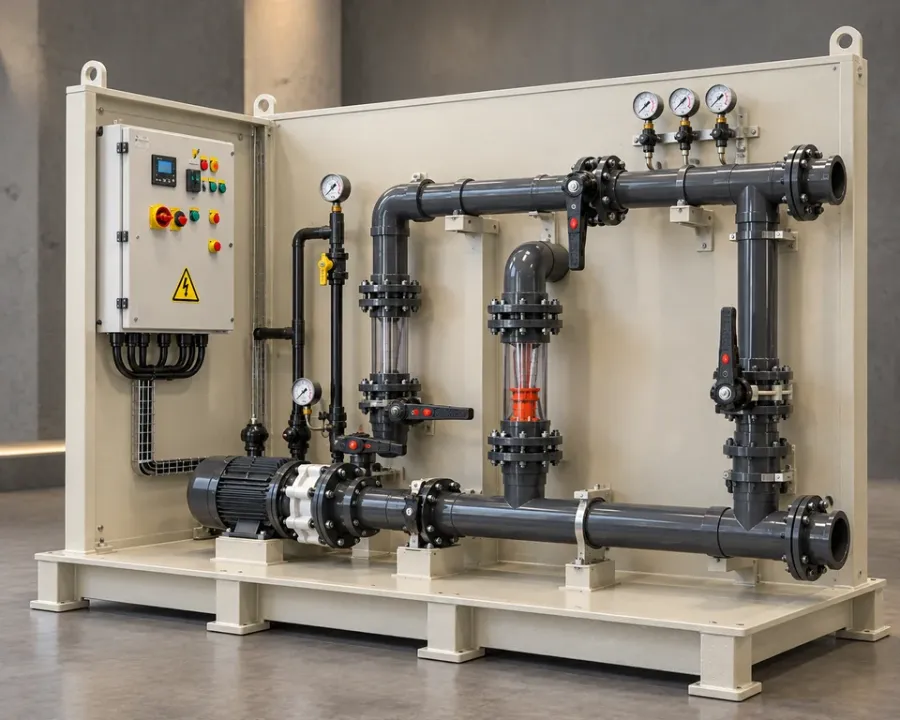 EQUIPMENT REFERENCE
See the mechanism.
Understand the duty.
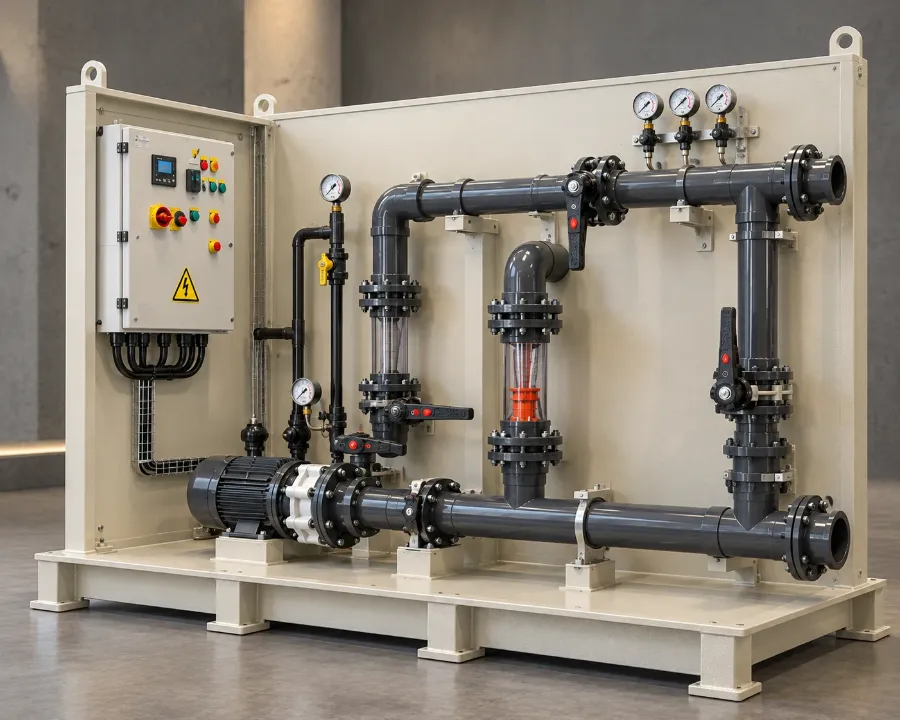
Select a route or a stage to inspect the process. The cutaway explains the equipment and water environment; it is a teaching illustration, not a project drawing.
Supply the pump
Check the complete pump and system duty.
Maintain the approved suction arrangement and avoid dry running or air ingress.
- Check the complete pump and system duty.
- Use internal pipe dimensions and measured operating flow.
- Review supply conditions, protection and service isolation.
Key takeaways
- Contact time: Water needs to spend enough time in contact with the biofilm for ammonia to be taken up.
- What limits it: Each media type has a hydraulic loading it handles well.
- How to balance: Set tank turnover for oxygen and waste removal, then check the biofilter loading.
- Sizing next: Combine this with biofilter sizing for the load.
Contact time
Water needs to spend enough time in contact with the biofilm for ammonia to be taken up. Faster flow shortens it.
What limits it
Each media type has a hydraulic loading it handles well. Beyond it, performance can fall and solids can scour the biofilm.
Work with your own numbers.
Use the tools below to explore the relevant arithmetic. Enter measured values or declared assumptions. An estimate does not establish equipment capacity, biological performance or a safe operating limit.
Biofilter media planning scenario
Relate a defined nitrogen load to an explicitly supplied media conversion rate and fill share.
Assumptions and limits
Use a conversion rate verified for the media, water chemistry, oxygen, temperature and load. Example numbers are arithmetic inputs, not approved biological capacities or fill recommendations.
Feed & loading scenario
Translate a selected feeding rate and assumed waste yield into a planning load.
Assumptions and limits
The feeding rate and TAN yield are supplied assumptions. Use the species, feed, growth stage and verified process design; the estimate is not a Pureflow capacity rating.
Convert units before you calculate
Planning arithmetic · inputs remain visible for review · example values are not operating recommendations
How to balance
Set tank turnover for oxygen and waste removal, then check the biofilter loading. If it is too high, use more biofilters in parallel or a larger reactor. See turnover rate.
Sizing next
Combine this with biofilter sizing for the load.
Pureflow Bio equipment for this
Standard drum filters (RDF) →Automatic solids removal.MBBR biofilters →Moving bed biofilters.Keep circulation and treatment separate
Use these questions to prepare a project brief or an operating review. Check an item only when the information has been recorded for your installation.
This checklist is a working aid in the current page session, not a saved maintenance record.
Turnover Rate and Biofilter Contact Time FAQ
Does a faster turnover clean water better?
Not necessarily. It can cut biofilter performance.
How do I check loading?
Divide flow by media volume or area and compare with the media maker’s limits.
More guides related to turnover rate and biofilter contact time
Discuss your system with Pureflow.
Share your application, operating volume, actual flow, loading and the question you are trying to resolve.