
Pump Head Loss and Pipe SizingWhy Your Flow Is Lower Than Expected
How pipe length, bends, valves and filters reduce flow, and how to size pipework so your pump delivers what you planned.
 EQUIPMENT REFERENCE
See the mechanism.
Understand the duty.
Select a route or a stage to inspect the process. The cutaway explains the equipment and water environment; it is a teaching illustration, not a project drawing.
Supply the pump
Check the complete pump and system duty.
Maintain the approved suction arrangement and avoid dry running or air ingress.
- Check the complete pump and system duty.
- Use internal pipe dimensions and measured operating flow.
- Review supply conditions, protection and service isolation.
Key takeaways
- What head loss is: Every metre of pipe, every bend and every valve resists the flow a little.
- The big culprits: Narrow pipe, many sharp elbows, half-closed valves and clogged strainers.
- How to size pipe: Pick a pipe diameter that keeps water speed moderate, so friction stays low.
- Read the pump curve: Find your total head on the pump curve and read the flow.
What head loss is
Every metre of pipe, every bend and every valve resists the flow a little. Add it all up with the lifting height and you get the total head the pump must overcome. As head rises, the pump delivers less flow.
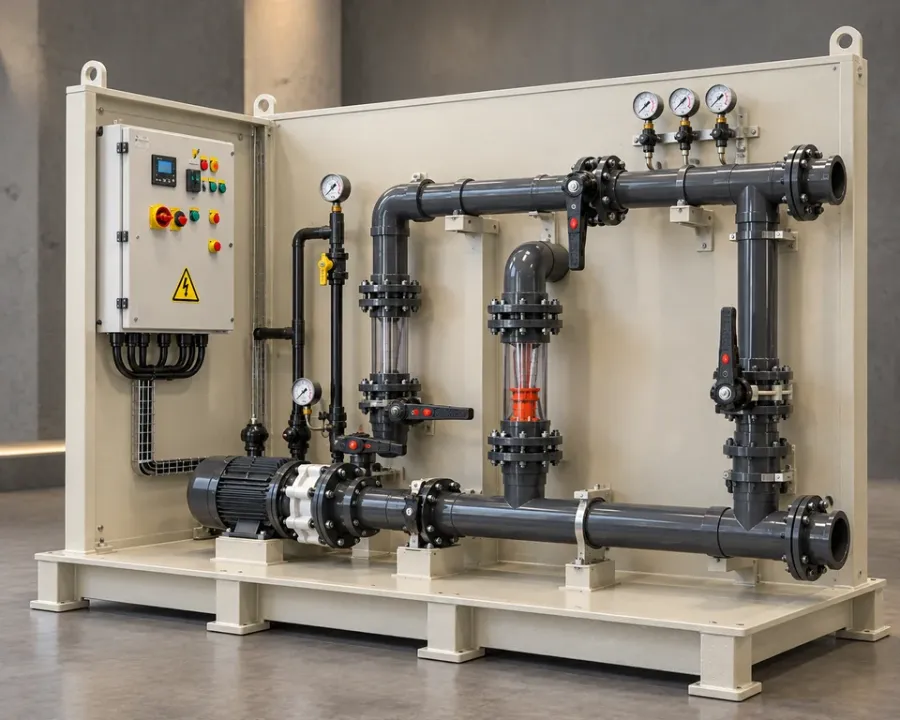
The big culprits
Narrow pipe, many sharp elbows, half-closed valves and clogged strainers. A pipe that is one size too small can cost you far more power than a slightly bigger pump would.
Work with your own numbers.
Use the tools below to explore the relevant arithmetic. Enter measured values or declared assumptions. An estimate does not establish equipment capacity, biological performance or a safe operating limit.
Pipe-loss planning scenario
Estimate pipe friction and local losses from explicit hydraulic assumptions.
Assumptions and limits
The Darcy factor and K values must suit your pipe and fittings. Excludes unlisted equipment losses, fouling, transients and pump-curve verification. Do not use as an installation approval.
Pump or equipment energy cost
Estimate electrical use from measured input power and a declared daily operating schedule.
Assumptions and limits
Use electrical input, not hydraulic power or the pump’s flow rating. Starting load, variable duty, taxes and demand charges are not included.
Convert units before you calculate
Planning arithmetic · inputs remain visible for review · example values are not operating recommendations
How to size pipe
Pick a pipe diameter that keeps water speed moderate, so friction stays low. Use long-radius bends instead of sharp elbows and keep runs as short as the layout allows. Ask your supplier for a head loss figure at your design flow.
Read the pump curve
Find your total head on the pump curve and read the flow. That is what you will get. See choosing a pump.
Quick wins
Open valves fully, clean strainers, and replace sharp bends. These cost little and can bring flow back to the design value.
Pureflow Bio equipment for this
All aquaculture equipment →Pumps, tanks, oxygen and filtration.Use the delivered operating duty
Use these questions to prepare a project brief or an operating review. Check an item only when the information has been recorded for your installation.
This checklist is a working aid in the current page session, not a saved maintenance record.
Pump Head Loss and Pipe Sizing FAQ
Why is my flow low even with a new pump?
Check head loss in pipes, valves and the filter, and read the pump curve at your real head.
Should I use bigger pipe?
Often yes. Bigger pipe lowers friction and saves power over the years.
More guides related to pump head loss and pipe sizing
Discuss your system with Pureflow.
Share your application, operating volume, actual flow, loading and the question you are trying to resolve.