
Trickle FiltersBiological Filtration and Degassing in One
Trickle (shower) filters explained: how water rains over media, oxygenation, degassing and pH, cooling, media choice, placement and troubleshooting.
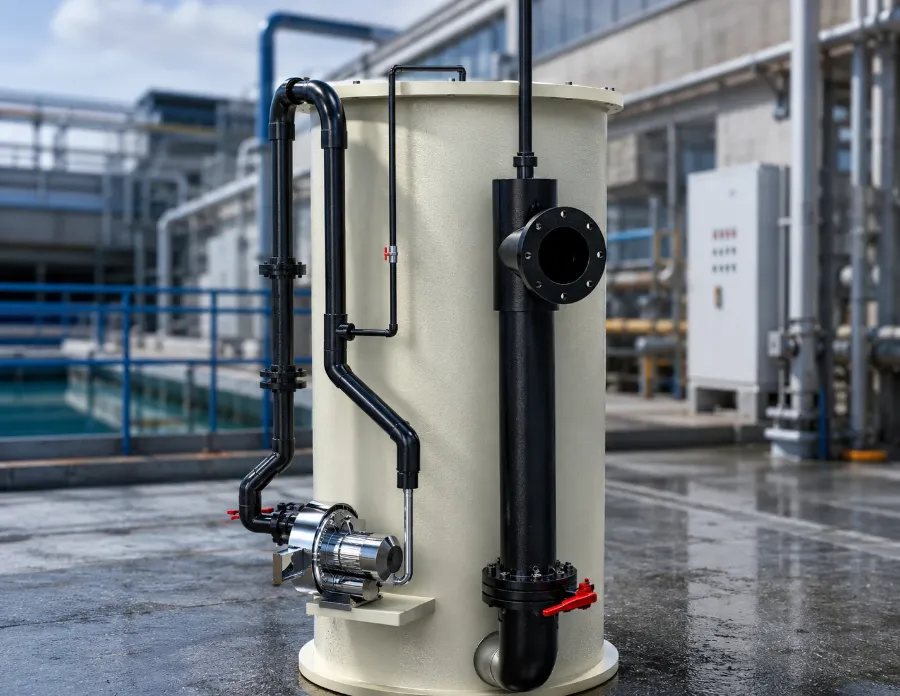 EQUIPMENT REFERENCE
See the mechanism.
Understand the duty.
Select a route or a stage to inspect the process. The cutaway explains the equipment and water environment; it is a teaching illustration, not a project drawing.
Feed the reactor
Define peak feed and the nitrogen load.
Pre-screened water enters the biological stage. Effective upstream solids removal helps protect the reactor.
- Define peak feed and the nitrogen load.
- Check oxygen, pH, alkalinity and temperature.
- Use supported media performance and the specified fill arrangement.
Key takeaways
- Water rains over media in open air, so oxygen and CO2 exchange are excellent.
- Degassing raises pH slightly.
- Cooling is welcome in summer, less so in winter.
- Keep distribution even so media stays wet.
From the top tray to the pond in four steps
- The distribution tray spreads the waterEvenly across the media.
- The water rains over the mediaBiofilm treats it.
- Air flows through the towerGas exchange.
- Oxygen-rich water flows backTo the pond or tank.
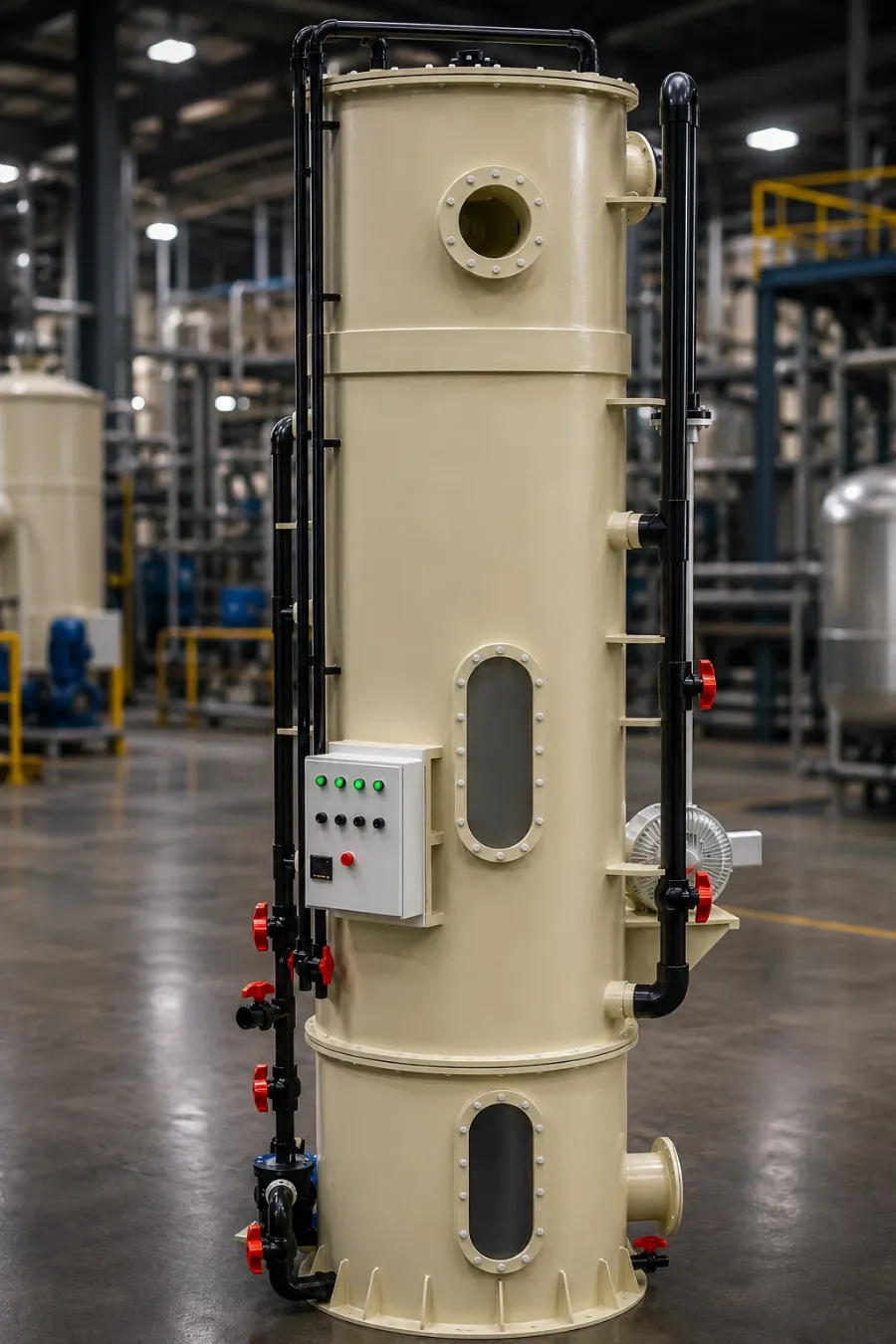
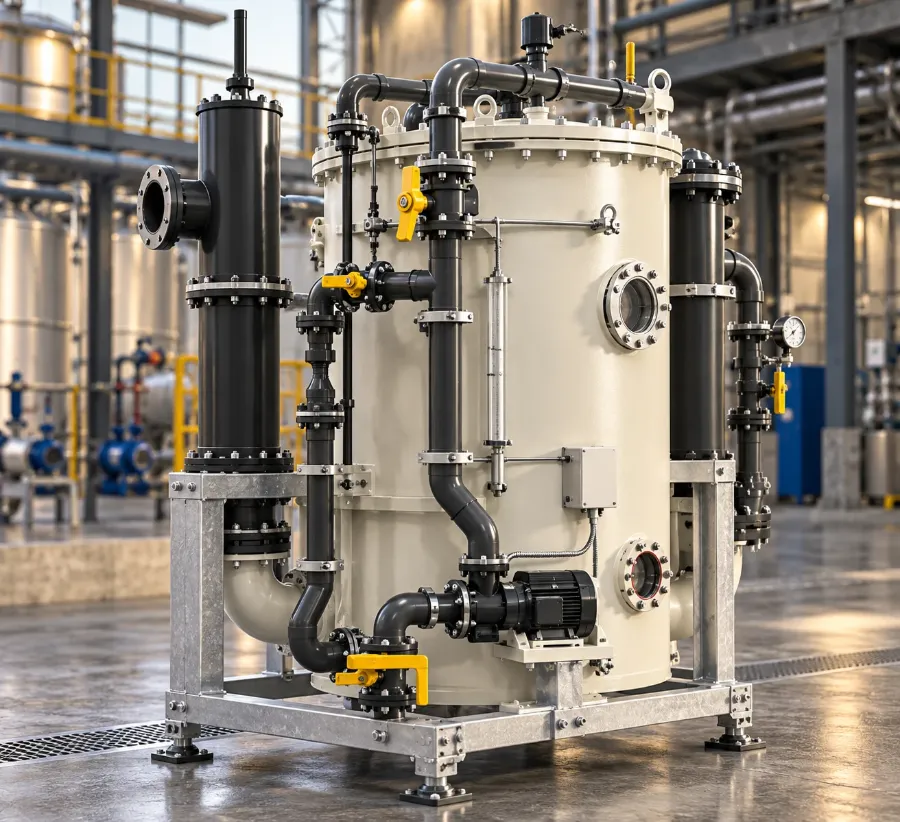
Air and water meet in every drop
Degassing and pH
CO2 leaves the water, which tends to raise pH. See CO2 in RAS.
Cooling
Evaporation cools the water, helpful in summer and a drawback in winter.
Work with your own numbers.
Use the tools below to explore the relevant arithmetic. Enter measured values or declared assumptions. An estimate does not establish equipment capacity, biological performance or a safe operating limit.
Flow & turnover planner
Relate a measured water volume to a selected turnover time. Confirm the time from the application and hydraulic design.
Assumptions and limits
A planning allowance is your assumption. This calculation does not choose a filter, prove treatment capacity or account for pump head.
Pond or tank volume
Estimate a rectangular water volume from internal wetted dimensions and average operating depth.
Assumptions and limits
Irregular shapes, sloping walls, freeboard and displaced equipment change the usable water volume. Confirm with a fill meter where practical.
Convert units before you calculate
Planning arithmetic · inputs remain visible for review · example values are not operating recommendations
Which media goes in?
Open, light plastic media with good surface area and airflow. See media types.
Where it goes
After solids removal. It can work alongside a moving bed filter. UV-C and a return pump complete the loop.
Trickle filter or moving bed?
| Trickle | Moving bed | |
|---|---|---|
| How it works | Static media in air | Media moved by air under water |
| Oxygen | From the air | From bubbles |
| CO2 stripping | Very good | Good |
| Air pump | Not needed | Runs 24/7 |
Keeping it healthy
Check the biological assumptions
Use these questions to prepare a project brief or an operating review. Check an item only when the information has been recorded for your installation.
This checklist is a working aid in the current page session, not a saved maintenance record.
Trickle Filters FAQ
Do trickle filters need an air pump?
No.
Do they cool the water?
Yes, through evaporation.
Can I combine with MBBR?
Yes, often.
More guides related to trickle filters
Discuss your system with Pureflow.
Share your application, operating volume, actual flow, loading and the question you are trying to resolve.