
Aquaculture Filtration SystemsMechanical, Biological and Disinfection
Aquaculture filtration systems for RAS: solids removal, biofiltration, CO2 stripping, oxygen and disinfection, how to size by flow and feed, gravity or pump-fed layouts.
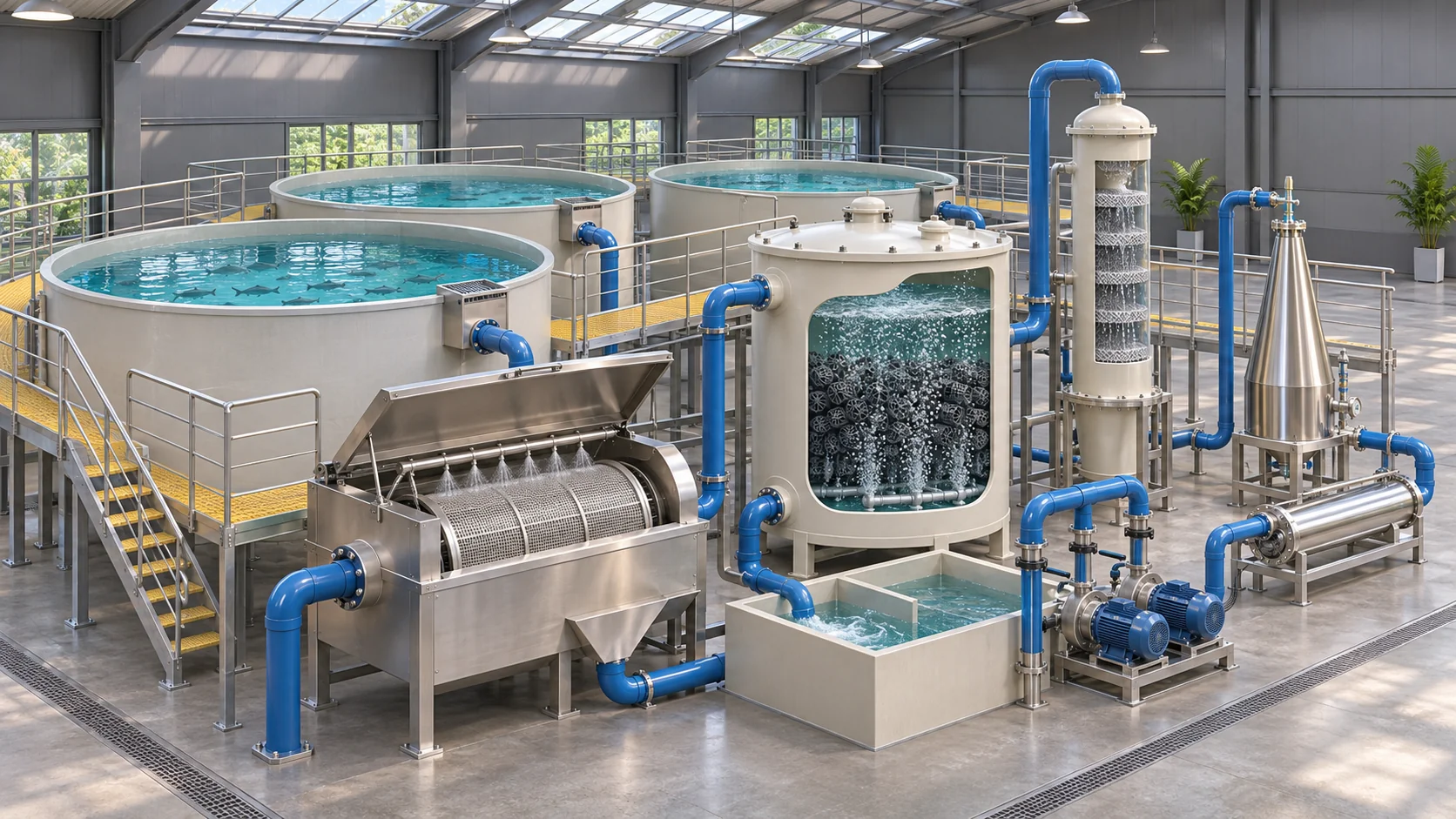 SYSTEM CONCEPT
See the mechanism.
Understand the duty.
Select a route or a stage to inspect the process. The cutaway explains the equipment and water environment; it is a teaching illustration, not a project drawing.
Culture tanks
Collect waste before it settles.
The culture tank is both an animal environment and a hydraulic vessel. The return flow should distribute oxygenated water and move settleable waste toward the intended outlet. Tank shape, drain arrangement and the behaviour of the stock determine how well this happens.
- Confirm the operating water volume and peak feed.
- Check circulation, drain capture and access for inspection.
- Record oxygen at the animal zone, not only in the return pipe.
Key takeaways
- Four jobs: remove solids, convert ammonia, strip CO2 and add oxygen, disinfect.
- Size solids removal by flow and solids load, biofilters by daily feed.
- Gravity-fed layouts are cleaner, pump-fed ones more flexible.
- Everything must be built for 24/7 duty, with backup.

What does a ras filtration system have to do?
- Take the solids out firstBefore they break down into dissolved waste.
- Convert the ammoniaBiofilter bacteria turn ammonia into nitrate.
- Strip CO2, add oxygenDegassing and oxygenation steps. See CO2 in RAS.
- Disinfect the clear waterUV or ozone to control pathogens.
How to size a ras filter system: flow and feed
Use two numbers: the recirculation flow (tank volume divided by the exchange time) and the daily feed. Flow sizes the drum filter. Feed sizes the biofilter. See drum filter sizing and biofilter sizing.
| Water type | Typical tank exchange |
|---|---|
| Warm water species | About every hour |
| Cold water species | About every 30 minutes |
Starting points. Use your designer’s final calculation.
Work with your own numbers.
Use the tools below to explore the relevant arithmetic. Enter measured values or declared assumptions. An estimate does not establish equipment capacity, biological performance or a safe operating limit.
Feed & loading scenario
Translate a selected feeding rate and assumed waste yield into a planning load.
Assumptions and limits
The feeding rate and TAN yield are supplied assumptions. Use the species, feed, growth stage and verified process design; the estimate is not a Pureflow capacity rating.
Biomass & observed density
Convert a known count and mean fish weight into biomass and current loading per water volume.
Assumptions and limits
This describes the inputs; it does not establish a safe stocking density or the system’s oxygen, filtration or welfare capacity.
Convert units before you calculate
Planning arithmetic · inputs remain visible for review · example values are not operating recommendations
The building blocks
Gravity-fed or pump-fed?
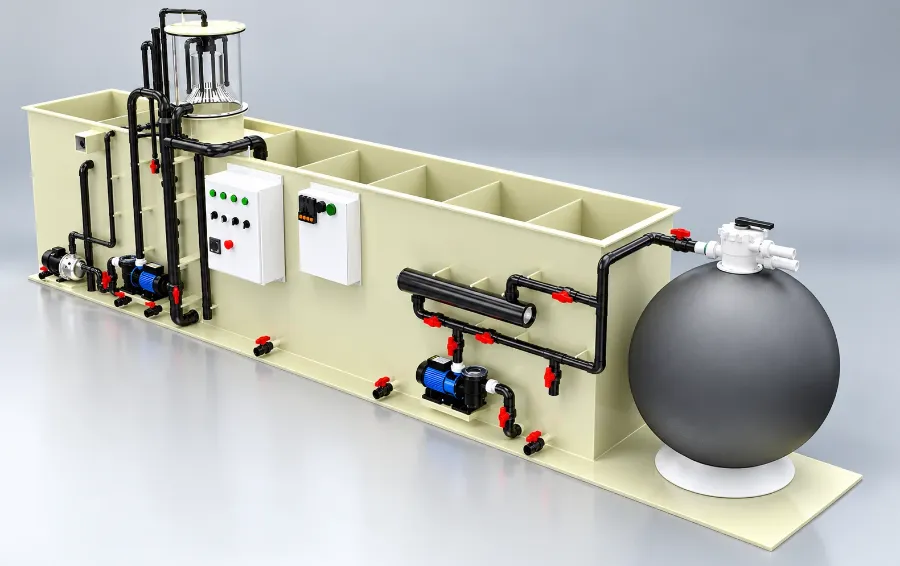
Gravity-fed layouts keep solids away from pumps and cut breakage, while pump-fed ones fit tight spaces. See gravity or pump-fed.
Larger farms, hatcheries and research
Larger sites use several drum filters in parallel, multiple biofilters and a dedicated oxygen plant. Hatcheries add UV and ozone for biosecurity. See UV for hatcheries.
Built for 24/7 operation
Use corrosion-resistant materials, spare parts for pumps and sensors, and alarms. See power backup and alarms.
Pureflow Bio equipment for this
Standard drum filters (RDF) →Gravity-fed rotary drum filters that remove solids before they break down.Pro drum filters →Compact pump-fed drum filters with a built-in biological stage.MBBR biofilters →Moving bed reactors for steady ammonia and nitrite removal.UV disinfection systems →UV-C chambers for disease control.Review the design at peak load
Use these questions to prepare a project brief or an operating review. Check an item only when the information has been recorded for your installation.
This checklist is a working aid in the current page session, not a saved maintenance record.
Aquaculture Filtration Systems FAQ
What is the first step in RAS filtration?
Solids removal. Removing waste before it dissolves protects the biofilter.
How do I size the biofilter?
From daily feed and the media’s conversion rate.
Do I need UV and ozone?
Not always, but they help biosecurity, especially in hatcheries.
More guides related to aquaculture filtration systems
Discuss your system with Pureflow.
Share your application, operating volume, actual flow, loading and the question you are trying to resolve.