Water Quality for FishAmmonia, Nitrite, pH and Oxygen
Water quality explained: the nitrogen cycle, ammonia toxicity, nitrite, nitrate, pH and KH, oxygen, target values for ponds, aquariums and farms, testing and troubleshooting.
 EQUIPMENT REFERENCE
See the mechanism.
Understand the duty.
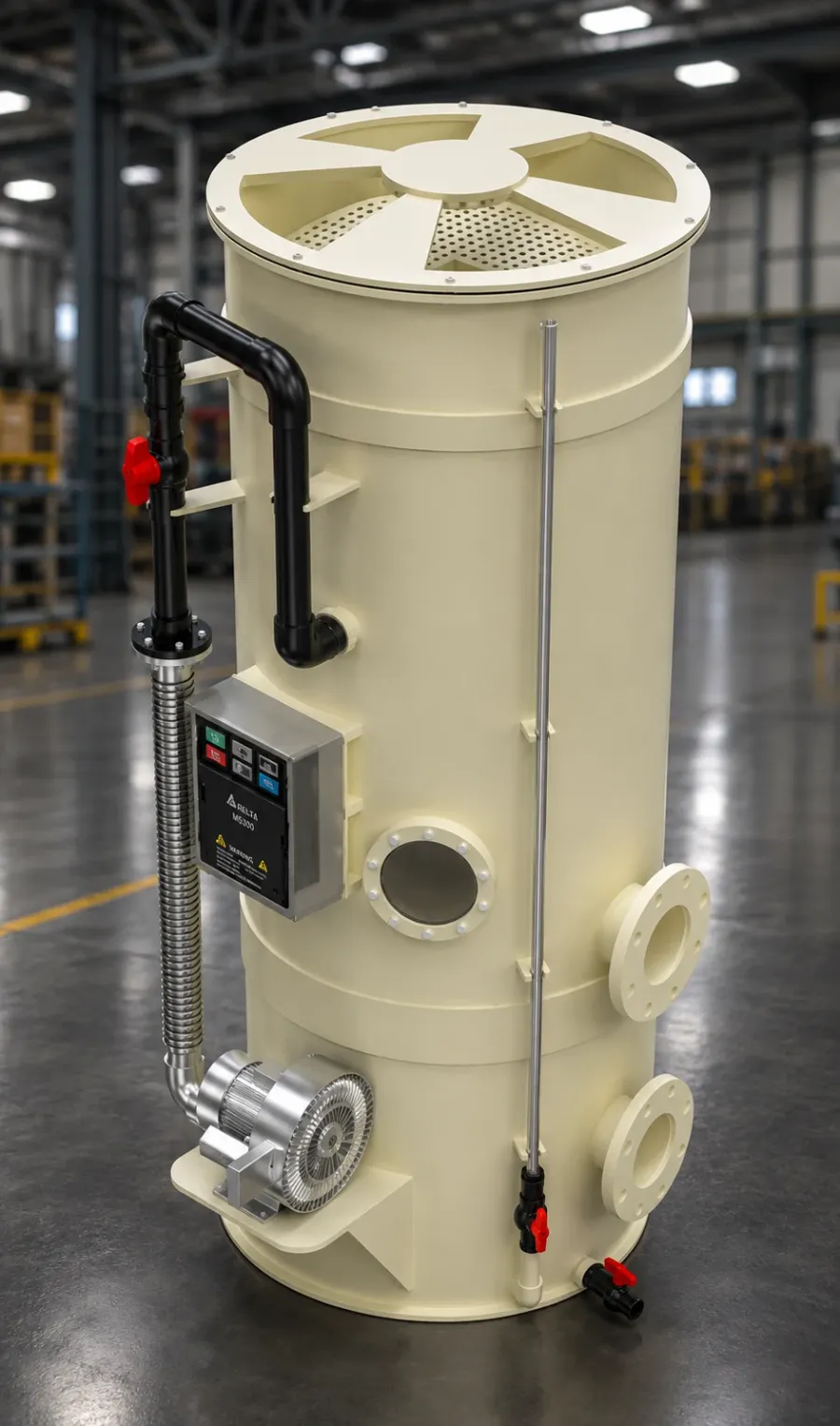
Select a route or a stage to inspect the process. The cutaway explains the equipment and water environment; it is a teaching illustration, not a project drawing.
Measure the system
Record the test method, units and sampling location.
Use appropriate tests and record units, location, time, pH and temperature with the result.
- Record the test method, units and sampling location.
- Keep concentrations, loads and chemical forms distinct.
- Interpret results with species, pH, temperature and salinity.
Key takeaways
- Ammonia and nitrite should be zero in a mature system. Nitrate should stay low.
- The same ammonia reading can be harmless or deadly depending on pH and temperature.
- KH is the buffer that keeps pH stable.
- Test regularly and keep a log. Trends warn you early.
Why water quality decides everything
Fish breathe, feed and excrete in the water. Poor water stresses them, lowers immunity and invites disease. Good filtration keeps the water in range, but you need to know the range.

From fish waste to nitrate: the nitrogen cycle
- Ammonia is producedFish gills and waste release it.
- Ammonia becomes nitriteBacteria (Nitrosomonas) oxidise it.
- Nitrite becomes nitrateBacteria (Nitrobacter, Nitrospira) finish the job.
- A new system needs time to cycleWeeks, not days.
Work with your own numbers.
Use the tools below to explore the relevant arithmetic. Enter measured values or declared assumptions. An estimate does not establish equipment capacity, biological performance or a safe operating limit.
Freshwater ammonia fraction
Estimate the unionised fraction from TAN-N, pH and temperature using the Emerson freshwater equilibrium relationship.
Assumptions and limits
Freshwater approximation within the displayed input range. Result is NH₃-N, not NH₃ mass, and does not establish a safe limit. Do not apply to saline systems or use it to replace measured chemistry and species-specific review.
Feed & loading scenario
Translate a selected feeding rate and assumed waste yield into a planning load.
Assumptions and limits
The feeding rate and TAN yield are supplied assumptions. Use the species, feed, growth stage and verified process design; the estimate is not a Pureflow capacity rating.
Convert units before you calculate
Planning arithmetic · inputs remain visible for review · example values are not operating recommendations
Ammonia: why the same reading can be harmless or deadly
Total ammonia exists as NH₄⁺ (relatively harmless) and NH₃ (toxic). Higher pH and temperature push the balance toward NH₃.
| pH | Share as toxic NH₃ at about 25 °C (approx.) |
|---|---|
| 7.0 | 0.6% |
| 7.5 | 1.8% |
| 8.0 | 5.4% |
| 8.5 | 15% |
Approximate values for fresh water. See ammonia toxicity and pH.
When ammonia is too high
Stop feeding, change water gently, add aeration and check the biofilter.
Nitrite, nitrate and phosphate
Ph and kh: the buffer
KH (carbonate hardness) is the buffer that stops pH from falling as nitrification uses alkalinity. Keep KH up and pH stays steady. See alkalinity and pH.
Oxygen and temperature
Warm water holds less oxygen. Fish need enough at all hours. See dissolved oxygen.
Target values per application
| System | Temperature | pH | Ammonia | Other |
|---|---|---|---|---|
| Koi pond | 18 to 25 °C | 7.0 to 8.5 | 0 | KH 6 to 14 dKH |
| Natural swimming pond | Up to 23 °C | 7.0 to 9.0 | Low | Phosphorus very low |
| Freshwater aquarium | 22 to 28 °C | 6.5 to 7.5 | 0 | KH 4 to 8 |
| Reef aquarium | 24 to 28 °C | 8.1 to 8.3 | 0 | Salinity 35 ppt, alk 7 to 11 dKH |
| Fish farm, warm water | 22 to 32 °C | 6.0 to 8.5 | Below 3 mg/L TAN | DO above 5 mg/L |
| Fish farm, cold water | 10 to 18 °C | 6.0 to 8.5 | Below 1 mg/L TAN | DO above 6 to 8 mg/L |
| Aquaponics | 18 to 30 °C | 6 to 7 | Below 1 | Nitrate 5 to 150 mg/L |
Typical ranges. Species and systems vary.
How to test your water
| Situation | Test | How often |
|---|---|---|
| New pond, tank or filter | Ammonia, nitrite, pH, KH | Every 2 to 3 days |
| Stable system | Ammonia, nitrite, nitrate, pH | Weekly |
| After changes or when fish act oddly | The above | Straight away |
What your fish and water are telling you
How filtration protects water quality
Drum filter removes solids, biofilter converts ammonia, trickle filter oxygenates and degasses, UV controls pathogens and algae.
Units and conversions
| Reported as | Convert to | Multiply by |
|---|---|---|
| NH₄-N (TAN) | NH₄⁺ | 1.288 |
| NH₃-N | NH₃ | 1.216 |
| NO₂-N | NO₂⁻ | 3.284 |
| NO₃-N | NO₃⁻ | 4.427 |
| PO₄-P | PO₄³⁻ | 3.066 |
| dKH or dGH | mg/L as CaCO₃ | 17.85 |
Ammonia toxicity calculator
Make the measurements comparable
Use these questions to prepare a project brief or an operating review. Check an item only when the information has been recorded for your installation.
This checklist is a working aid in the current page session, not a saved maintenance record.
Water Quality for Fish FAQ
What is the most important water value?
Ammonia and nitrite at zero, with stable pH.
How often should I test?
Weekly for stable systems, more often when anything changes.
Why does my pH keep falling?
KH is being used up by nitrification.
More guides related to water quality for fish
Discuss your system with Pureflow.
Share your application, operating volume, actual flow, loading and the question you are trying to resolve.