
Alkalinity and pH in Recirculating SystemsKeeping the Buffer Up
Why nitrification eats alkalinity, how pH drifts down in RAS and biofilters, and how to dose buffer safely.
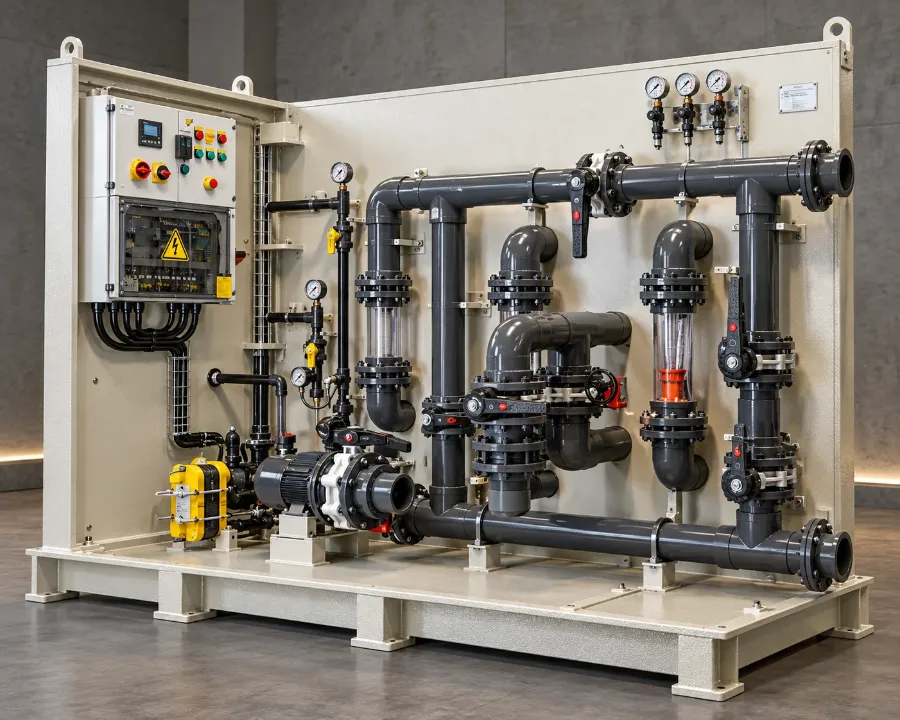 EQUIPMENT REFERENCE
See the mechanism.
Understand the duty.
Select a route or a stage to inspect the process. The cutaway explains the equipment and water environment; it is a teaching illustration, not a project drawing.
Measure the system
Record the test method, units and sampling location.
Use appropriate tests and record units, location, time, pH and temperature with the result.
- Record the test method, units and sampling location.
- Keep concentrations, loads and chemical forms distinct.
- Interpret results with species, pH, temperature and salinity.
Key takeaways
- What alkalinity does: Alkalinity is the water’s ability to resist pH change.
- Why it falls: Nitrification consumes alkalinity, and carbon dioxide from fish lowers pH.
- Targets: Many systems aim for alkalinity somewhere in the 50 to 400 mg/L range depending on species, and a pH of about 7 to 8.4.
- How to correct it: Dose sodium bicarbonate in small amounts, and watch pH and ammonia as you do.
What alkalinity does
Alkalinity is the water’s ability to resist pH change. With enough of it, pH holds steady. Without it, small events cause big swings.
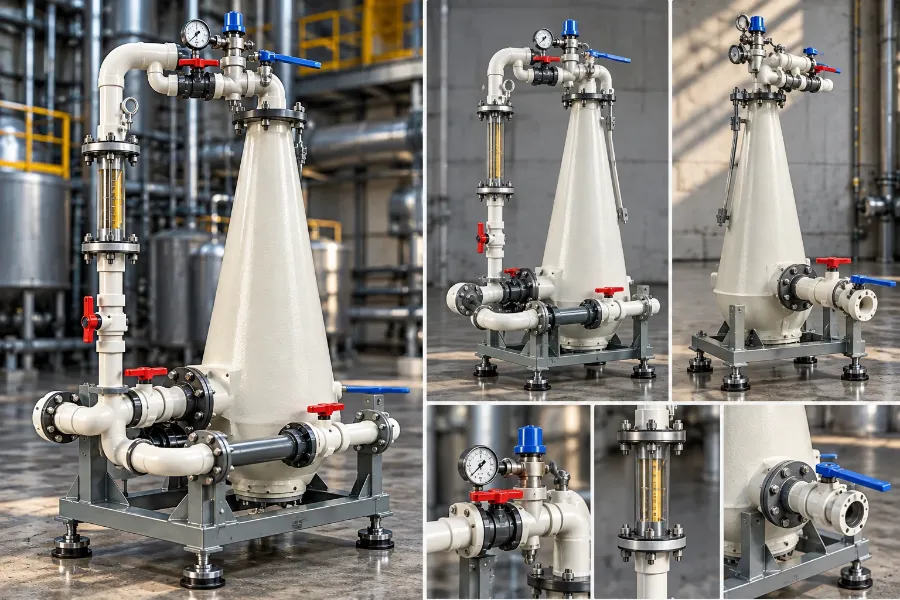
Why it falls
Nitrification consumes alkalinity, and carbon dioxide from fish lowers pH. In a closed loop, both push the same way.
Work with your own numbers.
Use the tools below to explore the relevant arithmetic. Enter measured values or declared assumptions. An estimate does not establish equipment capacity, biological performance or a safe operating limit.
Ideal dilution calculation
Estimate a single mixed water replacement from measured starting, replacement-water and target concentrations.
Assumptions and limits
A simple mass balance, not a safe operating target. Assumes complete mixing and no ongoing production or reaction. Species, chemistry and source-water suitability require review.
Flow & turnover planner
Relate a measured water volume to a selected turnover time. Confirm the time from the application and hydraulic design.
Assumptions and limits
A planning allowance is your assumption. This calculation does not choose a filter, prove treatment capacity or account for pump head.
Convert units before you calculate
Planning arithmetic · inputs remain visible for review · example values are not operating recommendations
Targets
Many systems aim for alkalinity somewhere in the 50 to 400 mg/L range depending on species, and a pH of about 7 to 8.4. Follow what suits your species.
How to correct it
Dose sodium bicarbonate in small amounts, and watch pH and ammonia as you do. Some farms use calcium hydroxide, which also raises pH and so changes ammonia toxicity. See ammonia and pH.
Prevent it
Remove carbon dioxide with good aeration and degassing, and avoid overloading the biofilter. See carbon dioxide.
Pureflow Bio equipment for this
MBBR biofilters →Moving bed biofilters.Oxygen cones →Oxygen dissolving.UV disinfection systems →UV-C chambers.Make the measurements comparable
Use these questions to prepare a project brief or an operating review. Check an item only when the information has been recorded for your installation.
This checklist is a working aid in the current page session, not a saved maintenance record.
Alkalinity and pH in Recirculating Systems FAQ
How often should I test alkalinity?
Weekly in a stable system, more often when feeding changes.
Can I just add baking soda?
Sodium bicarbonate is a common buffer, but dose slowly and track the results.
More guides related to alkalinity and ph in recirculating systems
Discuss your system with Pureflow.
Share your application, operating volume, actual flow, loading and the question you are trying to resolve.