
Koi Pond AerationHow Much Air Do Your Fish Need?
Why koi ponds need extra aeration, how to size an air pump and diffusers, and when summer heat makes it essential.
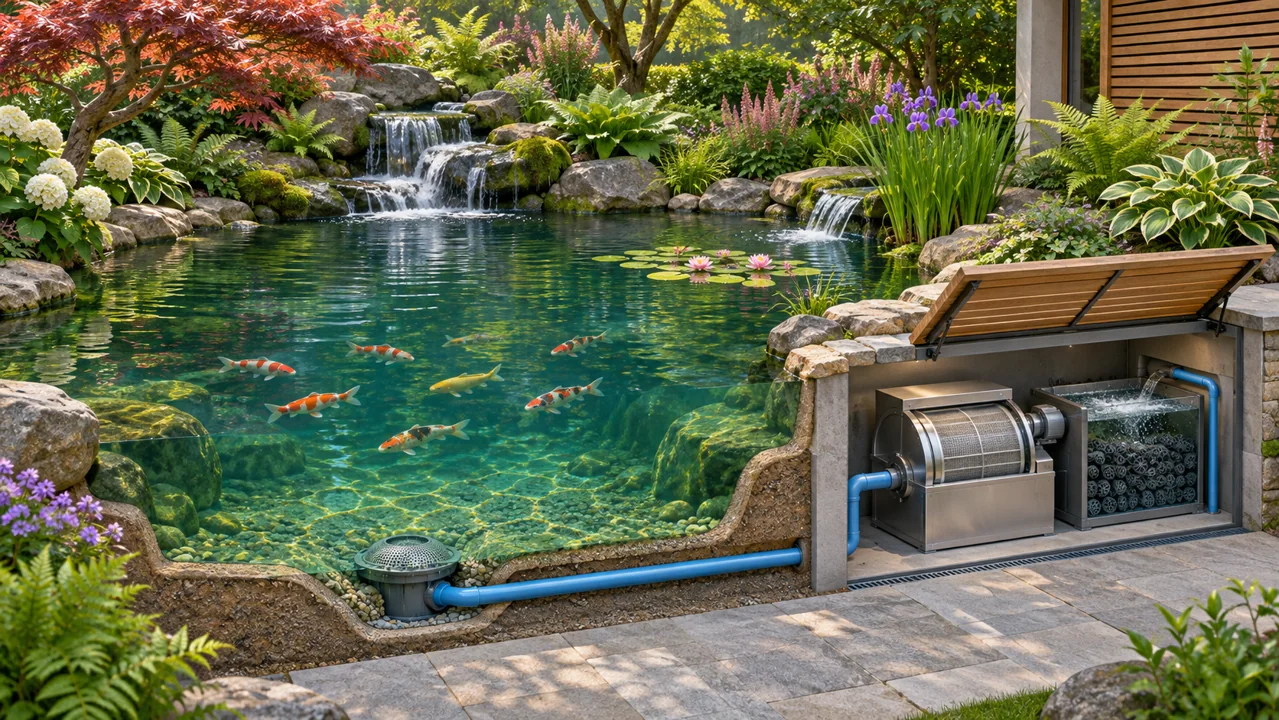 SYSTEM CONCEPT
See the mechanism.
Understand the duty.
Select a route or a stage to inspect the process. The cutaway explains the equipment and water environment; it is a teaching illustration, not a project drawing.
Collect surface debris
Use the operating pond volume and actual loading.
A skimmer can collect floating debris. Its duty and position depend on the pond layout.
- Use the operating pond volume and actual loading.
- Review collection, filtration, oxygen and return distribution.
- Record water chemistry and changes in fish behaviour.
Key takeaways
- Why koi are demanding: Large fish, dense stocking and warm water all push oxygen demand up, while warm water holds less oxygen.
- Where air helps most: At night, in summer, and after feeding.
- Sizing the system: Use an air pump or blower rated for the water depth, with diffusers spread across the pond floor so oxygen reaches every corner.
- Do not forget the biofilter: Moving bed biofilters and trickle filters need their own air.

Why koi are demanding
Large fish, dense stocking and warm water all push oxygen demand up, while warm water holds less oxygen. Biofilter bacteria are competing for the same oxygen.
Where air helps most
At night, in summer, and after feeding. A pond that looks fine at noon can be short of oxygen before dawn.
Work with your own numbers.
Use the tools below to explore the relevant arithmetic. Enter measured values or declared assumptions. An estimate does not establish equipment capacity, biological performance or a safe operating limit.
Dissolved-oxygen mass inventory
Convert measured dissolved concentration and water volume into the mass currently dissolved.
Assumptions and limits
This is an inventory, not oxygen-delivery capacity or safe survival time. Fish, bacteria, transfer efficiency and changing demand require a separate oxygen balance.
Pump or equipment energy cost
Estimate electrical use from measured input power and a declared daily operating schedule.
Assumptions and limits
Use electrical input, not hydraulic power or the pump’s flow rating. Starting load, variable duty, taxes and demand charges are not included.
Convert units before you calculate
Planning arithmetic · inputs remain visible for review · example values are not operating recommendations
Sizing the system
Use an air pump or blower rated for the water depth, with diffusers spread across the pond floor so oxygen reaches every corner. Deeper ponds need more pressure. A few large diffusers placed well beat many small ones in one spot.
Do not forget the biofilter
Moving bed biofilters and trickle filters need their own air. See moving bed biofilters.
Signs of low oxygen
Fish at the surface, gathering at waterfalls or inlets, and poor appetite. Add air immediately and cut feed.
Pureflow Bio equipment for this
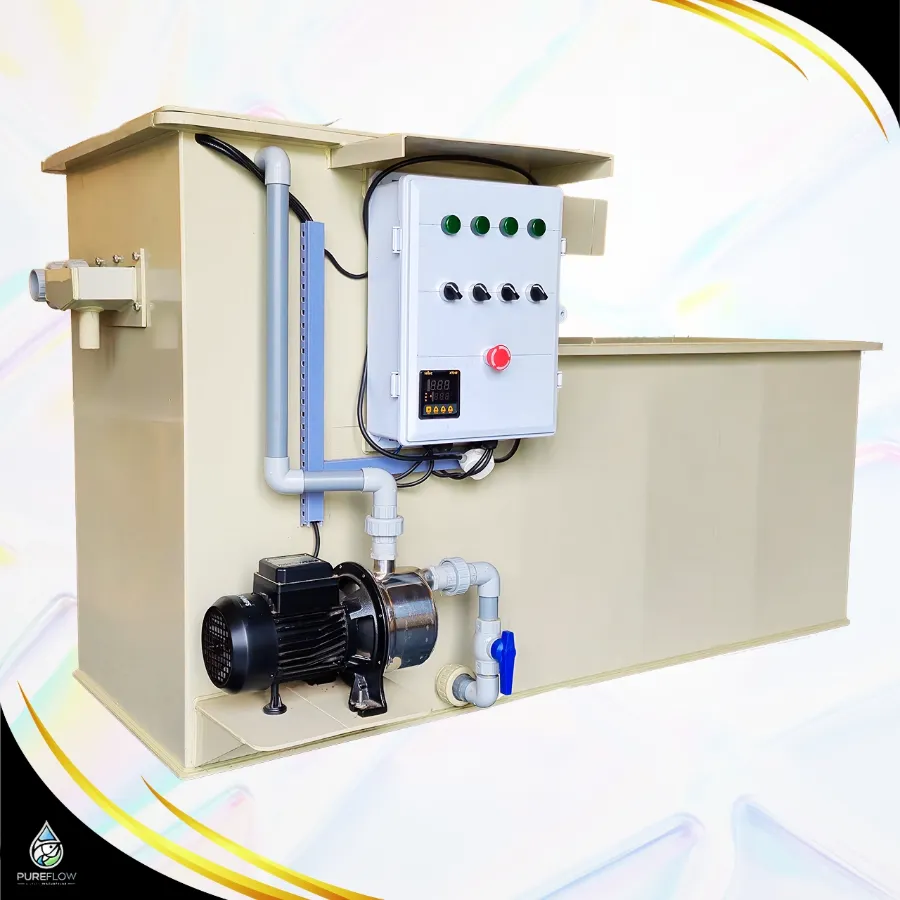
Koi and ornamental pond systems →Filtration sets for koi ponds.Standard drum filters (RDF) →Automatic solids removal.Start with the operating pond
Use these questions to prepare a project brief or an operating review. Check an item only when the information has been recorded for your installation.
This checklist is a working aid in the current page session, not a saved maintenance record.
Koi Pond Aeration FAQ
Can a waterfall replace an air pump?
It helps, but on hot, still nights an air pump is more reliable.
Should aeration run 24 hours?
In most koi ponds, yes.
More guides related to koi pond aeration
Discuss your system with Pureflow.
Share your application, operating volume, actual flow, loading and the question you are trying to resolve.