
AquaponicsHow It Works and Is It Right for You
Aquaponics explained: how fish and plants share one loop, following the nitrogen, grow methods, pH, what to grow, system sizing, nutrients and troubleshooting.
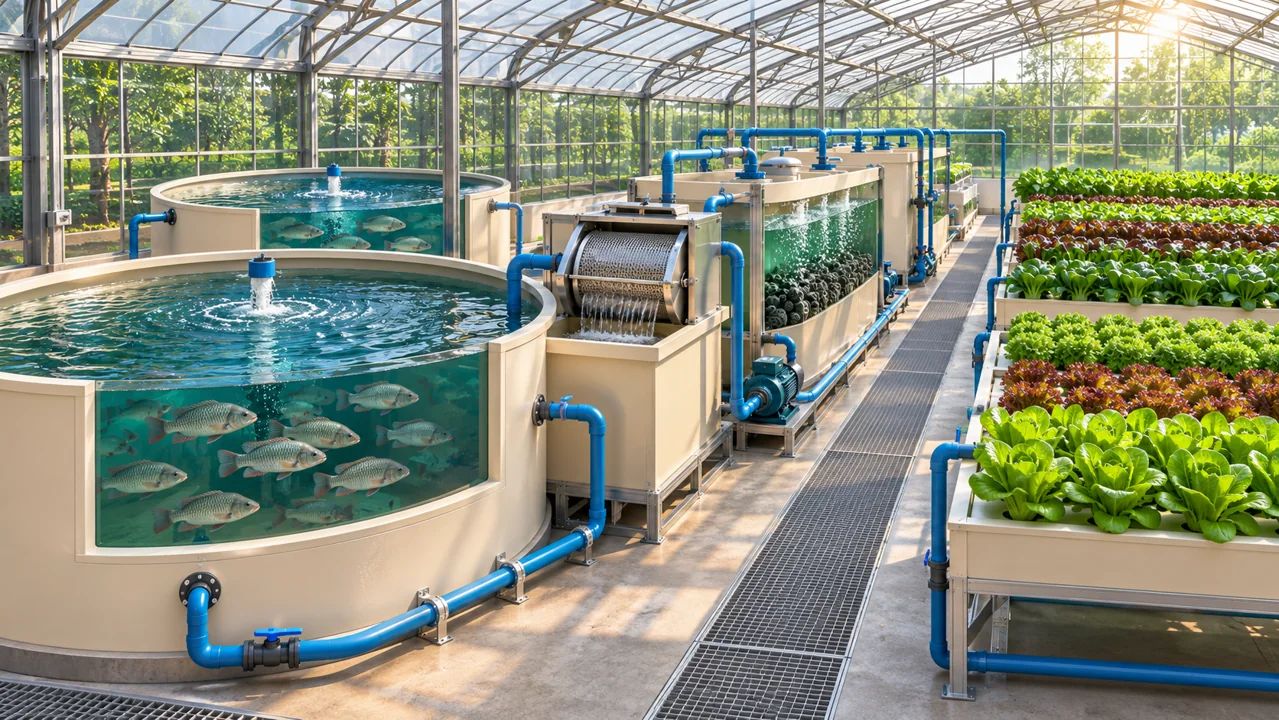 SYSTEM CONCEPT
See the mechanism.
Understand the duty.
Select a route or a stage to inspect the process. The cutaway explains the equipment and water environment; it is a teaching illustration, not a project drawing.
Define the fish load
Define the fish feed input and crop-growing method.
Feed and the fish production stage establish solids and dissolved-waste loading on the fish side.
- Define the fish feed input and crop-growing method.
- Review solids removal and biological treatment.
- Balance both water programmes; plant area does not prove fish capacity.
Key takeaways
- Fish, bacteria and plants share one water. Each needs different conditions, so aquaponics is a compromise.
- pH 6 to 7 is the usual compromise. It is the hardest value to hold.
- Size the system from daily feed, using the feed-rate ratio.
- Iron, potassium and calcium often run short and need fish-safe supplements.
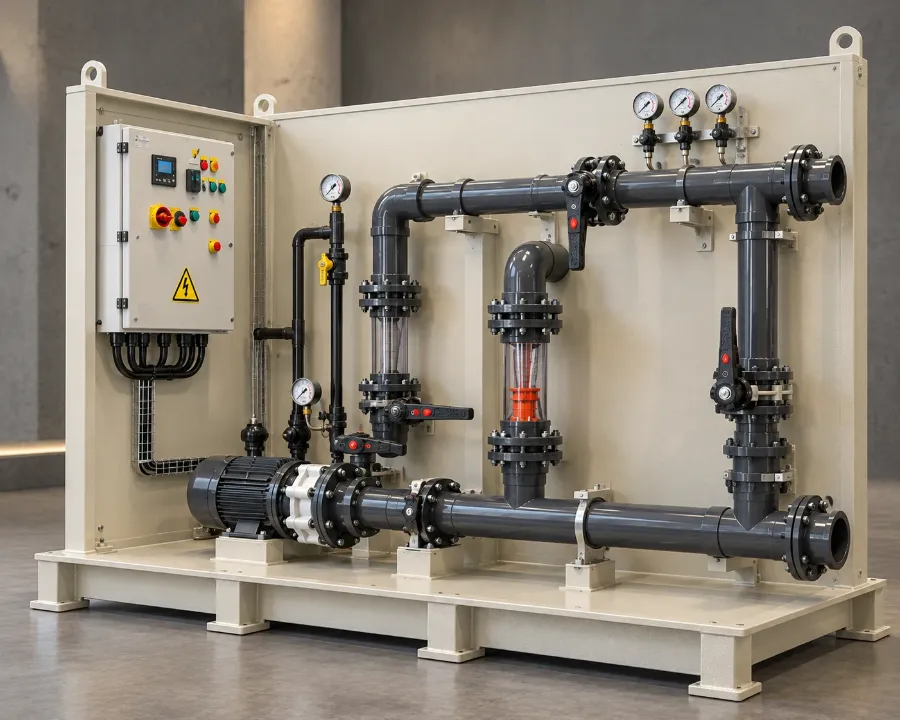
What is aquaponics?
It combines aquaculture (raising fish) with hydroponics (growing plants without soil). Instead of buying fertiliser, you feed the fish and let the system make the nutrients.
Aquaponics: follow the nitrogen
- Fish eat feedProtein in feed is the source of nitrogen.
- Fish excrete ammoniaMostly through the gills.
- Bacteria oxidise itNitrosomonas to nitrite, Nitrobacter to nitrate.
- Plants take up nitrateThey remove it from the water.
- Clean water returnsBack to the fish.
Read more in nitrification explained.
Work with your own numbers.
Use the tools below to explore the relevant arithmetic. Enter measured values or declared assumptions. An estimate does not establish equipment capacity, biological performance or a safe operating limit.
Aquaponics feed-to-area scenario
Relate plant area to a chosen feed-rate ratio and a selected biomass feeding rate.
Assumptions and limits
Crop, fish, feed and nutrient availability determine the suitable ratio. The implied biomass is not a stocking recommendation or proof of nutrient balance.
Flow & turnover planner
Relate a measured water volume to a selected turnover time. Confirm the time from the application and hydraulic design.
Assumptions and limits
A planning allowance is your assumption. This calculation does not choose a filter, prove treatment capacity or account for pump head.
Convert units before you calculate
Planning arithmetic · inputs remain visible for review · example values are not operating recommendations
Aquaponics: media bed, NFT or deep water culture
| Method | Best for | Notes |
|---|---|---|
| Media bed | Home systems, beginners, fruiting crops | Bed also filters solids and hosts bacteria |
| NFT | Leafy greens, herbs, vertical growing | Needs a separate solids filter |
| Deep water culture | Leafy greens at commercial scale | Needs solids filter and biofilter |
Aquaponics: the compromise: one water for three
Fish, plants and bacteria each prefer different values. Aquaponics sits in the middle.
| Parameter | Target |
|---|---|
| Temperature | 18 to 30 °C |
| pH | 6 to 7 |
| Ammonia | Below 1 mg/L |
| Nitrite | Below 1 mg/L |
| Nitrate | 5 to 150 mg/L |
| Dissolved oxygen | Above 5 mg/L |
Recommended water quality for aquaponics.
Why pH is the hardest part
Nitrification lowers pH, plants prefer slightly acid, bacteria and fish like higher pH. Add alkalinity gently. See alkalinity and pH.
Aquaponics: what to grow, and with which fish
Easy: leafy greens and herbs
Lettuce, basil, kale, mint and pak choi grow well on the nutrients fish provide.
Demanding: fruiting crops
Tomatoes, cucumbers and peppers need more nutrients and are best in mature systems, often with extra supplements.
For fish, see best fish for aquaponics.
Aquaponics: size a system with the feed-rate ratio
Feed rate per square metre of plant area is the common design number. See fish-to-plant ratio.
Aquaponics: one loop, or two?
Coupled systems share one loop. Decoupled systems split fish and plants. See decoupled aquaponics.
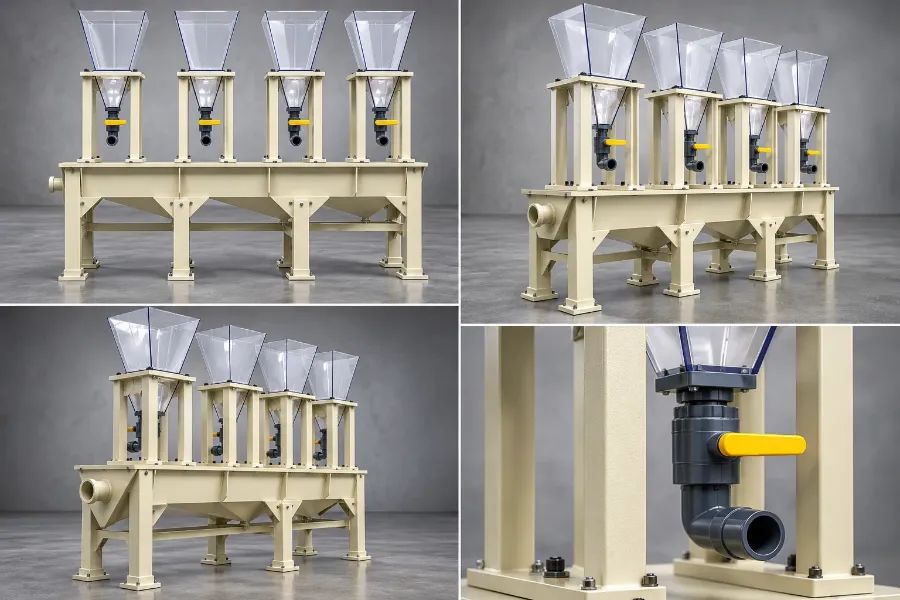
Aquaponics: what fish feed does not supply
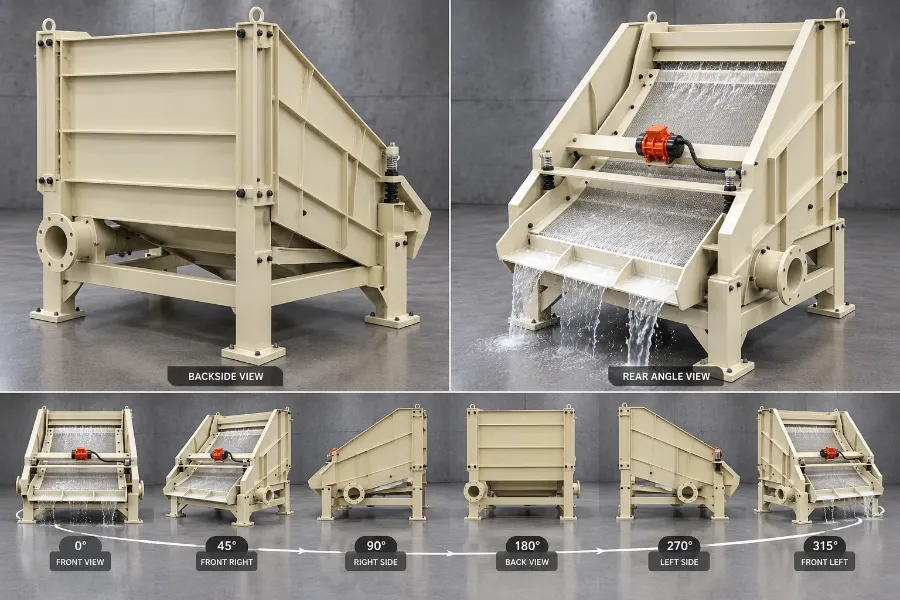
Aquaponics: fish-farm filtration for the fish side
Balance both living systems
Use these questions to prepare a project brief or an operating review. Check an item only when the information has been recorded for your installation.
This checklist is a working aid in the current page session, not a saved maintenance record.
Aquaponics FAQ
Is aquaponics hard?
The idea is simple; keeping balance takes practice.
What is the best pH?
About 6.8 to 7.0 for coupled systems.
Can I use any fish?
Hardy warm-water fish such as tilapia are common. Check local rules.
More guides related to aquaponics
Discuss your system with Pureflow.
Share your application, operating volume, actual flow, loading and the question you are trying to resolve.