
Aquaponics vs HydroponicsDifferences, Costs and Which to Choose
Aquaponics vs hydroponics: differences, side-by-side comparison, pros and cons, yields, labour and risk, and which suits you, including decoupled aquaponics.
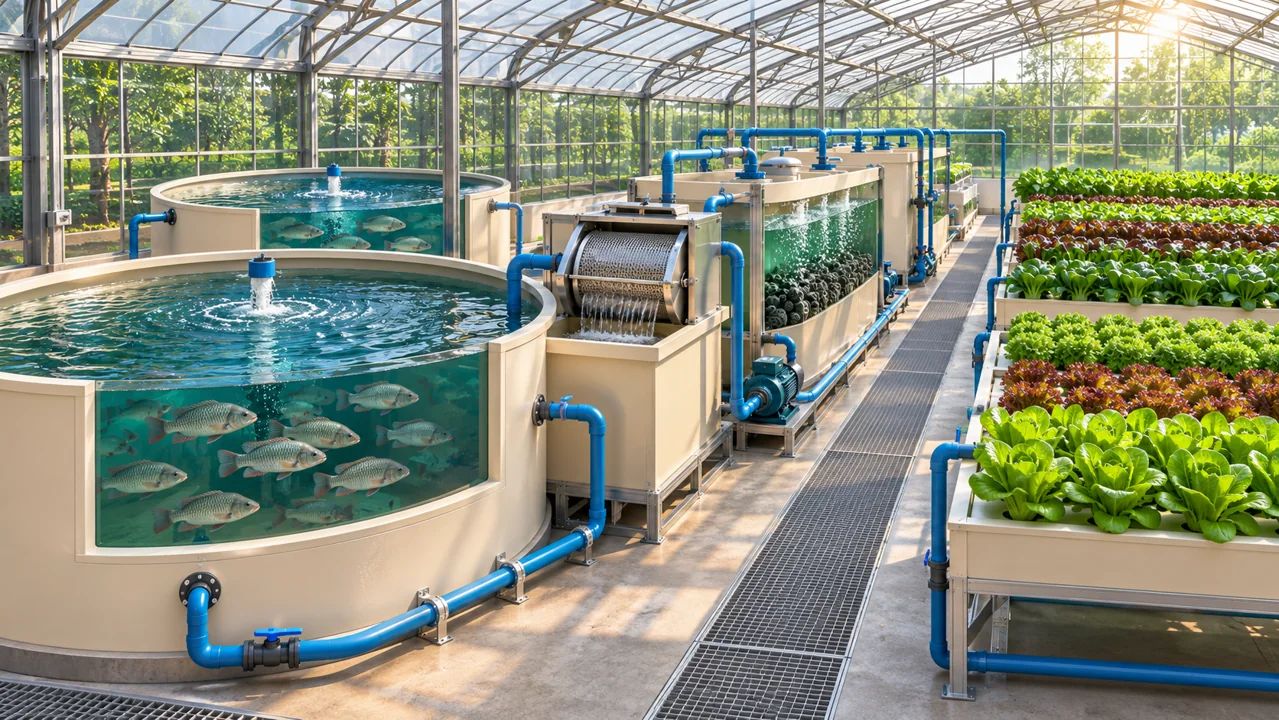 SYSTEM CONCEPT
See the mechanism.
Understand the duty.
Select a route or a stage to inspect the process. The cutaway explains the equipment and water environment; it is a teaching illustration, not a project drawing.
Define the fish load
Define the fish feed input and crop-growing method.
Feed and the fish production stage establish solids and dissolved-waste loading on the fish side.
- Define the fish feed input and crop-growing method.
- Review solids removal and biological treatment.
- Balance both water programmes; plant area does not prove fish capacity.
Key takeaways
- Hydroponics gives faster, more predictable crops.
- Aquaponics adds a fish crop and organic nutrient source but is more complex.
- Decoupled aquaponics is a hybrid with two loops.
- Business planning matters more than the system choice.
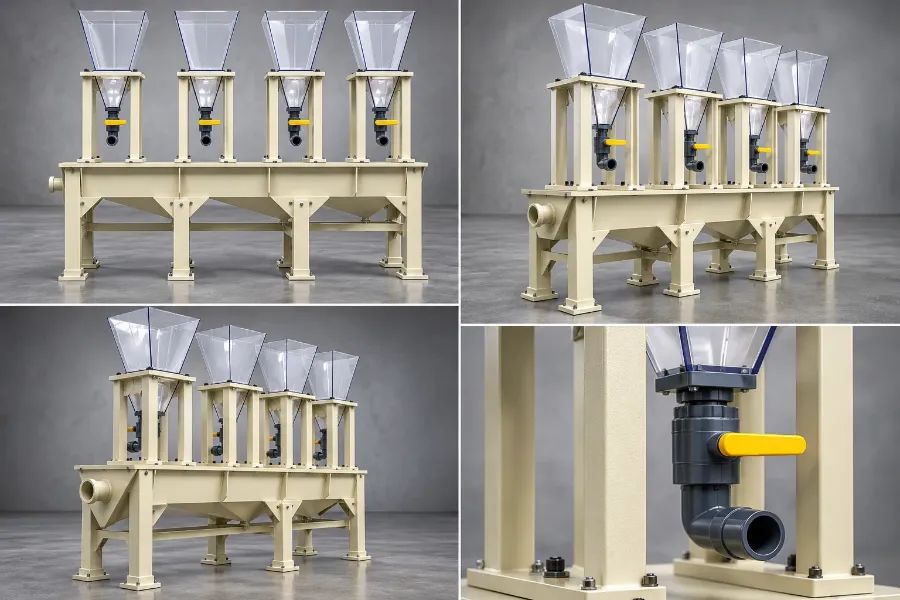
What is the difference?
| Aspect | Aquaponics | Hydroponics |
|---|---|---|
| Nutrient source | Fish feed, converted by fish and bacteria | Mineral fertiliser salts |
| Start-up | 3 to 8 weeks to establish the biofilter | Plant as soon as solution is mixed |
| pH | 6 to 7 compromise | 5.5 to 6.5 for plants |
| Control | Harder | Precise |
| Extra crop | Fish | None |
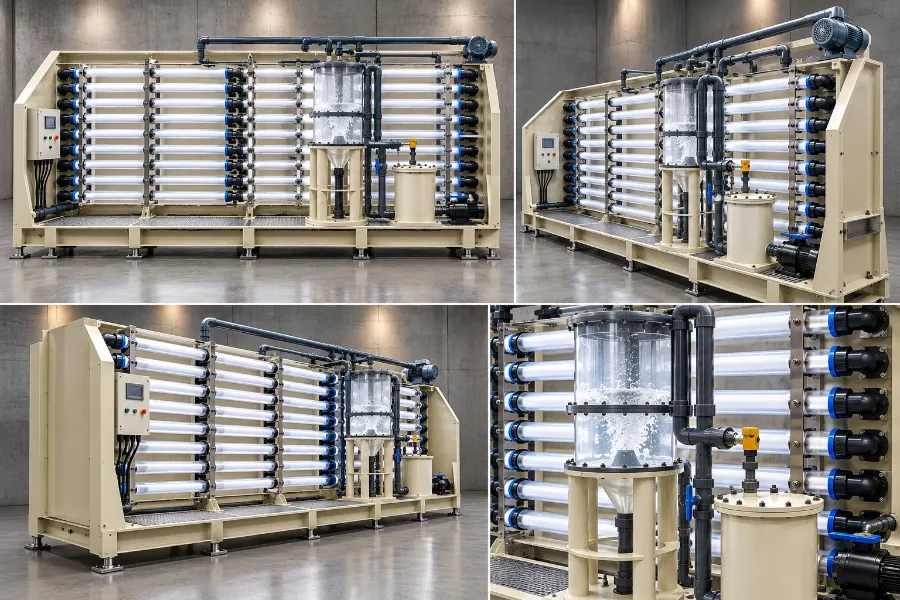
Two loops side by side
Work with your own numbers.
Use the tools below to explore the relevant arithmetic. Enter measured values or declared assumptions. An estimate does not establish equipment capacity, biological performance or a safe operating limit.
Aquaponics feed-to-area scenario
Relate plant area to a chosen feed-rate ratio and a selected biomass feeding rate.
Assumptions and limits
Crop, fish, feed and nutrient availability determine the suitable ratio. The implied biomass is not a stocking recommendation or proof of nutrient balance.
Flow & turnover planner
Relate a measured water volume to a selected turnover time. Confirm the time from the application and hydraulic design.
Assumptions and limits
A planning allowance is your assumption. This calculation does not choose a filter, prove treatment capacity or account for pump head.
Convert units before you calculate
Planning arithmetic · inputs remain visible for review · example values are not operating recommendations
Pros and cons
| Aquaponics | Hydroponics | |
|---|---|---|
| Pros | Two products, low fertiliser use, good story | Faster crops, tight control |
| Cons | Complex, slower start, pH compromise | Fertiliser purchase, one product |
Which gives higher yields?
Hydroponics usually wins on speed and yield because nutrients can be tuned exactly. Aquaponics catches up in mature, well-run systems, especially for leafy greens.
Costs, labour and risk
Aquaponics adds fish costs and a biofilter, and fish illness can hit the whole system. Hydroponics is simpler but depends on fertiliser inputs.
Which is better for you?
Balance both living systems
Use these questions to prepare a project brief or an operating review. Check an item only when the information has been recorded for your installation.
This checklist is a working aid in the current page session, not a saved maintenance record.
Aquaponics vs Hydroponics FAQ
Is aquaponics organic?
Rules vary by region.
Which is cheaper?
Hydroponics is cheaper to start. Aquaponics saves on fertiliser later.
Can I switch?
Yes, but plan the filtration first.
More guides related to aquaponics vs hydroponics
Discuss your system with Pureflow.
Share your application, operating volume, actual flow, loading and the question you are trying to resolve.