
How to Build an Aquaponics SystemStep-by-Step
How to build an aquaponics system step by step: choose scale and grow bed, size from plants to feed to fish, lay out for gravity flow, cycle, stock and run it.
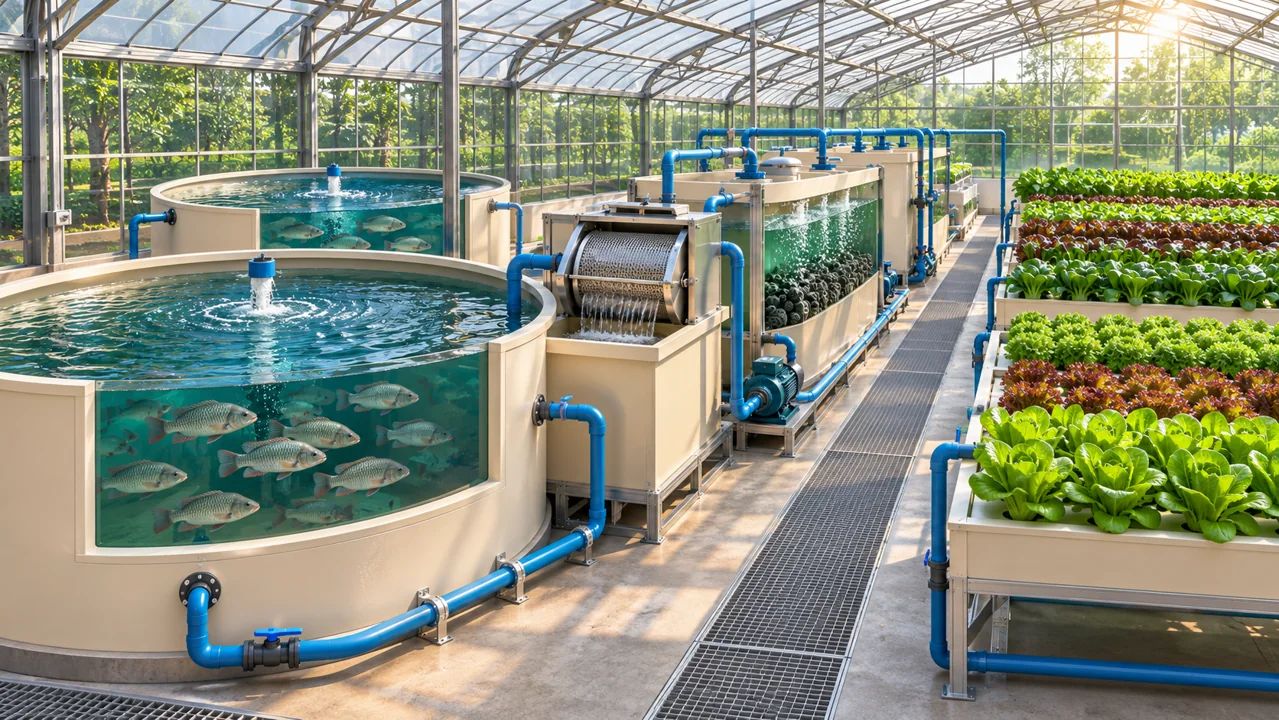 SYSTEM CONCEPT
See the mechanism.
Understand the duty.
Select a route or a stage to inspect the process. The cutaway explains the equipment and water environment; it is a teaching illustration, not a project drawing.
Define the fish load
Define the fish feed input and crop-growing method.
Feed and the fish production stage establish solids and dissolved-waste loading on the fish side.
- Define the fish feed input and crop-growing method.
- Review solids removal and biological treatment.
- Balance both water programmes; plant area does not prove fish capacity.
Key takeaways
- Size from the plants: grow area sets feed, feed sets fish, fish tank sets flow and filters.
- Build and test with water only, cycle, then fish, then plants.
- Lay out for gravity flow and one pump.
- Daily, weekly and monthly routines keep it healthy.
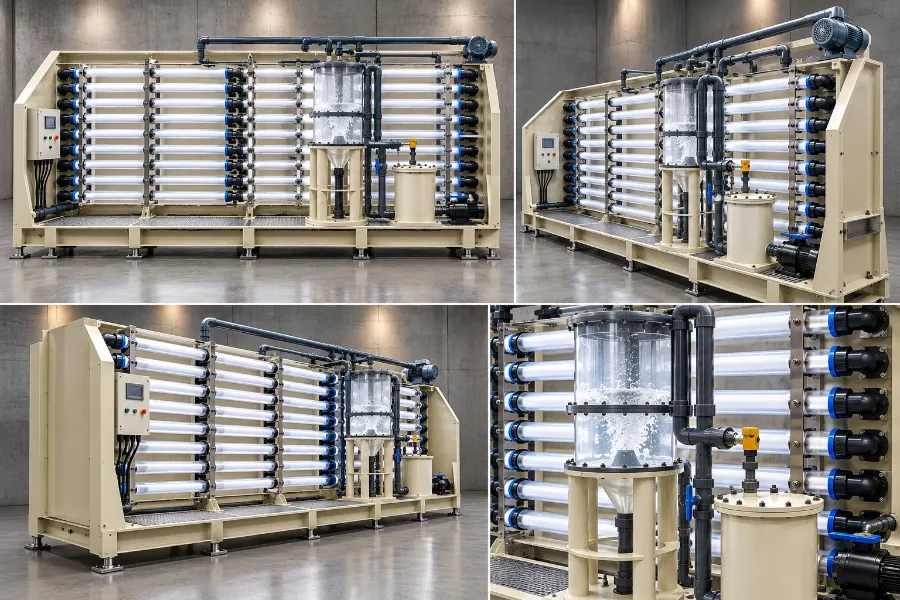
Choose your scale
| Backyard | Semi-commercial | Commercial | |
|---|---|---|---|
| Grow area | 4 m² | 50 m² | 200 m² |
| Fish feed a day | 160 to 200 g | 2.0 to 2.5 kg | 8 to 10 kg |
| Fish in system | 10 to 20 kg | About 130 to 170 kg | About 530 kg |
Leafy greens at 40 to 50 g feed per m² a day.
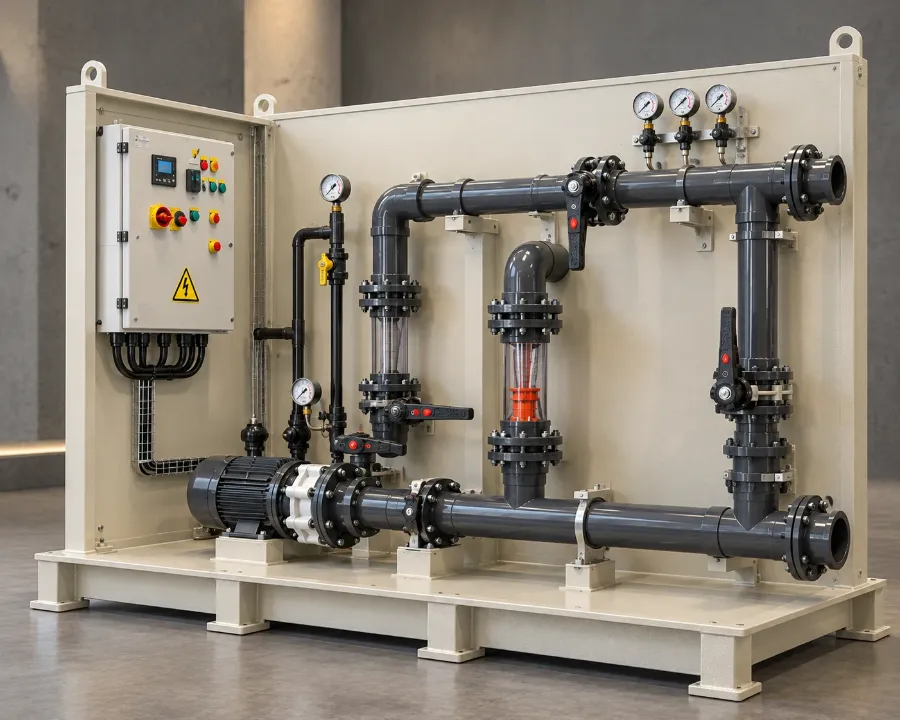
Components
Work with your own numbers.
Use the tools below to explore the relevant arithmetic. Enter measured values or declared assumptions. An estimate does not establish equipment capacity, biological performance or a safe operating limit.
Aquaponics feed-to-area scenario
Relate plant area to a chosen feed-rate ratio and a selected biomass feeding rate.
Assumptions and limits
Crop, fish, feed and nutrient availability determine the suitable ratio. The implied biomass is not a stocking recommendation or proof of nutrient balance.
Flow & turnover planner
Relate a measured water volume to a selected turnover time. Confirm the time from the application and hydraulic design.
Assumptions and limits
A planning allowance is your assumption. This calculation does not choose a filter, prove treatment capacity or account for pump head.
Convert units before you calculate
Planning arithmetic · inputs remain visible for review · example values are not operating recommendations
Which grow bed to build
| Media bed | NFT | DWC | |
|---|---|---|---|
| Best for | Home, fruiting | Greens, vertical | Commercial greens |
| Solids removal | The bed itself | Separate filter | Separate filter |
Size from the plants
- Grow area sets the feedArea x feed rate.
- Feed sets the fishFish weight from feed per day.
- Tank sets the flow and filtersTwo tank volumes an hour is common.
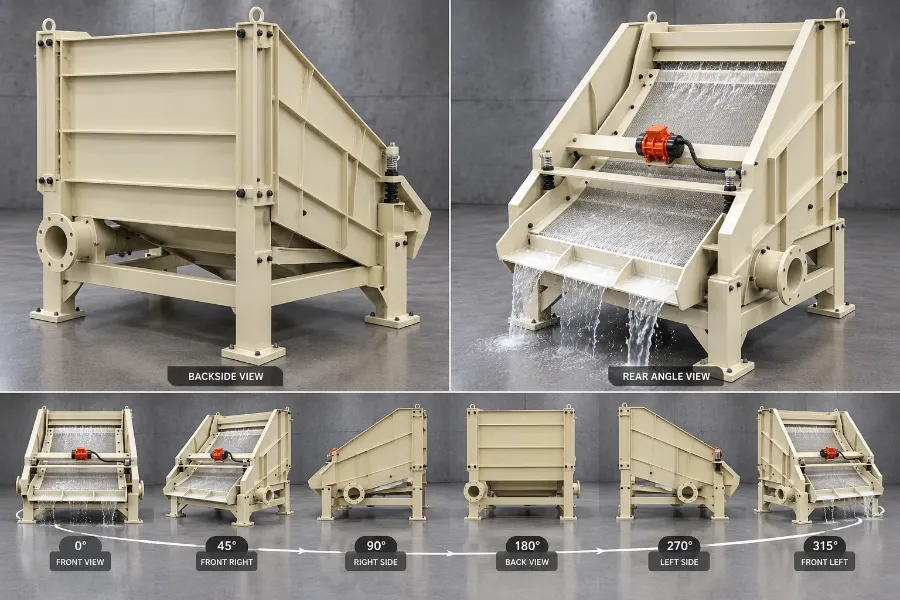
Lay out for gravity flow
Place the fish tank highest, then filters, then beds, with a sump low so one pump returns water. See gravity-feed pipework.
Build, test, cycle and stock
- Build and test with water onlyLook for leaks.
- Cycle the biofilterSee cycling.
- Stock fish, then plantAdd gradually.
Routine and mistakes
- Daily: feed, observe, check flow.
- Weekly: test water.
- Monthly: clean filters, check plumbing.
Common mistakes: too many fish too soon, no solids filter, poor aeration.
Balance both living systems
Use these questions to prepare a project brief or an operating review. Check an item only when the information has been recorded for your installation.
This checklist is a working aid in the current page session, not a saved maintenance record.
How to Build an Aquaponics System FAQ
How big should my fish tank be?
Size it for the biomass that gives your feed rate.
Do I need a drum filter?
For larger systems, yes. It removes solids before they clog beds.
How long to first harvest?
Greens in a few weeks after a cycled start.
More guides related to how to build an aquaponics system
Discuss your system with Pureflow.
Share your application, operating volume, actual flow, loading and the question you are trying to resolve.