
Nitrate ControlWater Exchange, Plants and Denitrification
Nitrate is the end of the nitrogen cycle but it still builds up. Learn how to keep it down with water exchange, plants or denitrification.
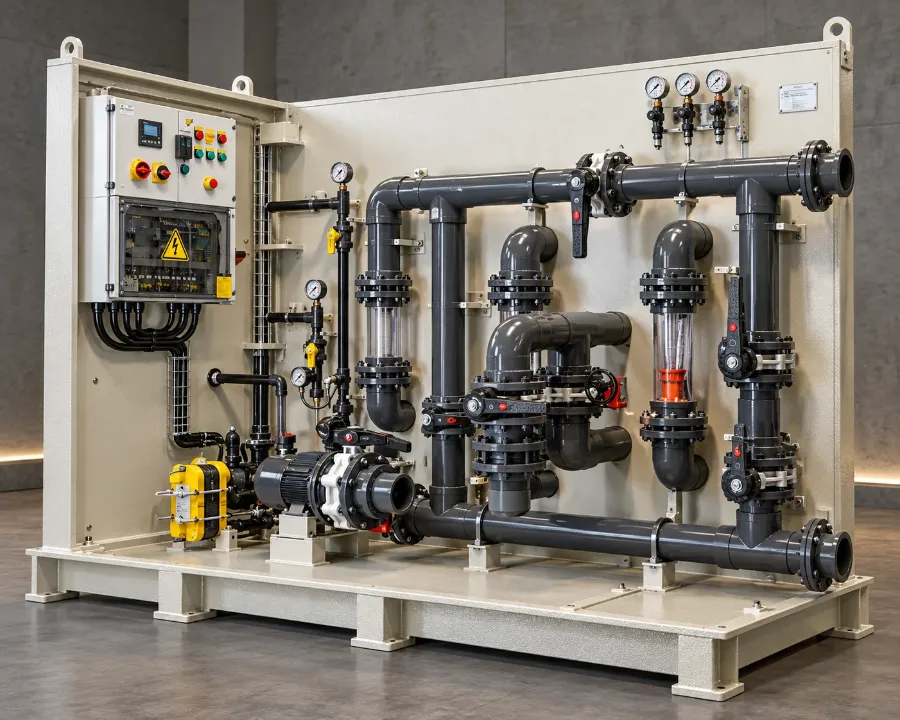 EQUIPMENT REFERENCE
See the mechanism.
Understand the duty.
Select a route or a stage to inspect the process. The cutaway explains the equipment and water environment; it is a teaching illustration, not a project drawing.
Measure the system
Record the test method, units and sampling location.
Use appropriate tests and record units, location, time, pH and temperature with the result.
- Record the test method, units and sampling location.
- Keep concentrations, loads and chemical forms distinct.
- Interpret results with species, pH, temperature and salinity.
Key takeaways
- Why it accumulates: Biofilters turn ammonia and nitrite into nitrate, and nothing in a standard biofilter removes it.
- Water exchange: The simplest approach is to replace part of the water regularly.
- Let plants use it: Aquaponics and planted ponds put nitrate to work as plant food.
- Denitrification: Large farms sometimes use an oxygen-free reactor where bacteria convert nitrate to nitrogen gas.
Why it accumulates
Biofilters turn ammonia and nitrite into nitrate, and nothing in a standard biofilter removes it. It only goes down when you take it out.
Water exchange
The simplest approach is to replace part of the water regularly. Check your source water too, because tap or well water can carry nitrate of its own.
Work with your own numbers.
Use the tools below to explore the relevant arithmetic. Enter measured values or declared assumptions. An estimate does not establish equipment capacity, biological performance or a safe operating limit.
Ideal dilution calculation
Estimate a single mixed water replacement from measured starting, replacement-water and target concentrations.
Assumptions and limits
A simple mass balance, not a safe operating target. Assumes complete mixing and no ongoing production or reaction. Species, chemistry and source-water suitability require review.
Water-change volume planner
Calculate the volume changed per event and the original-water fraction remaining after repeated equal changes.
Assumptions and limits
Assumes complete mixing between equal changes. Match replacement-water chemistry and temperature; this is not a safe-change prescription or a treatment guarantee.
Convert units before you calculate
Planning arithmetic · inputs remain visible for review · example values are not operating recommendations
Let plants use it
Aquaponics and planted ponds put nitrate to work as plant food. See aquaponics.
Denitrification
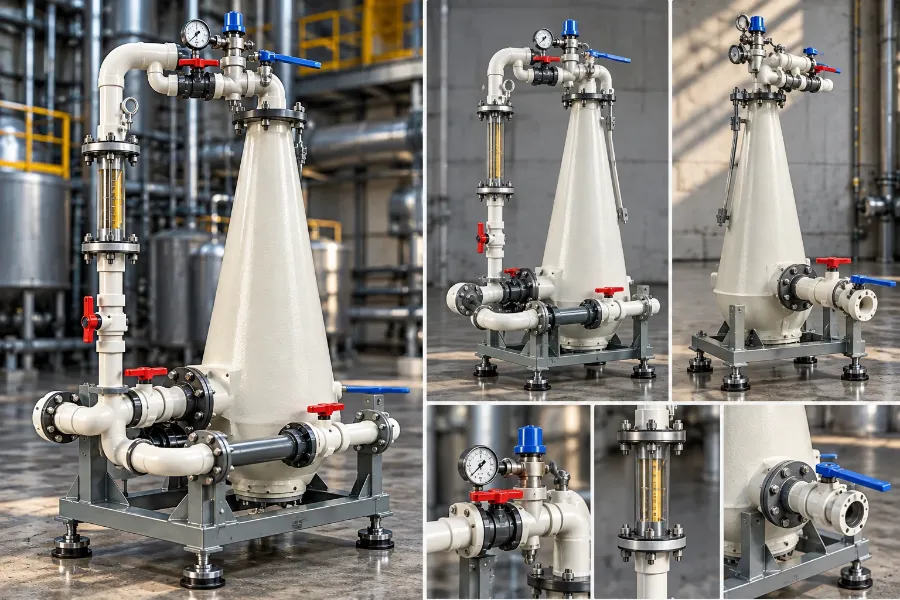
Large farms sometimes use an oxygen-free reactor where bacteria convert nitrate to nitrogen gas. It needs careful design and monitoring.
How much is too much
It depends on the species. Many freshwater fish tolerate much higher nitrate than marine fish or trout, so follow your species guidance.
Pureflow Bio equipment for this
MBBR biofilters →Moving bed biofilters.Oxygen cones →Oxygen dissolving.UV disinfection systems →UV-C chambers.Make the measurements comparable
Use these questions to prepare a project brief or an operating review. Check an item only when the information has been recorded for your installation.
This checklist is a working aid in the current page session, not a saved maintenance record.
Nitrate Control FAQ
How often should I change water for nitrate?
Based on testing. Change enough to hold it below your species limit.
Does nitrate cause green water?
It feeds algae along with phosphate and light, so high nitrate encourages blooms.
More guides related to nitrate control
Discuss your system with Pureflow.
Share your application, operating volume, actual flow, loading and the question you are trying to resolve.