
Aquaponics FiltrationSolids, Biofilters and Water Treatment
Aquaponics filtration: drum filter and moving bed biofilter, solids removal, ammonia conversion, oxygen, sizing and where sludge goes in coupled and decoupled systems.
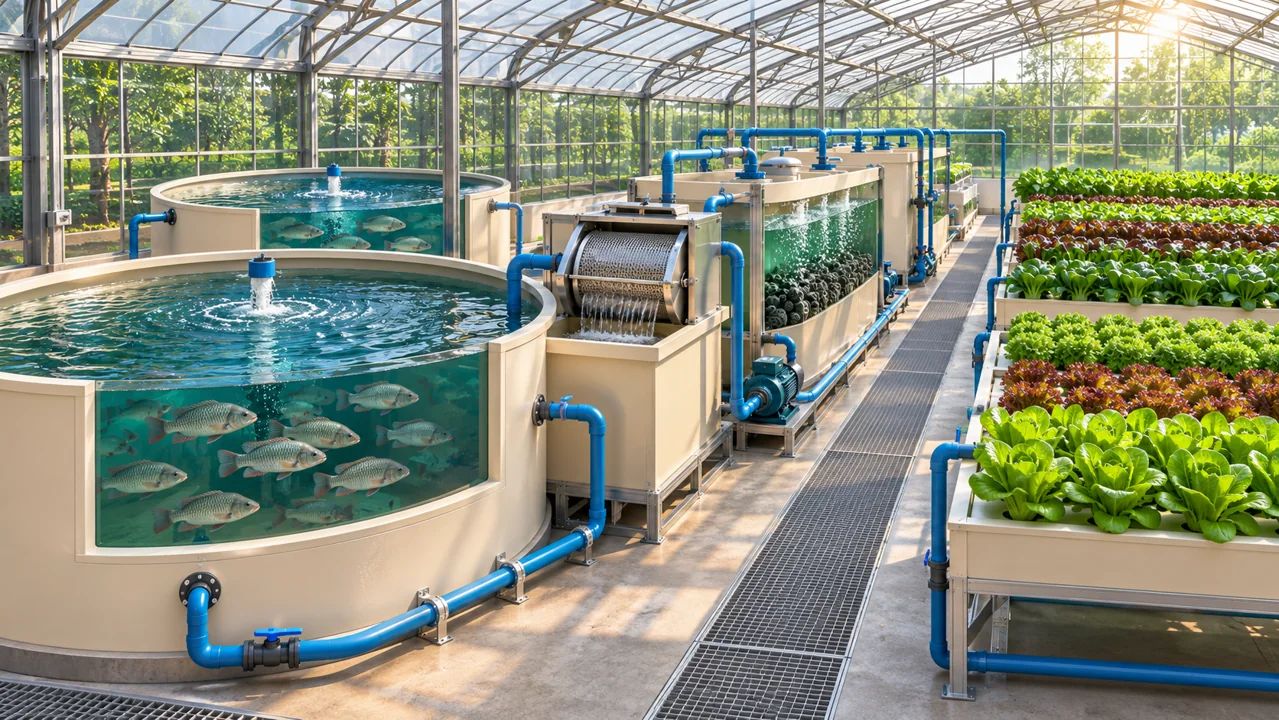 SYSTEM CONCEPT
See the mechanism.
Understand the duty.
Select a route or a stage to inspect the process. The cutaway explains the equipment and water environment; it is a teaching illustration, not a project drawing.
Define the fish load
Define the fish feed input and crop-growing method.
Feed and the fish production stage establish solids and dissolved-waste loading on the fish side.
- Define the fish feed input and crop-growing method.
- Review solids removal and biological treatment.
- Balance both water programmes; plant area does not prove fish capacity.
Key takeaways
- Remove solids first so beds do not clog.
- A biofilter turns ammonia into the nitrate plants use.
- Size from daily feed.
- Sludge goes to a settling tank in coupled systems, a digester in decoupled.
What does aquaponics filtration have to do?
- Take the solids out firstBefore they rot.
- Turn ammonia into nitrateBiofilter.
- Keep the oxygen upFish, bacteria and roots need it.
- Feed the plants, return the waterClose the loop.
How do I size aquaponics filtration?
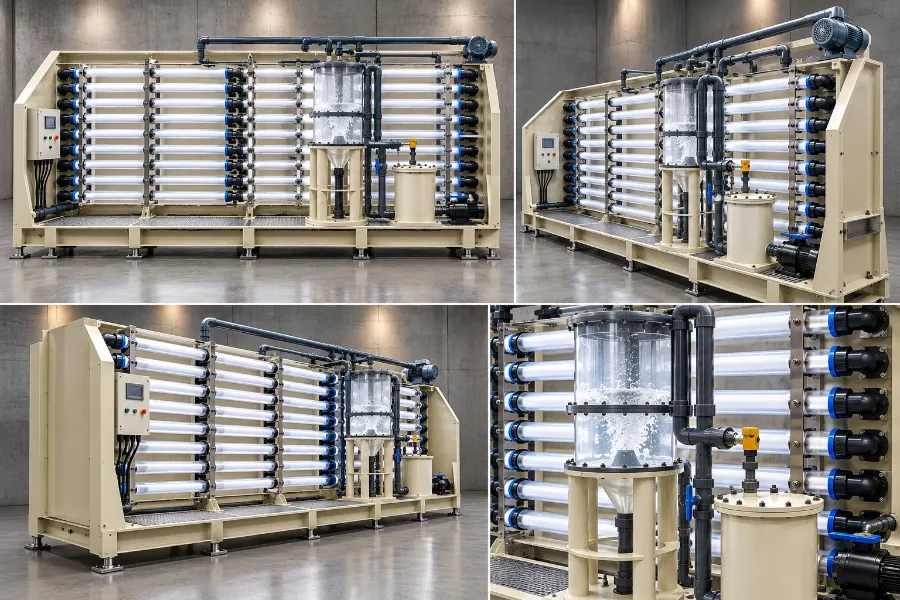
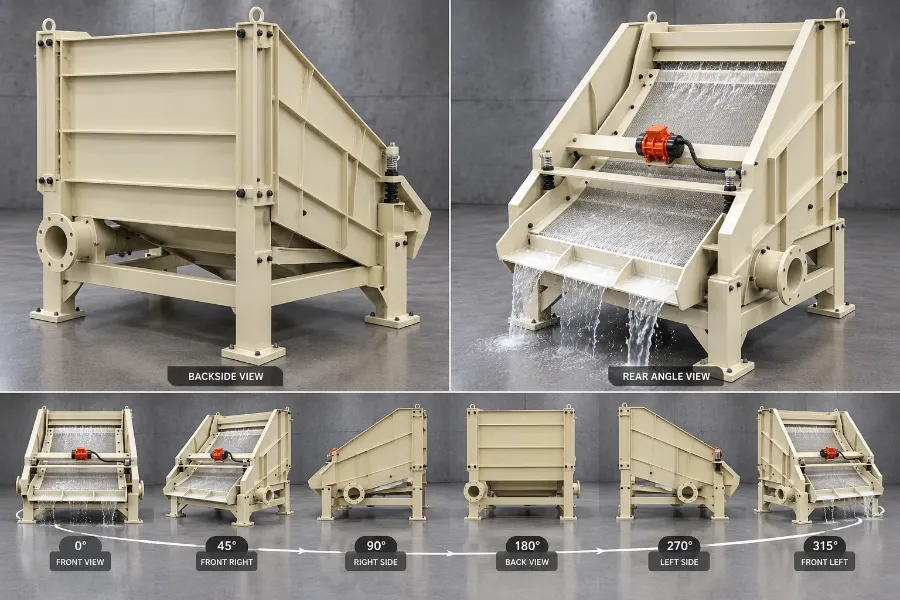
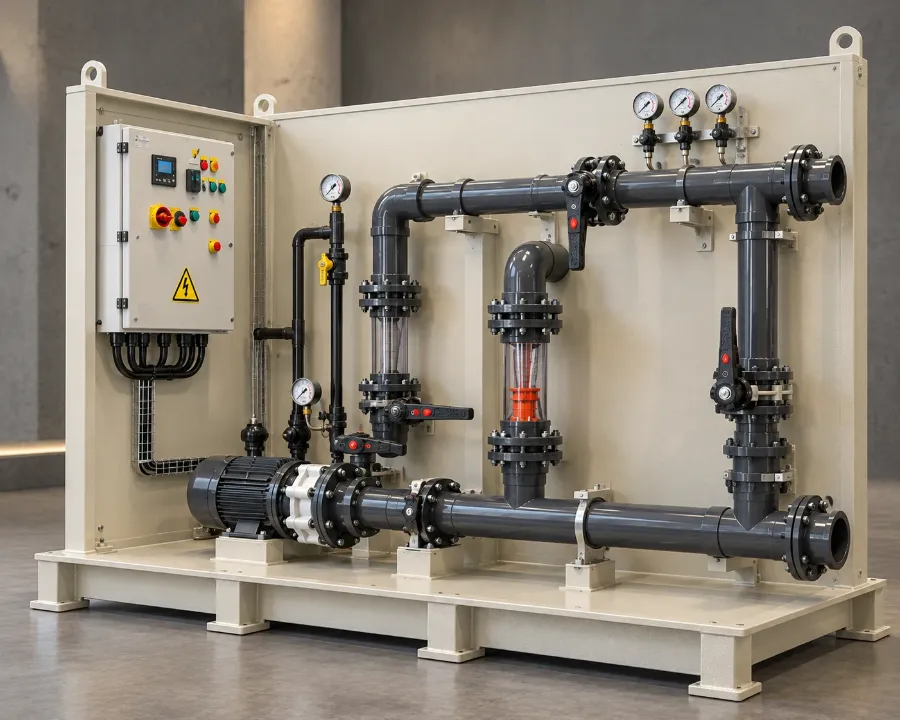
Fish tank at about two turnovers an hour, biofilter sized per kg feed a day. See biofilter sizing and drum filter sizing.
Work with your own numbers.
Use the tools below to explore the relevant arithmetic. Enter measured values or declared assumptions. An estimate does not establish equipment capacity, biological performance or a safe operating limit.
Biofilter media planning scenario
Relate a defined nitrogen load to an explicitly supplied media conversion rate and fill share.
Assumptions and limits
Use a conversion rate verified for the media, water chemistry, oxygen, temperature and load. Example numbers are arithmetic inputs, not approved biological capacities or fill recommendations.
Feed & loading scenario
Translate a selected feeding rate and assumed waste yield into a planning load.
Assumptions and limits
The feeding rate and TAN yield are supplied assumptions. Use the species, feed, growth stage and verified process design; the estimate is not a Pureflow capacity rating.
Convert units before you calculate
Planning arithmetic · inputs remain visible for review · example values are not operating recommendations
Building blocks
Where does the sludge go?
Balance both living systems
Use these questions to prepare a project brief or an operating review. Check an item only when the information has been recorded for your installation.
This checklist is a working aid in the current page session, not a saved maintenance record.
Aquaponics Filtration FAQ
Do I need a drum filter for aquaponics?
For anything beyond small systems it helps a lot.
How big should the biofilter be?
Sized from feed, not fish count.
Can plants be the only filter?
Only in small, lightly stocked systems.
More guides related to aquaponics filtration
Discuss your system with Pureflow.
Share your application, operating volume, actual flow, loading and the question you are trying to resolve.