
Hydroponic Water Temperature and OxygenKeep Roots Healthy
Why warm nutrient solution causes root rot, what temperature to aim for and how to cool and aerate hydroponic reservoirs.
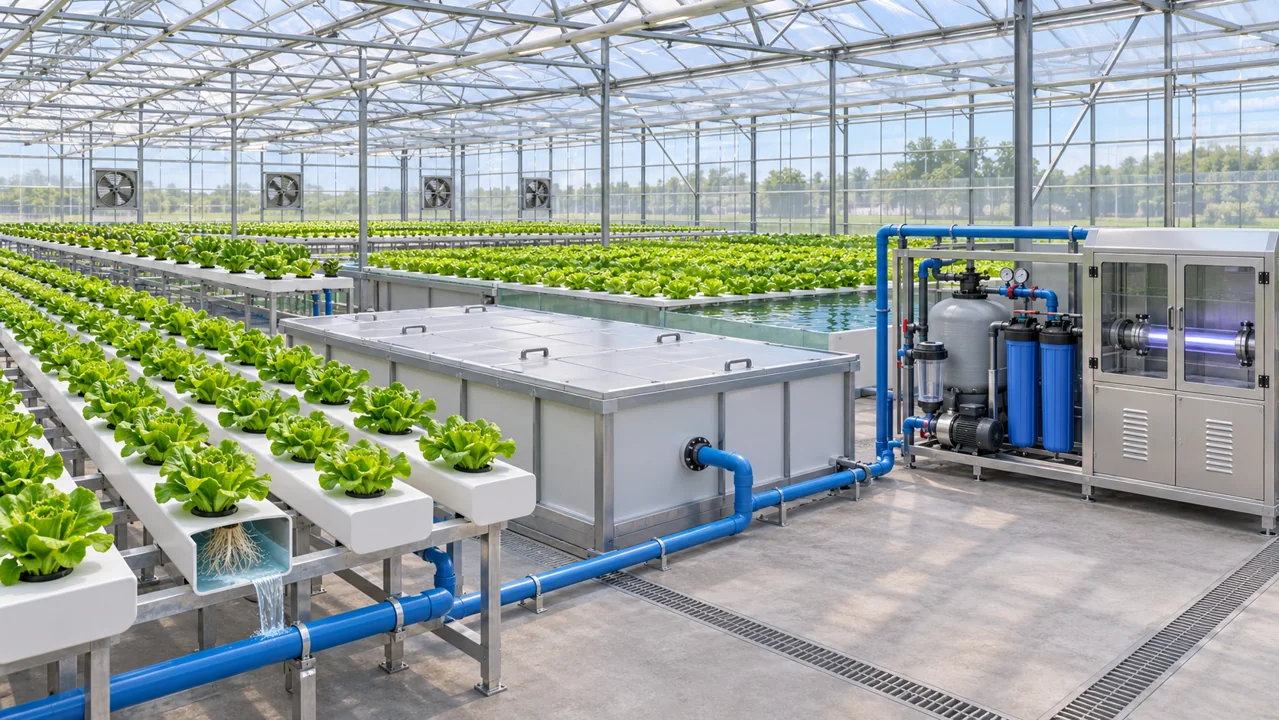 SYSTEM CONCEPT
See the mechanism.
Understand the duty.
Select a route or a stage to inspect the process. The cutaway explains the equipment and water environment; it is a teaching illustration, not a project drawing.
Supply the roots
Use measured irrigation and peak return duty.
A managed nutrient solution reaches the growing system at a flow suited to its design.
- Use measured irrigation and peak return duty.
- Record nutrient chemistry, temperature and root-zone conditions.
- Coordinate treatment with the growing method and crop programme.
Key takeaways
- Why temperature matters: Warm water holds less oxygen and encourages pathogens such as Pythium.
- Targets: Many crops do well with solution around 18 to 24 °C.
- Cooling: Insulate tanks and pipes, shade reservoirs, bury or shield lines, and where needed use a chiller.
- Oxygen: Use air pumps and diffusers in tanks and keep solution moving.

Why temperature matters
Warm water holds less oxygen and encourages pathogens such as Pythium. Roots suffocate and brown.
Targets
Many crops do well with solution around 18 to 24 °C. Hot climates may need shading, insulation or chilling.
Work with your own numbers.
Use the tools below to explore the relevant arithmetic. Enter measured values or declared assumptions. An estimate does not establish equipment capacity, biological performance or a safe operating limit.
Dissolved-oxygen mass inventory
Convert measured dissolved concentration and water volume into the mass currently dissolved.
Assumptions and limits
This is an inventory, not oxygen-delivery capacity or safe survival time. Fish, bacteria, transfer efficiency and changing demand require a separate oxygen balance.
Pump or equipment energy cost
Estimate electrical use from measured input power and a declared daily operating schedule.
Assumptions and limits
Use electrical input, not hydraulic power or the pump’s flow rating. Starting load, variable duty, taxes and demand charges are not included.
Convert units before you calculate
Planning arithmetic · inputs remain visible for review · example values are not operating recommendations
Cooling
Insulate tanks and pipes, shade reservoirs, bury or shield lines, and where needed use a chiller.
Oxygen
Use air pumps and diffusers in tanks and keep solution moving. See deep water culture.
Hygiene
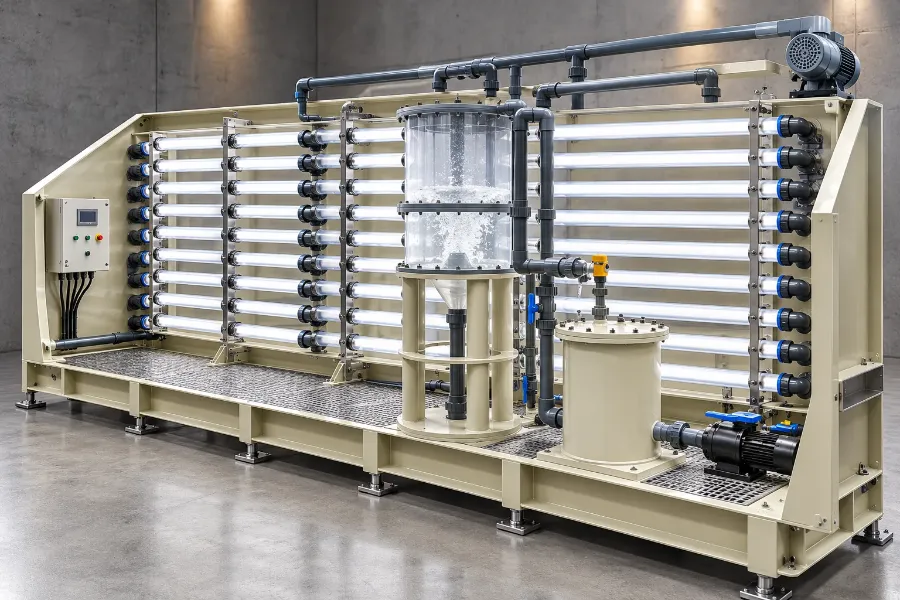
Filter and disinfect with UV to keep pathogens down.
Pureflow Bio equipment for this
Standard drum filters (RDF) →Automatic solids removal.UV disinfection systems →UV-C chambers.Use the real irrigation return
Use these questions to prepare a project brief or an operating review. Check an item only when the information has been recorded for your installation.
This checklist is a working aid in the current page session, not a saved maintenance record.
Hydroponic Water Temperature and Oxygen FAQ
What happens if the solution is too warm?
Root rot risk climbs and growth slows.
Can I use ice?
Temporarily, yes, but insulation and shade are better long-term.
More guides related to hydroponic water temperature and oxygen
Discuss your system with Pureflow.
Share your application, operating volume, actual flow, loading and the question you are trying to resolve.