
Aquaponics Problems and FixesYellow Leaves, Low pH and Sick Fish
A troubleshooting guide for common aquaponics problems: yellowing plants, falling pH, algae, clogging and fish stress.
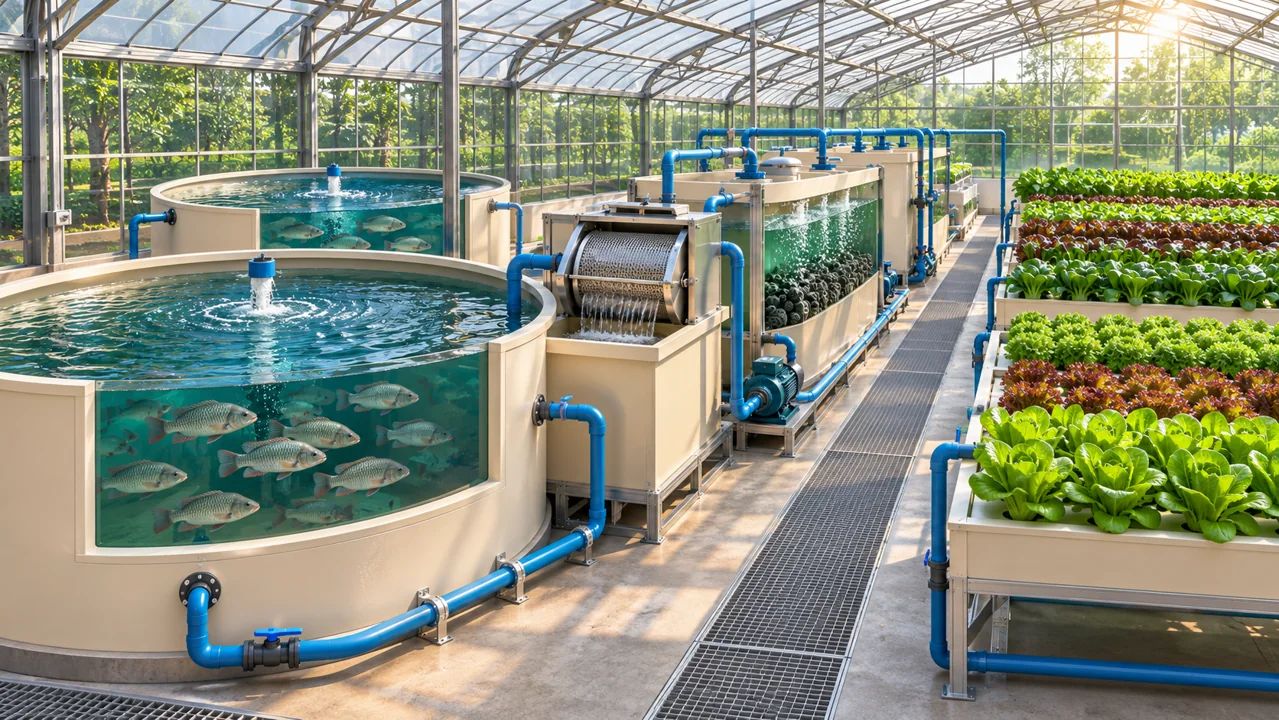 SYSTEM CONCEPT
See the mechanism.
Understand the duty.
Select a route or a stage to inspect the process. The cutaway explains the equipment and water environment; it is a teaching illustration, not a project drawing.
Define the fish load
Define the fish feed input and crop-growing method.
Feed and the fish production stage establish solids and dissolved-waste loading on the fish side.
- Define the fish feed input and crop-growing method.
- Review solids removal and biological treatment.
- Balance both water programmes; plant area does not prove fish capacity.
Key takeaways
- Yellow leaves: Often a nutrient shortage, most commonly iron, or pH that is too high for uptake.
- pH keeps falling: Nitrification consumes alkalinity.
- Algae on everything: Light hits nutrient-rich water.
- Clogged beds or pipes: Solids are getting through.
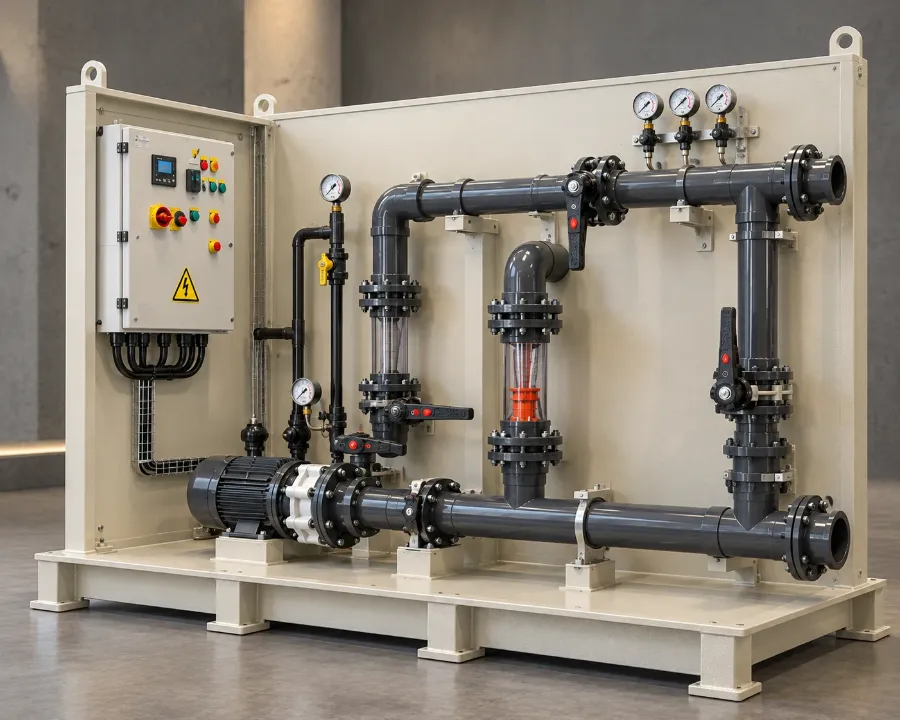
Yellow leaves
Often a nutrient shortage, most commonly iron, or pH that is too high for uptake. Check pH, and consider chelated iron if your readings and plant symptoms point to it.
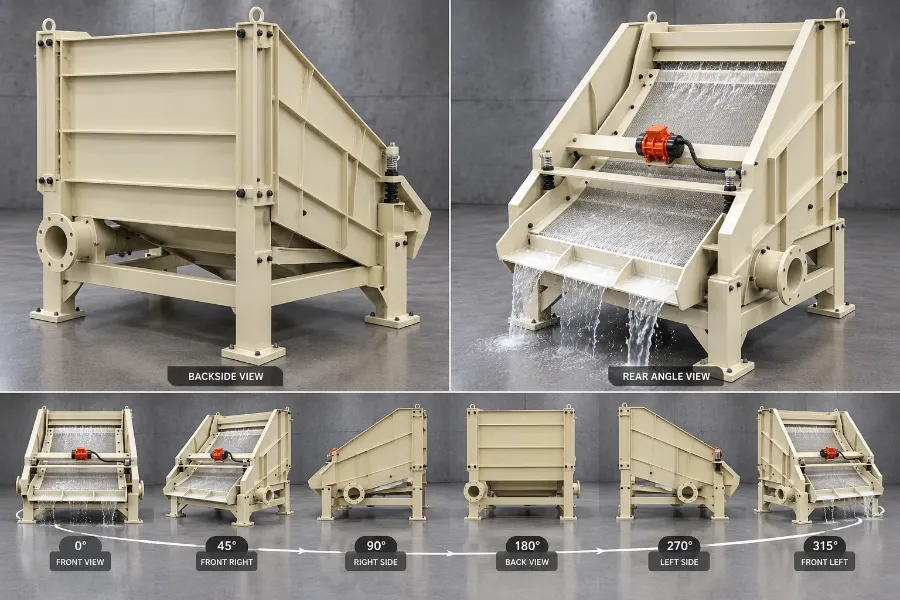
Ph keeps falling
Nitrification consumes alkalinity. Buffer slowly and watch the trend. See alkalinity and pH.
Work with your own numbers.
Use the tools below to explore the relevant arithmetic. Enter measured values or declared assumptions. An estimate does not establish equipment capacity, biological performance or a safe operating limit.
Aquaponics feed-to-area scenario
Relate plant area to a chosen feed-rate ratio and a selected biomass feeding rate.
Assumptions and limits
Crop, fish, feed and nutrient availability determine the suitable ratio. The implied biomass is not a stocking recommendation or proof of nutrient balance.
Flow & turnover planner
Relate a measured water volume to a selected turnover time. Confirm the time from the application and hydraulic design.
Assumptions and limits
A planning allowance is your assumption. This calculation does not choose a filter, prove treatment capacity or account for pump head.
Convert units before you calculate
Planning arithmetic · inputs remain visible for review · example values are not operating recommendations
Algae on everything
Light hits nutrient-rich water. Cover tanks and channels and reduce light on open water.
Clogged beds or pipes
Solids are getting through. Improve solids removal before the plants. See aquaponics filtration.
Fish gasping or off food
Check oxygen and ammonia first. Add air, cut feed and test.
Pests
Avoid chemical sprays that could harm fish. Use physical barriers and fish-safe methods.
Pureflow Bio equipment for this
All aquaculture equipment →Pumps, tanks, oxygen and filtration.MBBR biofilters →Moving bed biofilters.Balance both living systems
Use these questions to prepare a project brief or an operating review. Check an item only when the information has been recorded for your installation.
This checklist is a working aid in the current page session, not a saved maintenance record.
Aquaponics Problems and Fixes FAQ
Can I use normal pesticides?
No. Many are toxic to fish. Use fish-safe options.
Why are my plants slow?
Often nutrient imbalance, low iron, or too few fish for the plant area.
More guides related to aquaponics problems and fixes
Discuss your system with Pureflow.
Share your application, operating volume, actual flow, loading and the question you are trying to resolve.