
Biofilter Media TypesPlastic Carriers, Sand, Ceramic and Brushes
Compare common biofilter media: moving bed carriers, fixed plastic, sand, ceramic rings and brushes, with pros and cons of each.
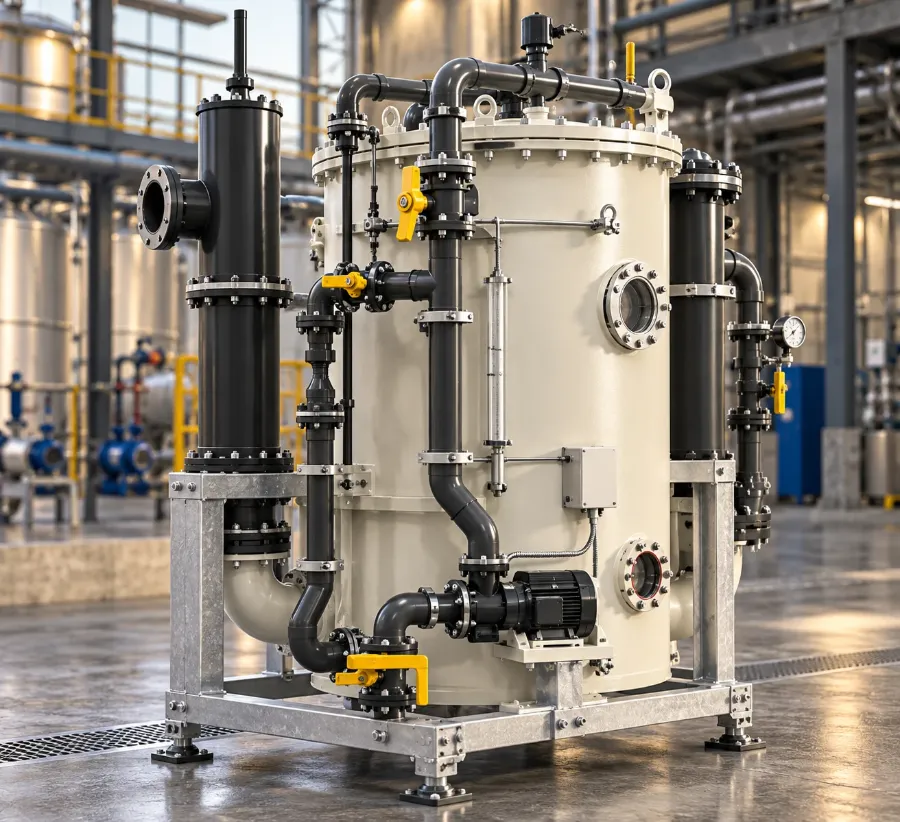 EQUIPMENT REFERENCE
See the mechanism.
Understand the duty.
Select a route or a stage to inspect the process. The cutaway explains the equipment and water environment; it is a teaching illustration, not a project drawing.
Feed the reactor
Define peak feed and the nitrogen load.
Pre-screened water enters the biological stage. Effective upstream solids removal helps protect the reactor.
- Define peak feed and the nitrogen load.
- Check oxygen, pH, alkalinity and temperature.
- Use supported media performance and the specified fill arrangement.
Key takeaways
- Moving bed carriers: Small plastic shapes kept in motion by air.
- Fixed plastic media: Sheets or blocks in a trickling or submerged filter.
- Sand and fluidised beds: Very high surface area in a small space.
- Ceramic and natural media: Porous rings or stones.
Moving bed carriers
Small plastic shapes kept in motion by air. Self-cleaning and compact, a favourite in RAS. They need aeration and a screen to hold them in.
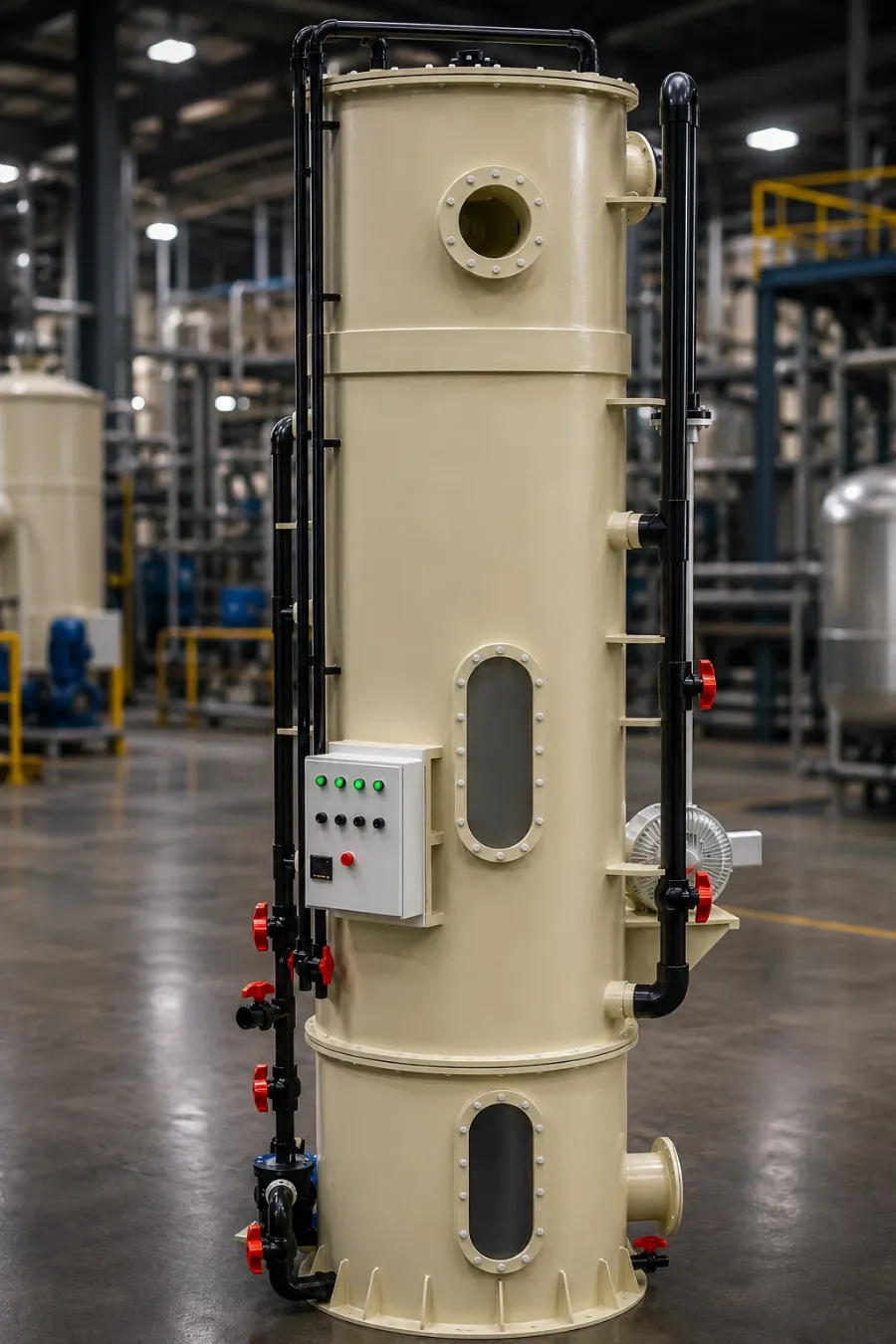
Fixed plastic media
Sheets or blocks in a trickling or submerged filter. Simple and durable, but they can clog if solids are not removed first.
Work with your own numbers.
Use the tools below to explore the relevant arithmetic. Enter measured values or declared assumptions. An estimate does not establish equipment capacity, biological performance or a safe operating limit.
Biofilter media planning scenario
Relate a defined nitrogen load to an explicitly supplied media conversion rate and fill share.
Assumptions and limits
Use a conversion rate verified for the media, water chemistry, oxygen, temperature and load. Example numbers are arithmetic inputs, not approved biological capacities or fill recommendations.
Feed & loading scenario
Translate a selected feeding rate and assumed waste yield into a planning load.
Assumptions and limits
The feeding rate and TAN yield are supplied assumptions. Use the species, feed, growth stage and verified process design; the estimate is not a Pureflow capacity rating.
Convert units before you calculate
Planning arithmetic · inputs remain visible for review · example values are not operating recommendations
Sand and fluidised beds
Very high surface area in a small space. They need careful flow control and are more specialised.
Ceramic and natural media
Porous rings or stones. Good for small ponds and aquariums, heavier and harder to clean.
Brushes and mats
Cheap and easy in ponds, but they trap debris and need manual rinsing.
Choosing
Large farms lean to moving bed media. Ponds and aquariums use whatever fits the filter box. Whichever you pick, keep solids away from it with good mechanical filtration, see drum filters.
Pureflow Bio equipment for this
MBBR biofilters →Moving bed biofilters.Standard drum filters (RDF) →Automatic solids removal.Check the biological assumptions
Use these questions to prepare a project brief or an operating review. Check an item only when the information has been recorded for your installation.
This checklist is a working aid in the current page session, not a saved maintenance record.
Biofilter Media Types FAQ
Which media has the most surface area?
Sand and some specialised media. But more surface is no use if it clogs.
Can I mix media?
Yes, in separate chambers or stages.
More guides related to biofilter media types
Discuss your system with Pureflow.
Share your application, operating volume, actual flow, loading and the question you are trying to resolve.